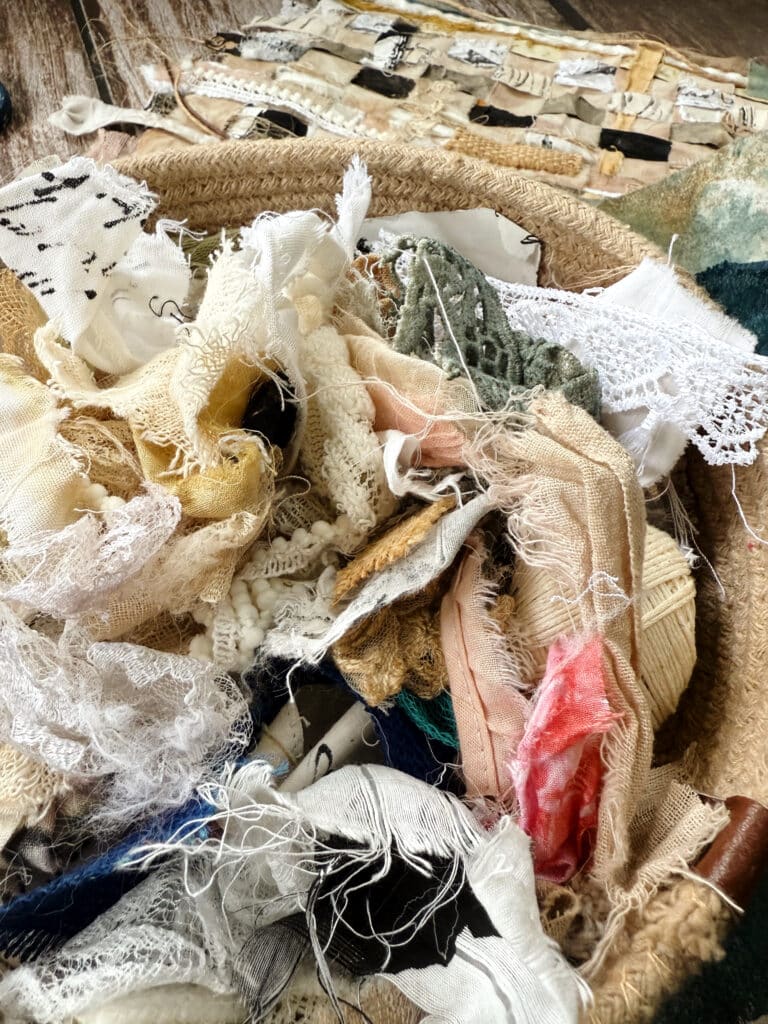
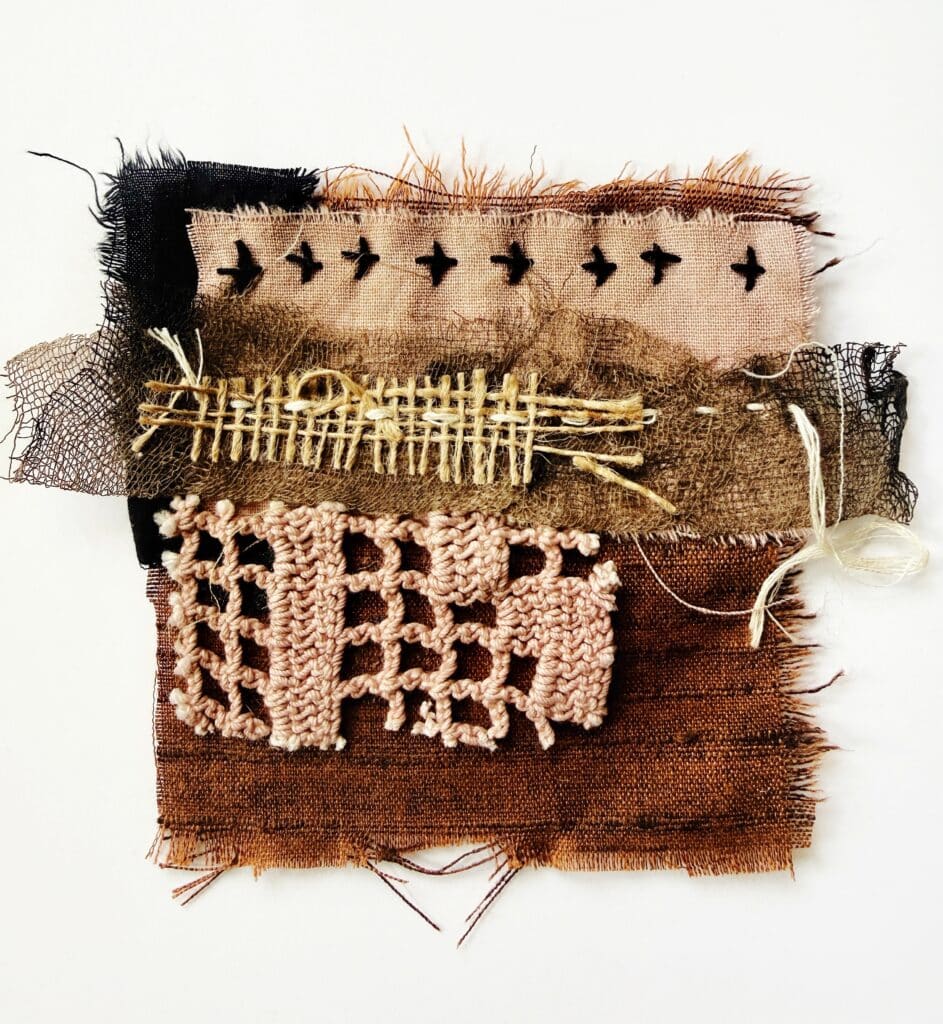
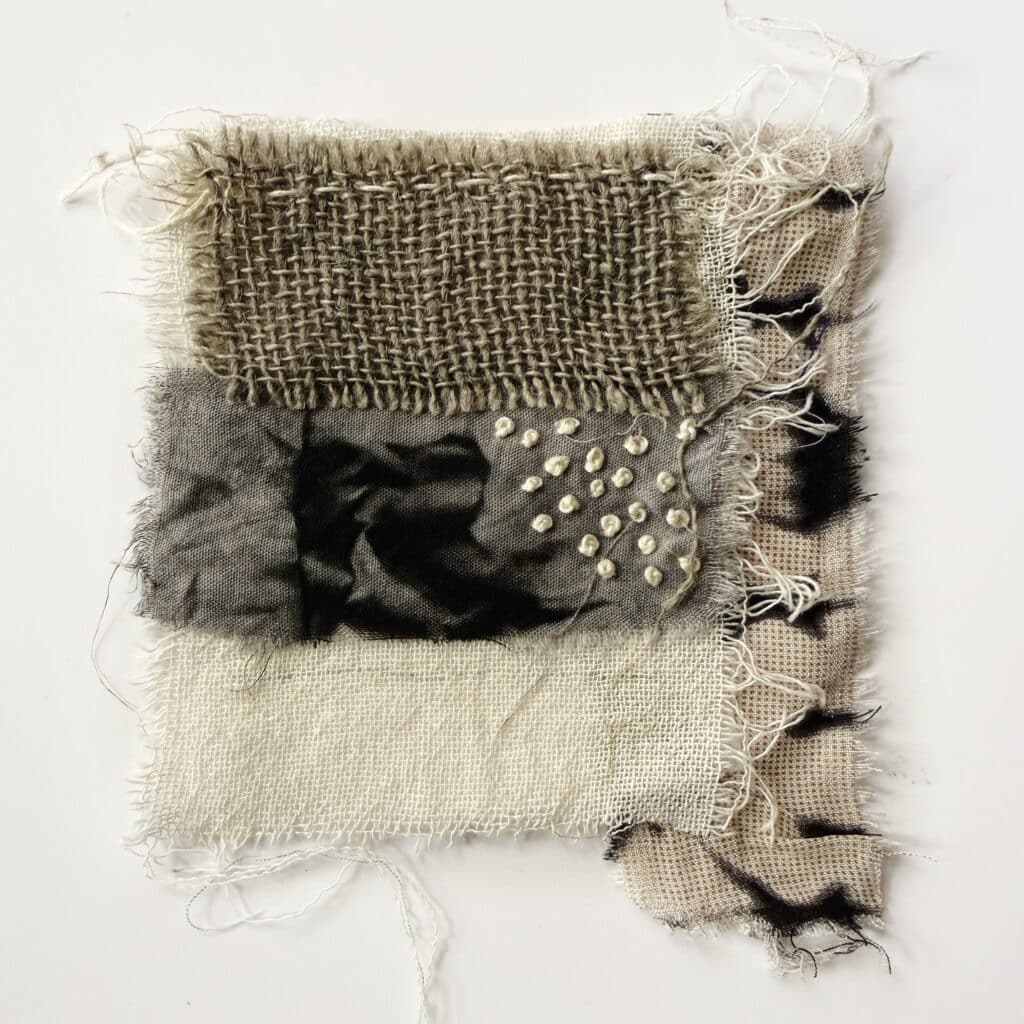
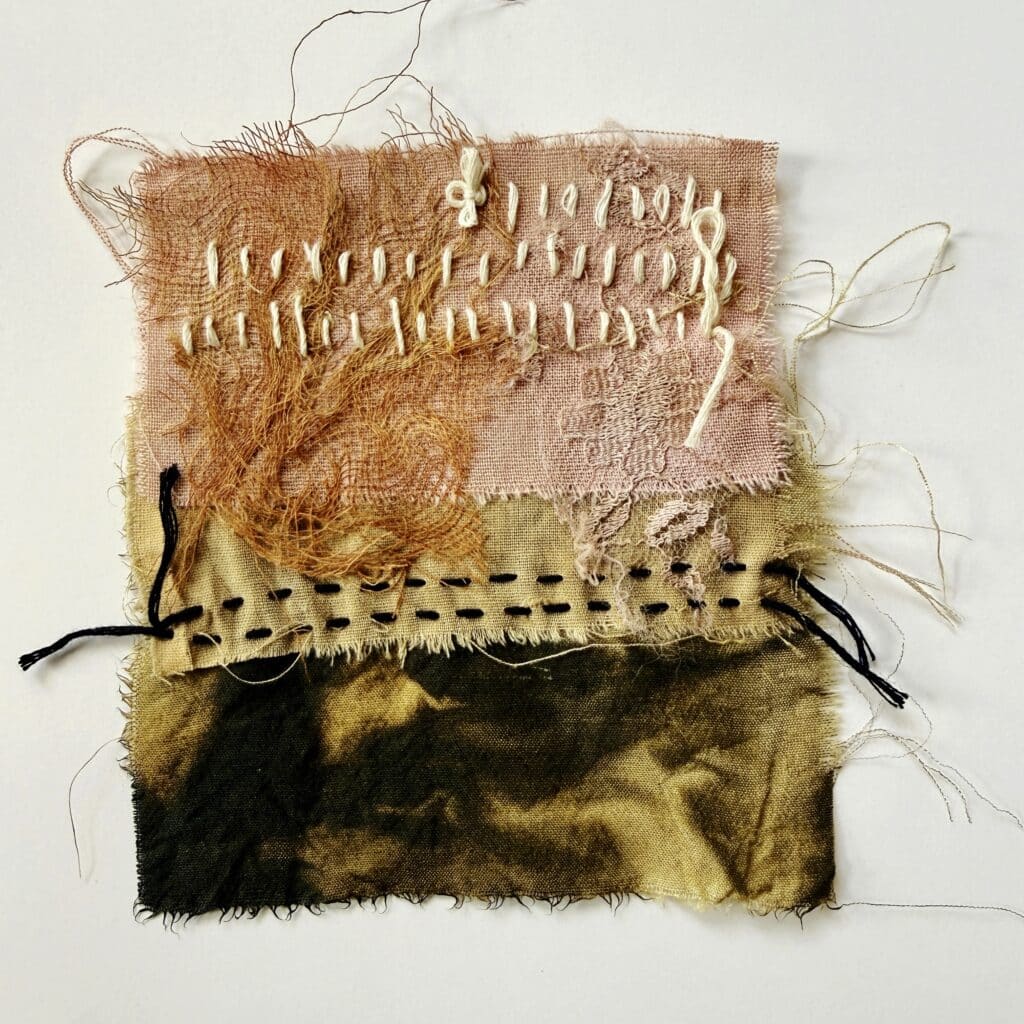
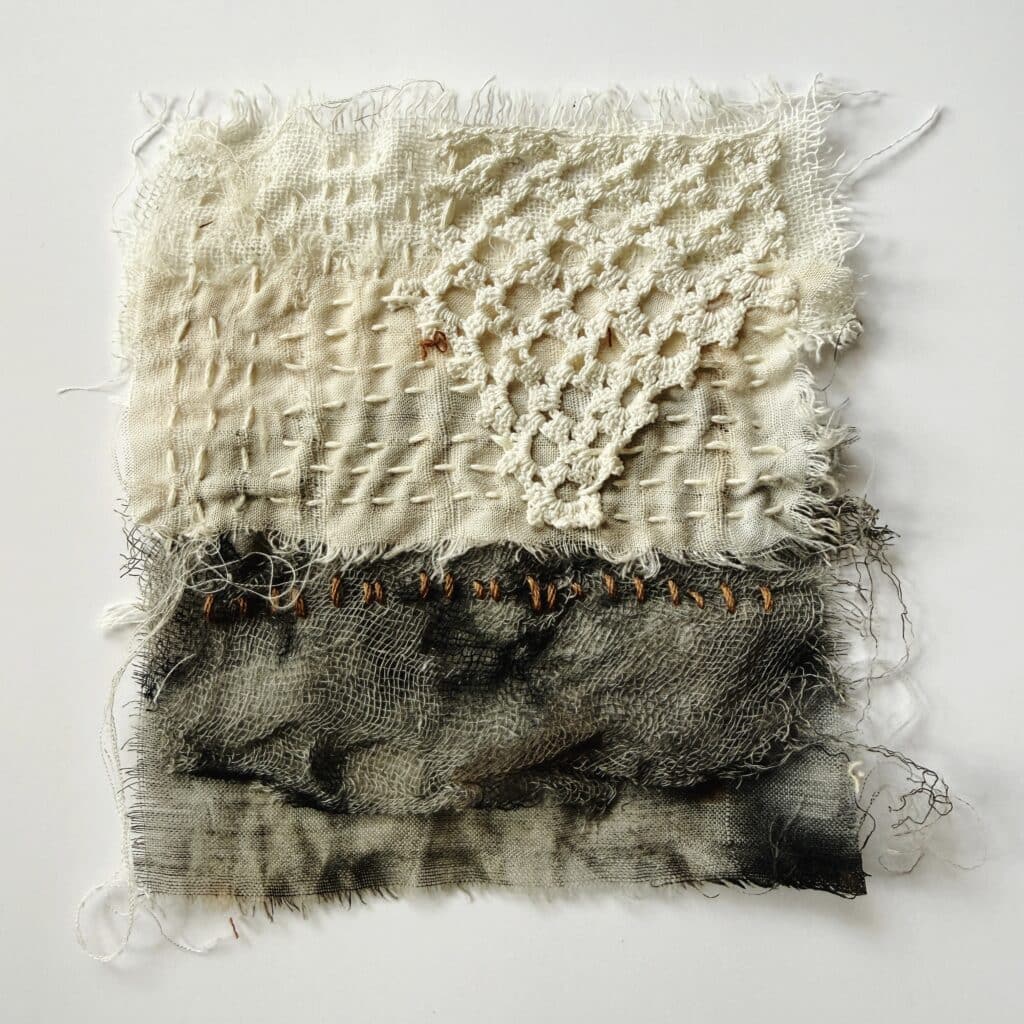
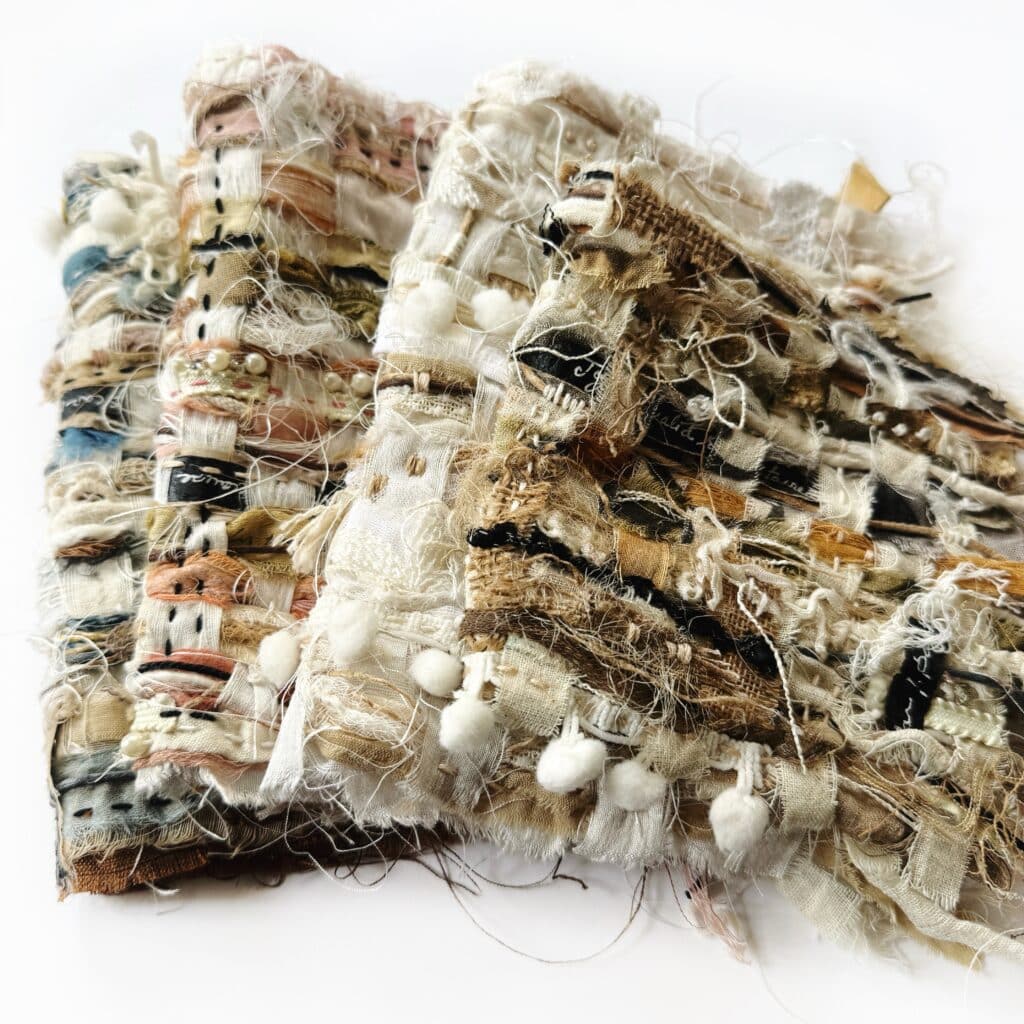
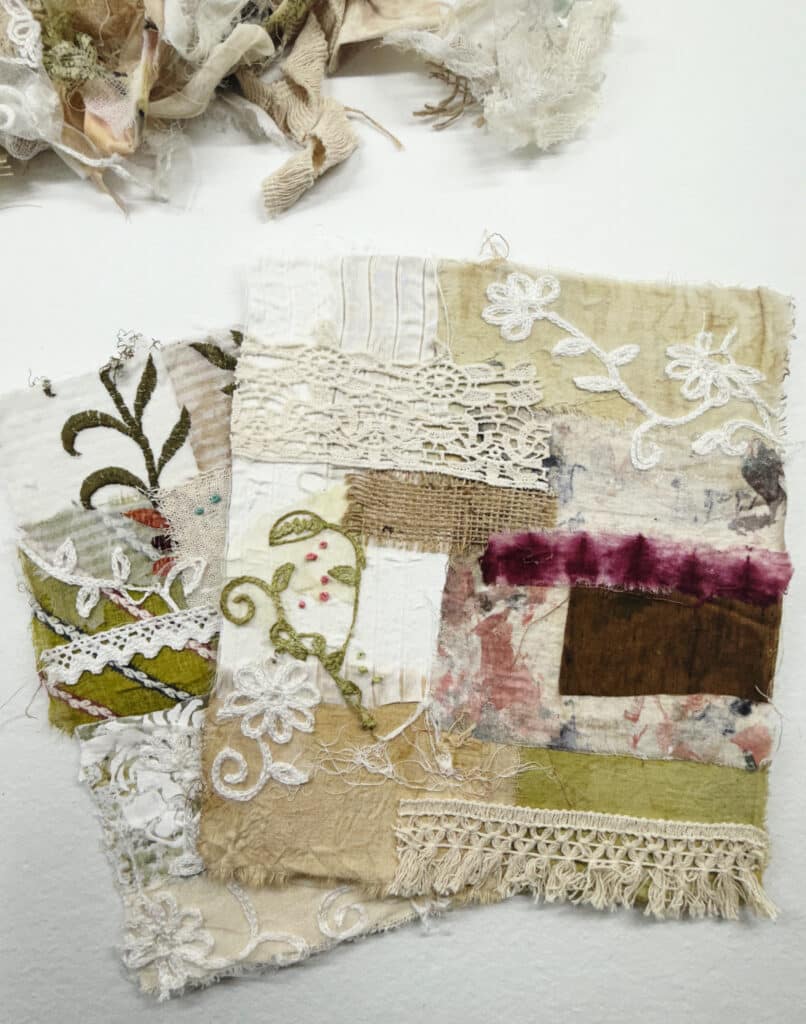
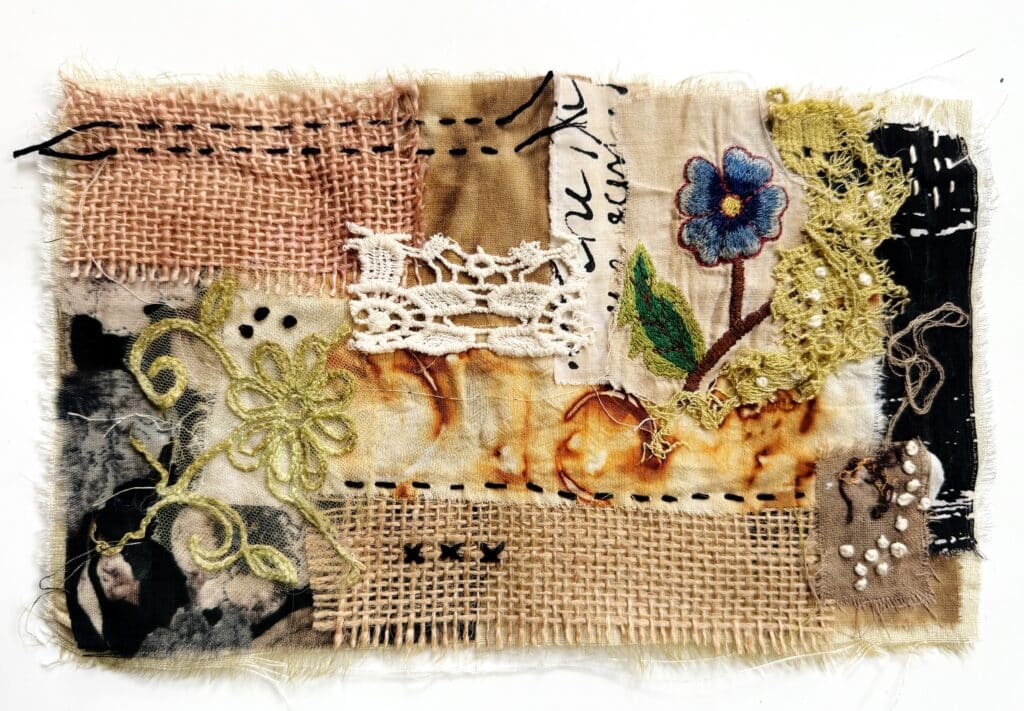
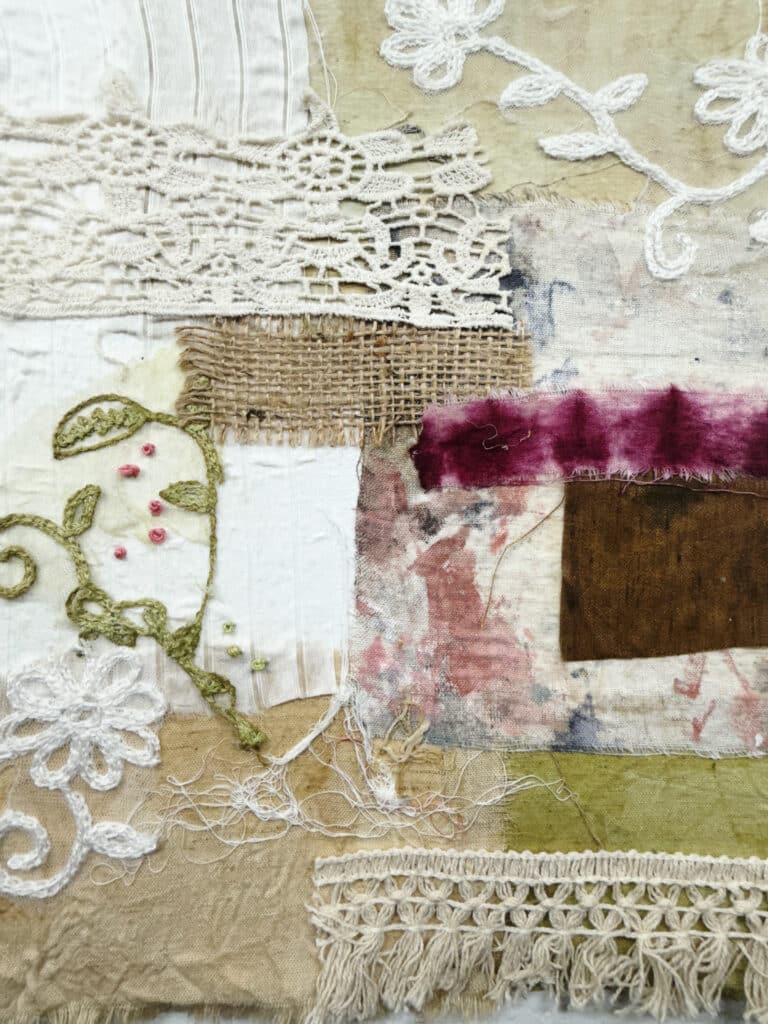
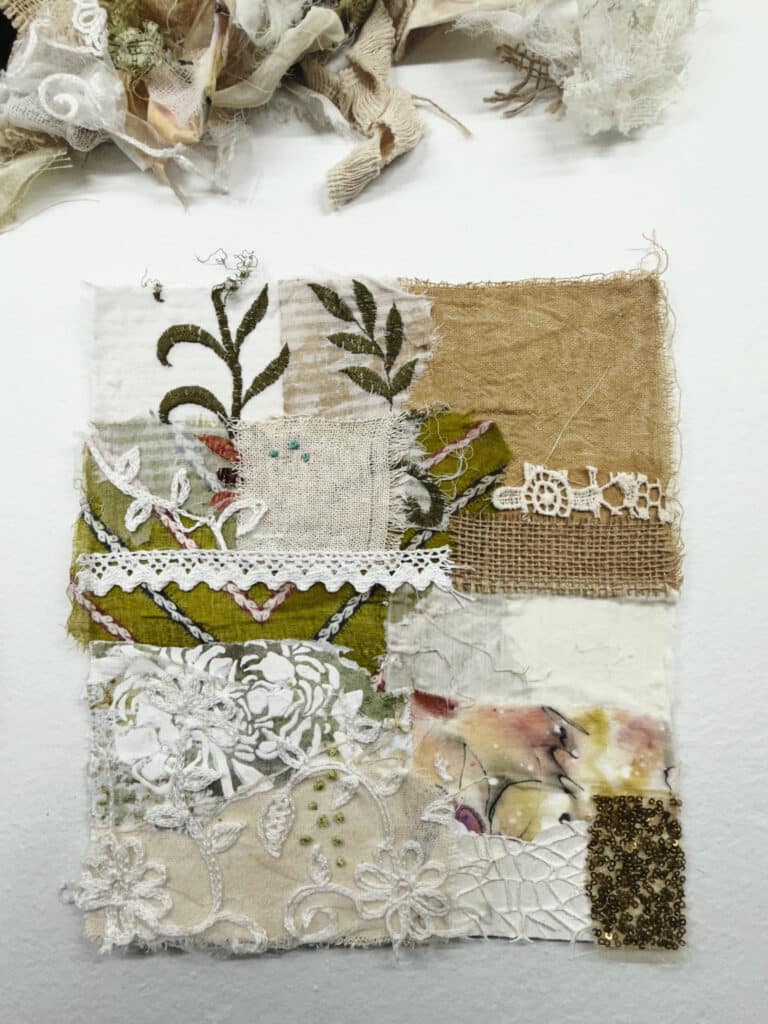

When we think of leftover fabrics, we often think waste.
But in truth, those small fragments carry texture, memory, softness, and history. This is where fabric collage ideas begin — not in perfection, but in pieces.
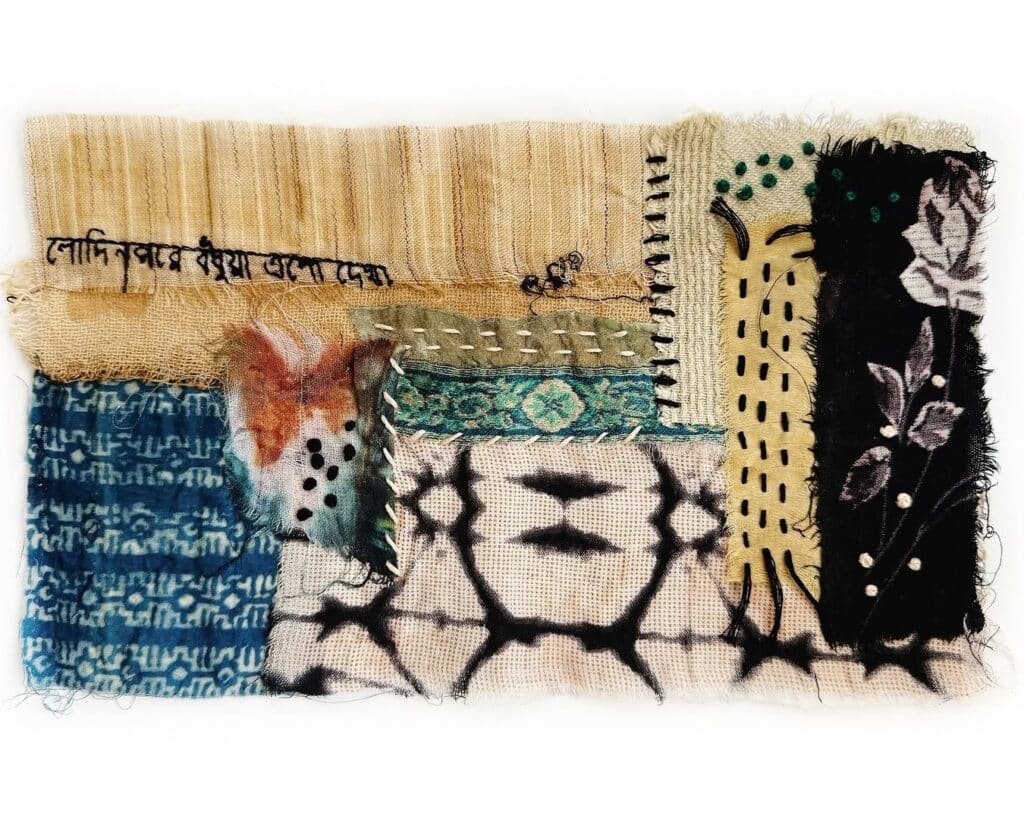
Textile collage art allows you to build surfaces slowly, intuitively, and without rules. You layer, stitch, overlap, and respond to what feels right.
It’s not about symmetry. It’s about presence.
Whether you are new to collage art or already exploring mixed media fabric collage, this process invites you to trust your hands & intuition.
So instead of discarding scraps, what if you saw them as beginnings?
15+ Fabric Collage Ideas to Inspire Your Next Piece
Below are creative directions you can explore. Each one can become small textile art — framed, mounted, stitched into a book, or simply kept as a tactile exploration.
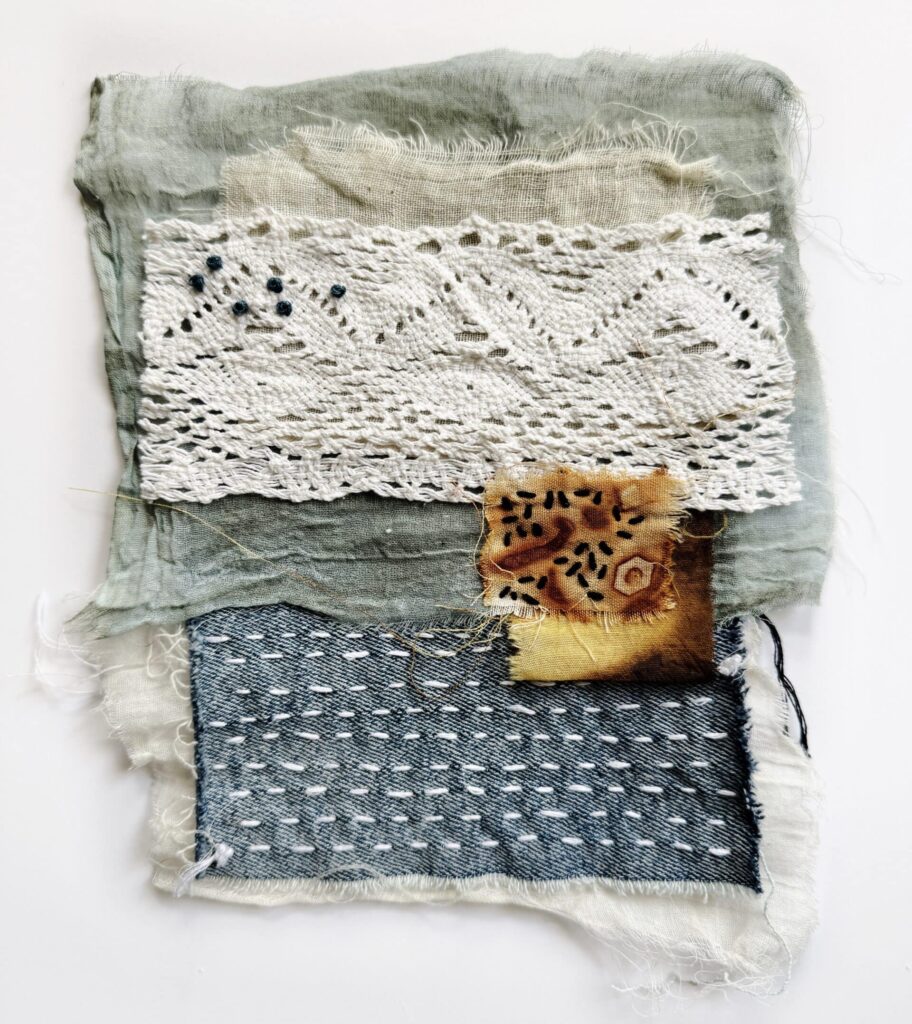
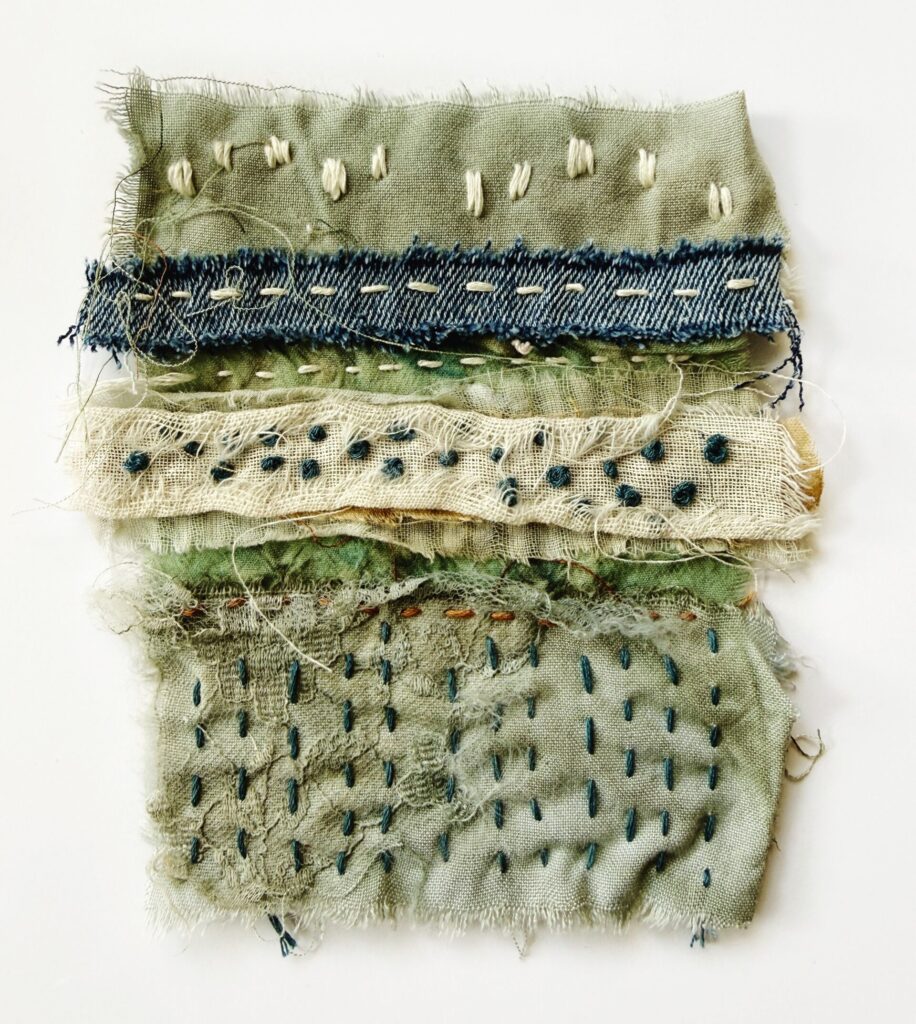
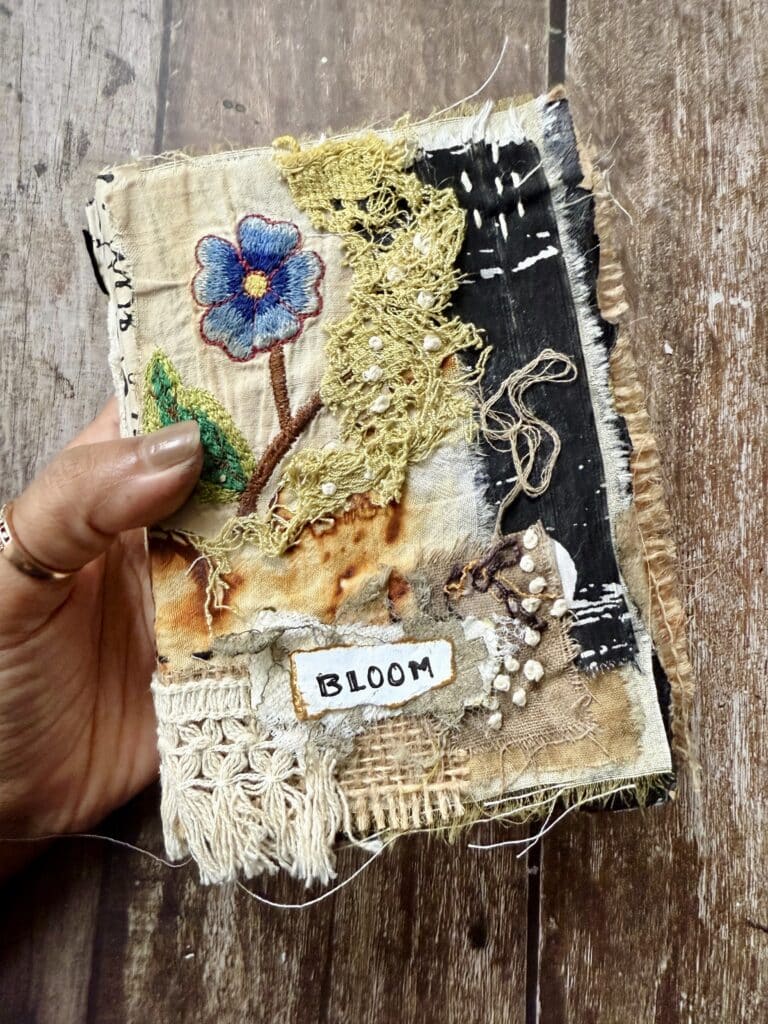
1–7: Abstract Layered Textures
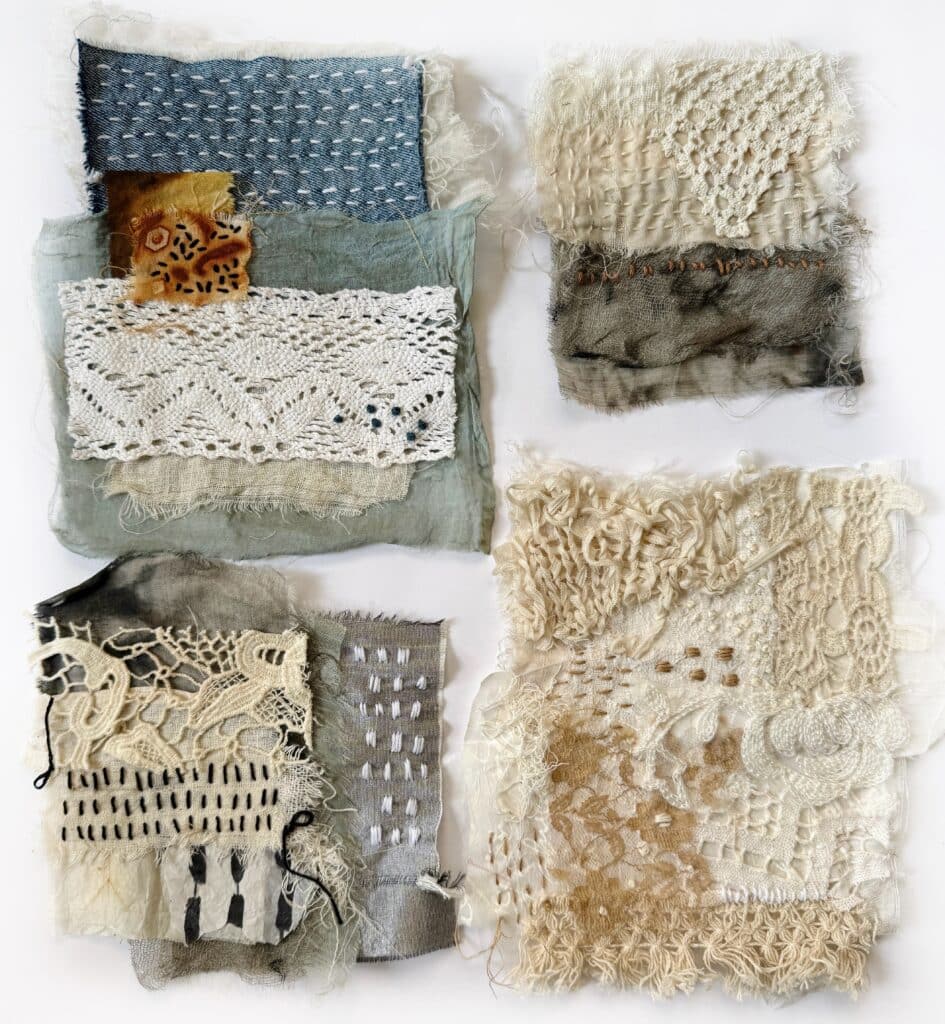
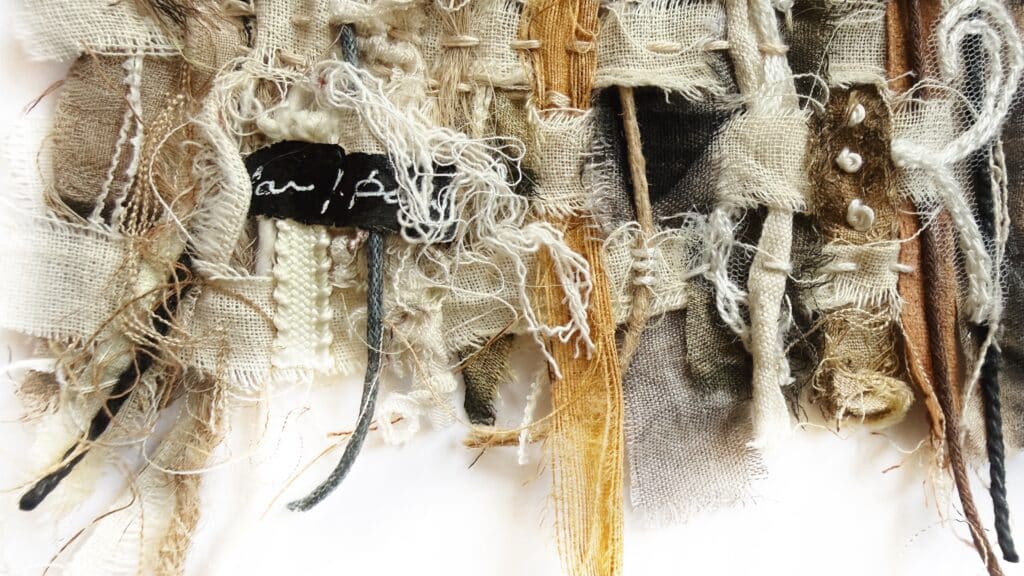
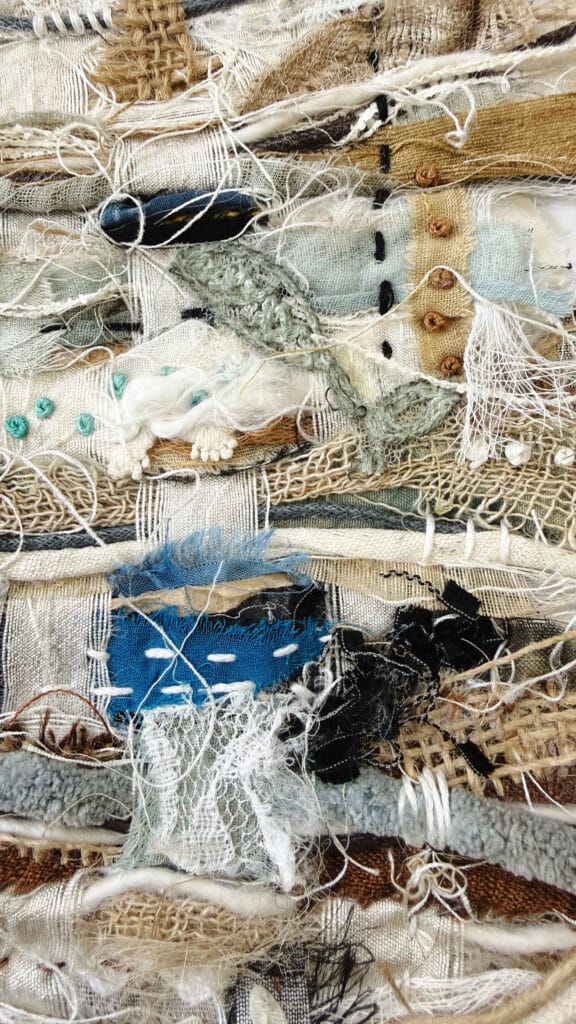
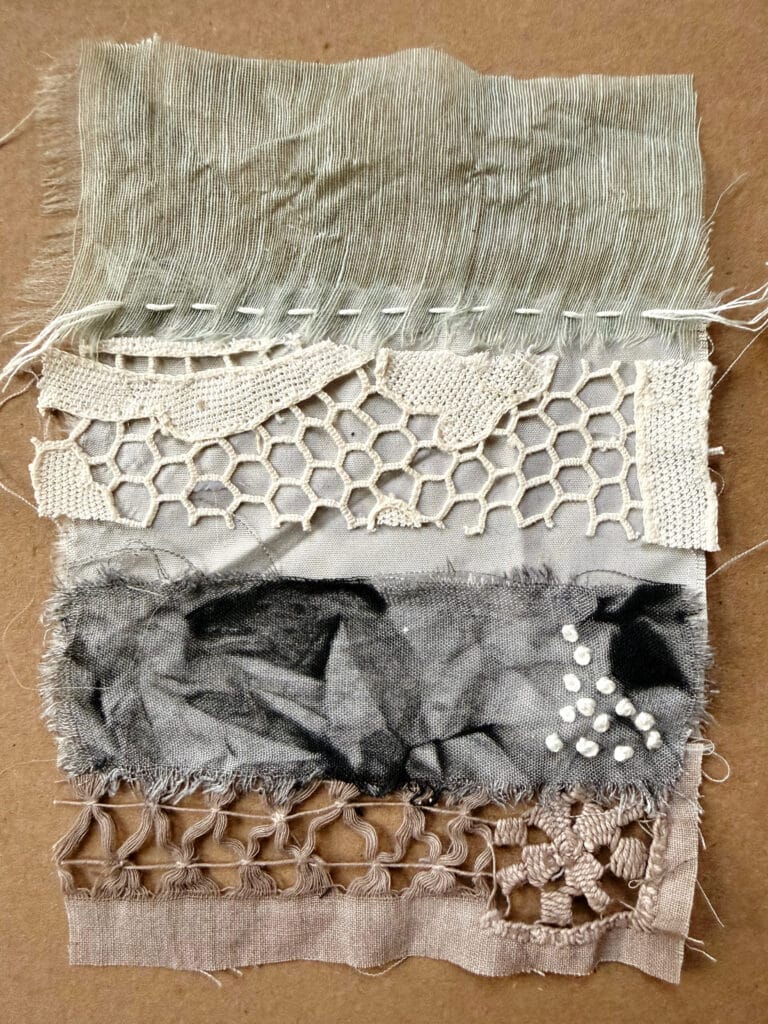
Build raw compositions using torn cotton, linen, muslin, and gauze. Focus on:
Raw edges
Overlapping shapes
Visible stitching
These fabric collage ideas work beautifully for expressive, non-representational pieces.
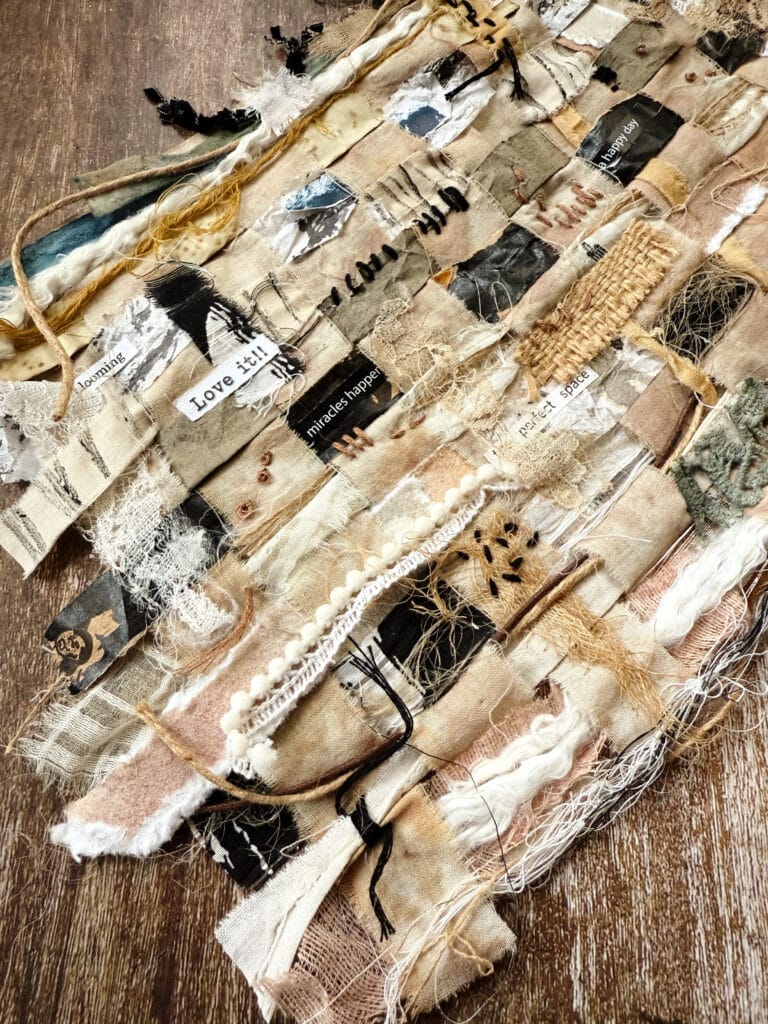
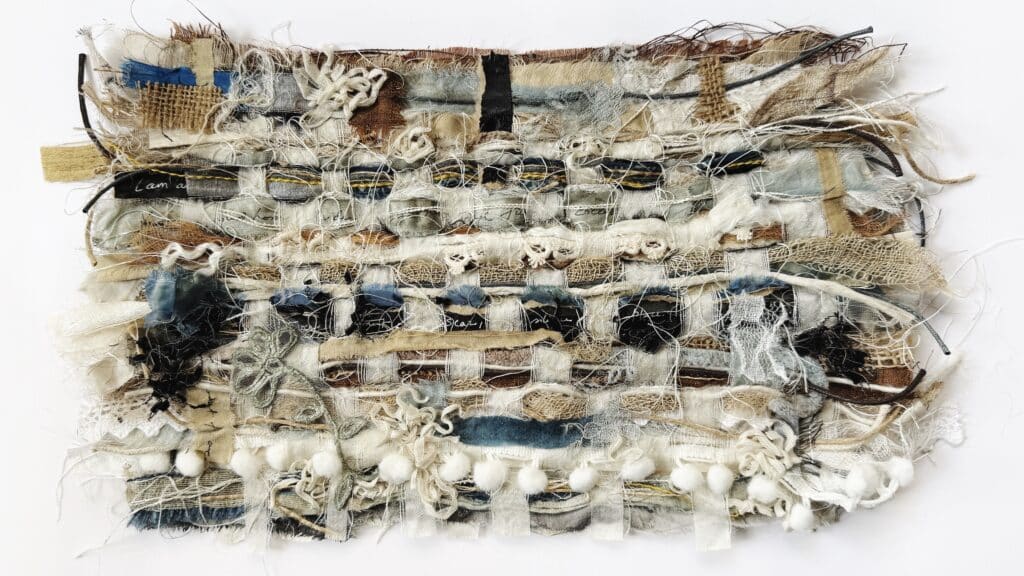
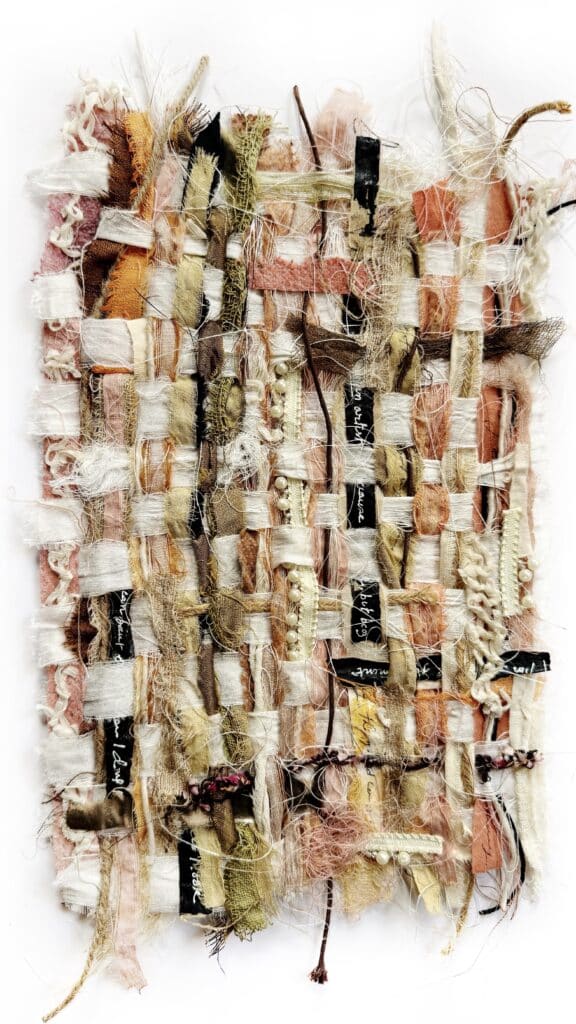
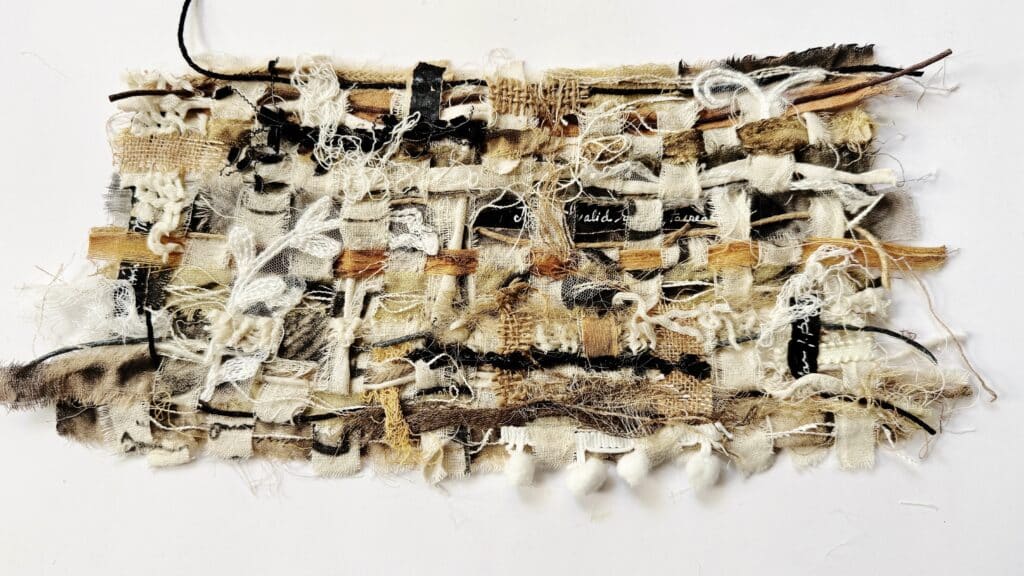
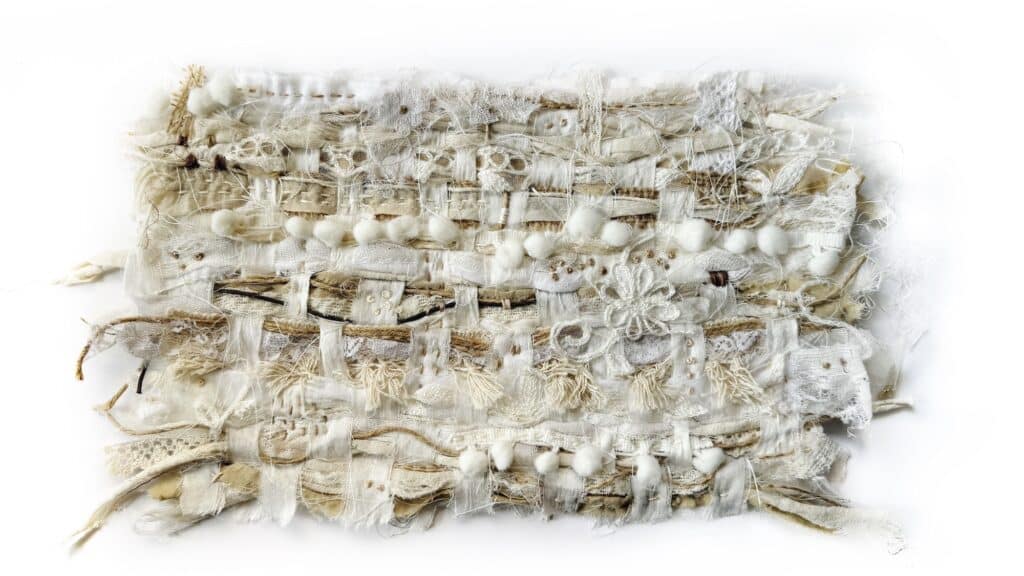
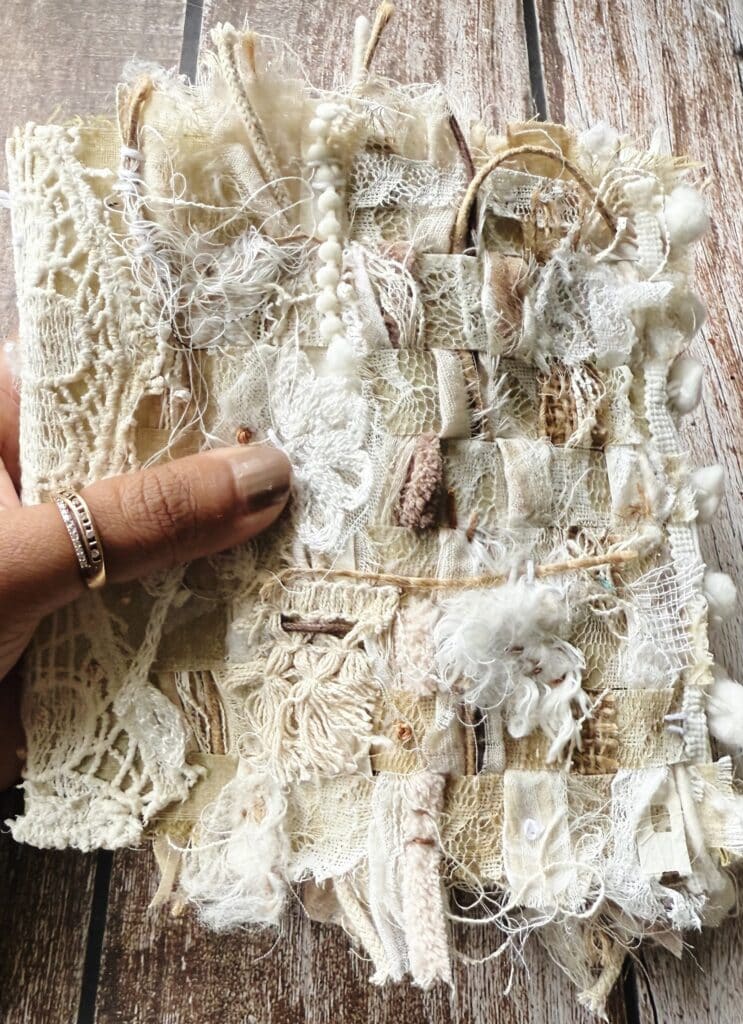
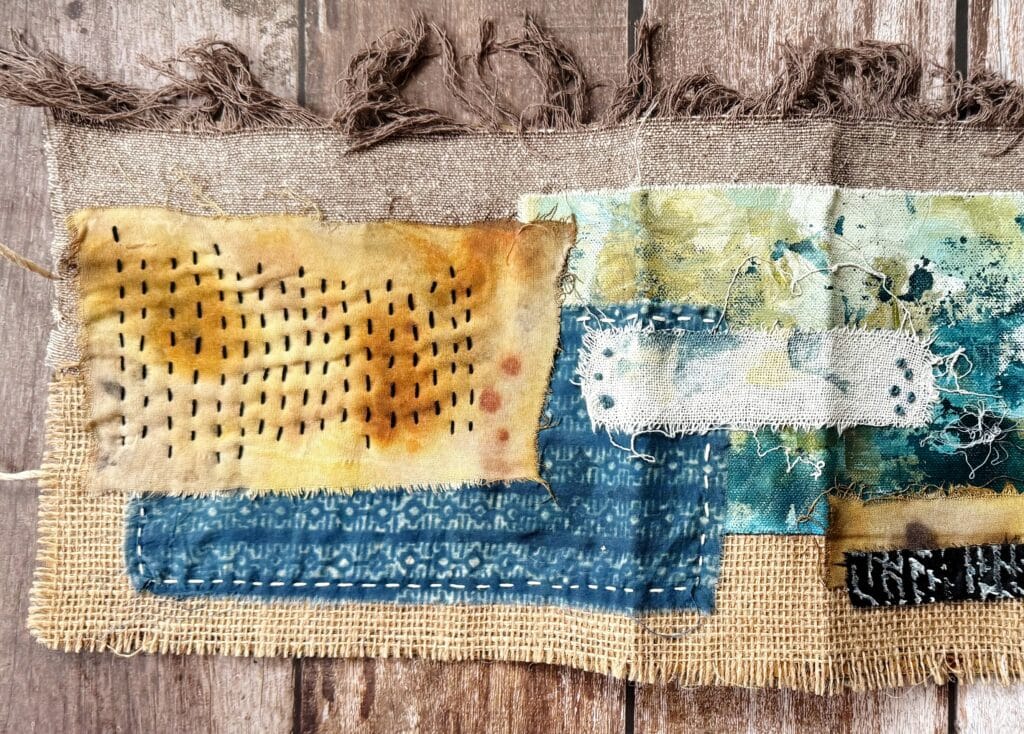
8-11: Woven Fabric Collage Pieces
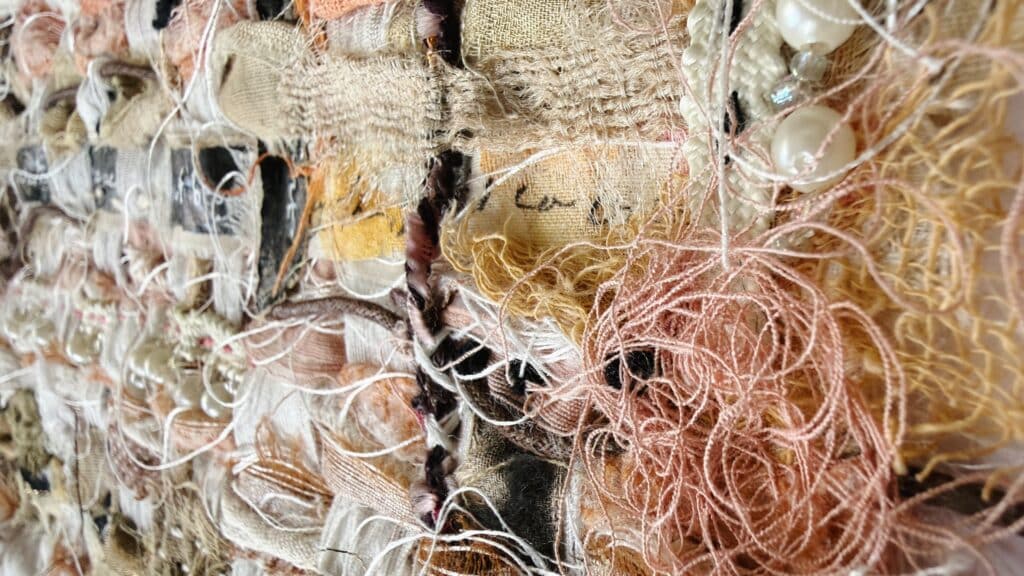
One of the most satisfying ways to explore fabric collage ideas is through weaving.
Instead of simply layering scraps on top of each other, you interlace them — over, under, over, under — creating a surface that feels architectural and tactile.
These woven compositions bring a beautiful shift in rhythm within your textile collage art practice.
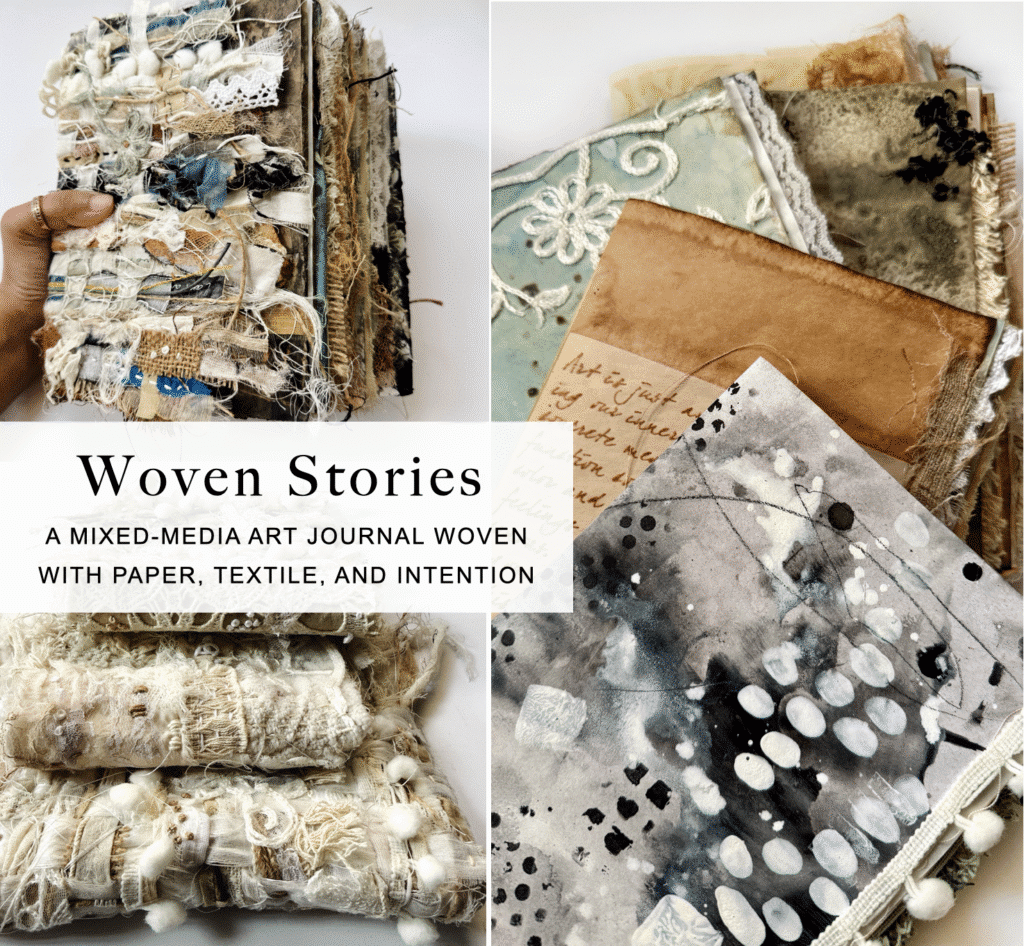
Learn to Create Woven Fabric Covers
In my class Woven Stories, we go beyond surface exploration and turn woven textile pieces into fully finished artist books.
The process brings together textile collage art, intuitive mark-making, and bookmaking into one cohesive experience.
If you’re curious about transforming your woven fabric collage work into a functional, tactile artist book, you can explore the class here:
12-14: Botanical-Inspired Textile Collage
Cut leaf-like shapes from dyed fabric scraps. Layer them over neutral backgrounds. Add delicate hand stitches to suggest veins.
This approach blends textile collage ideas with nature-inspired storytelling.
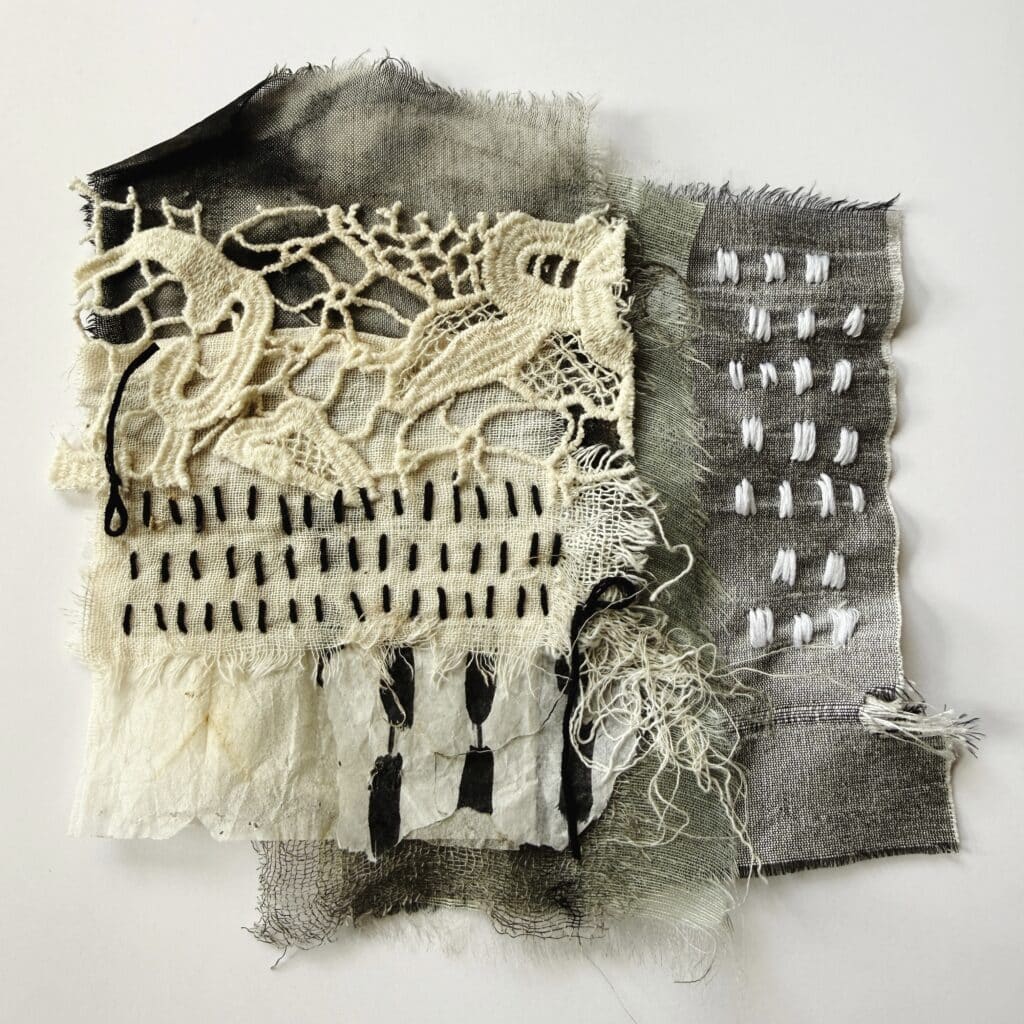
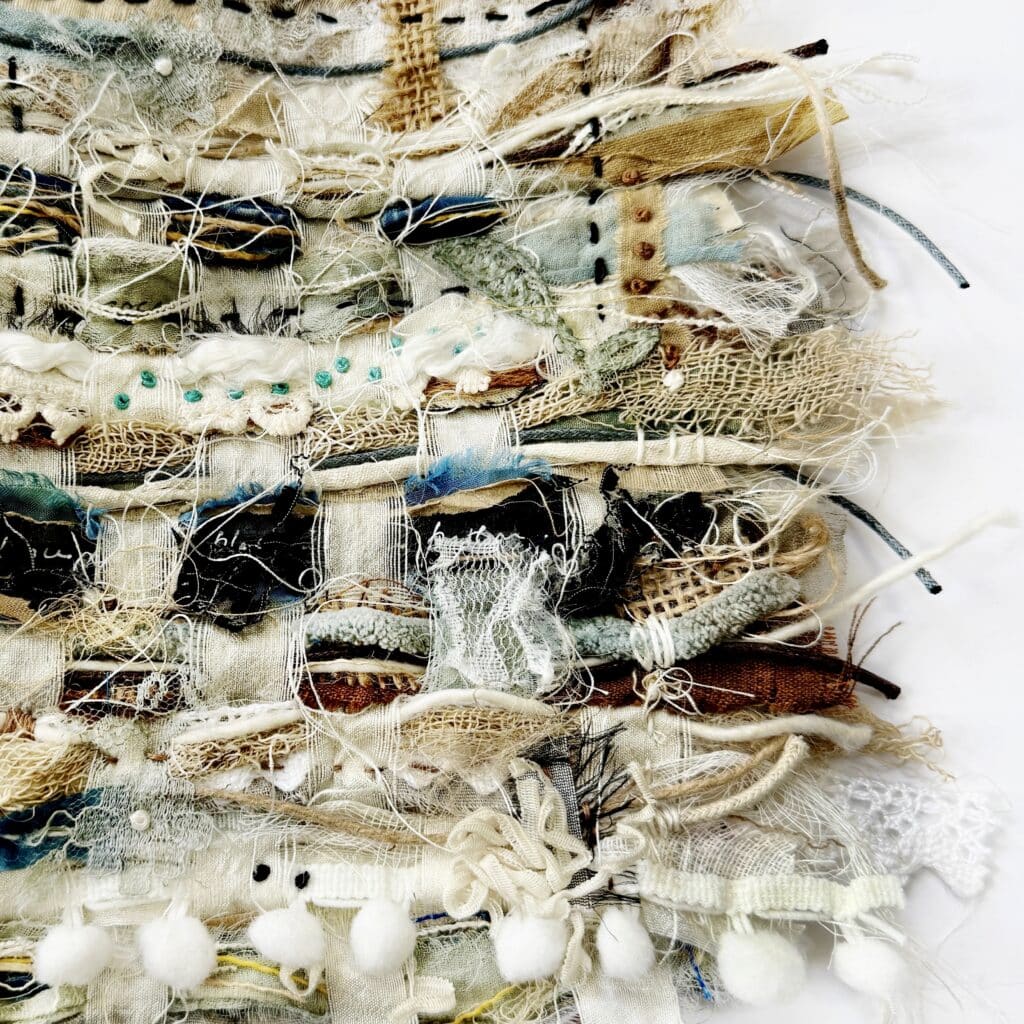
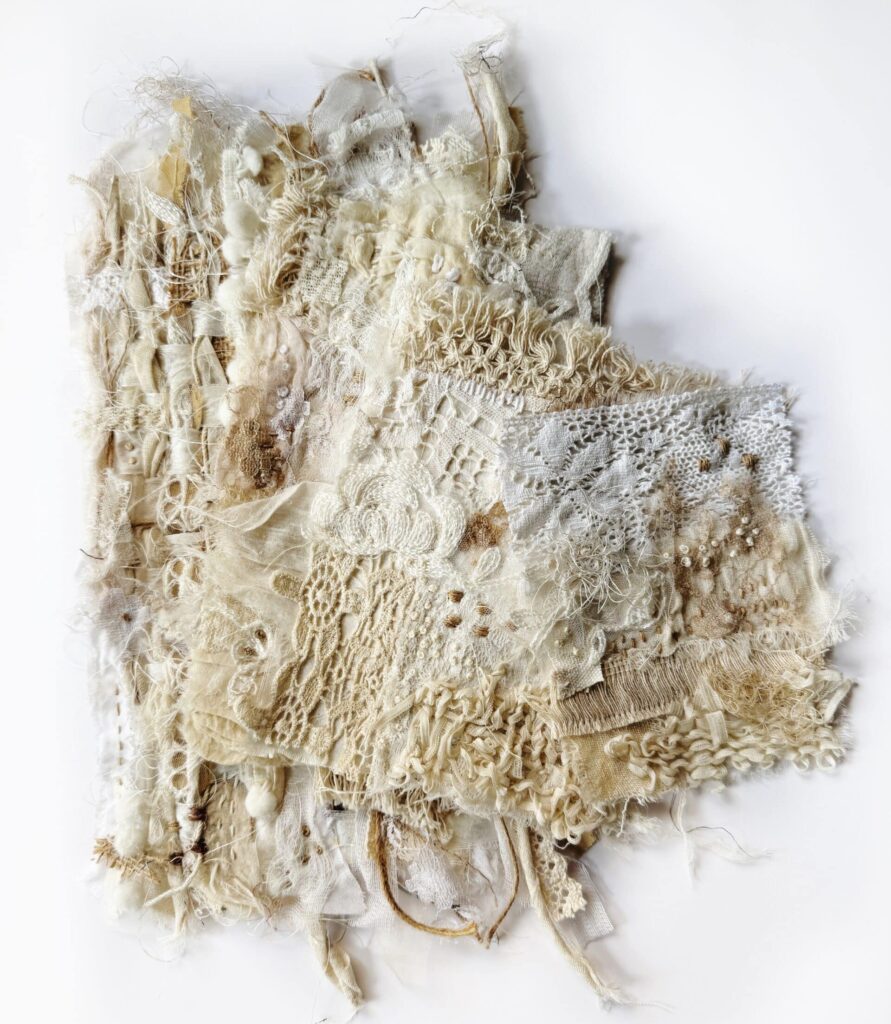
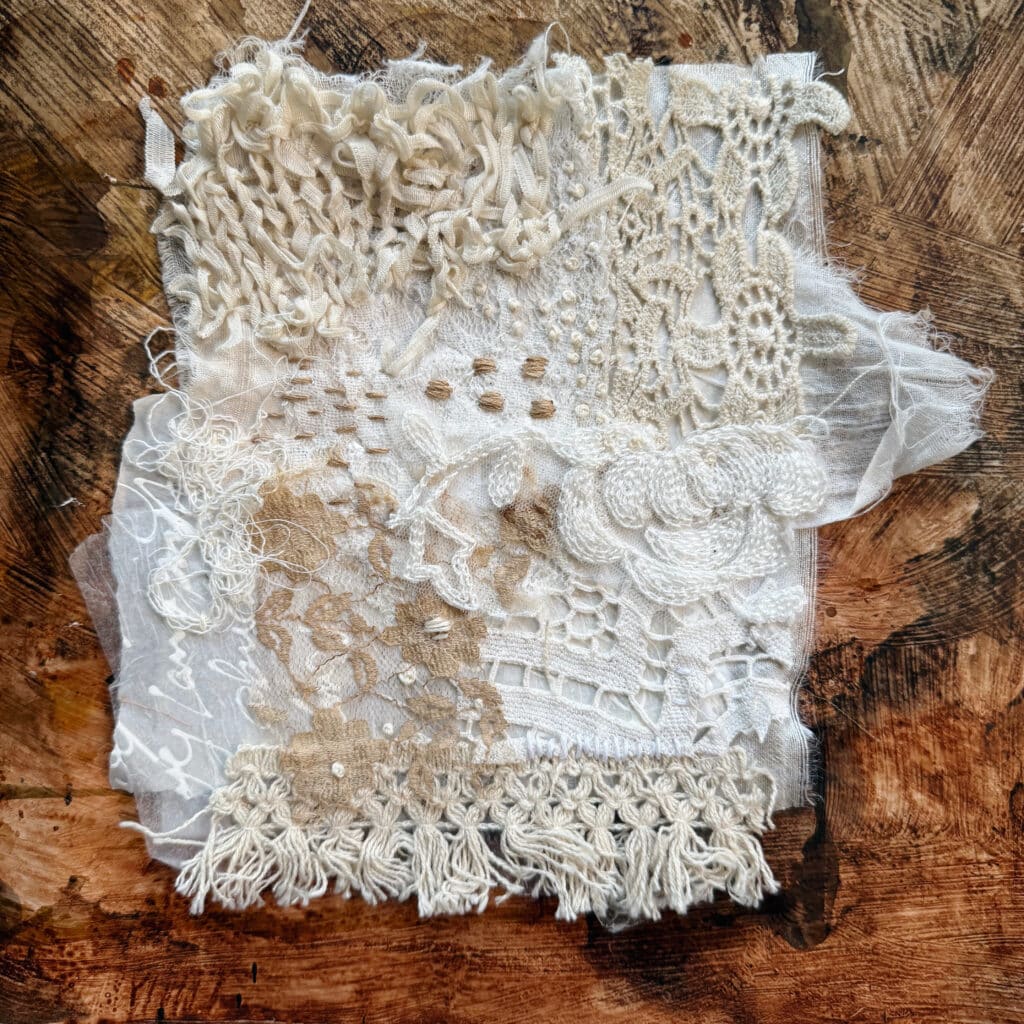
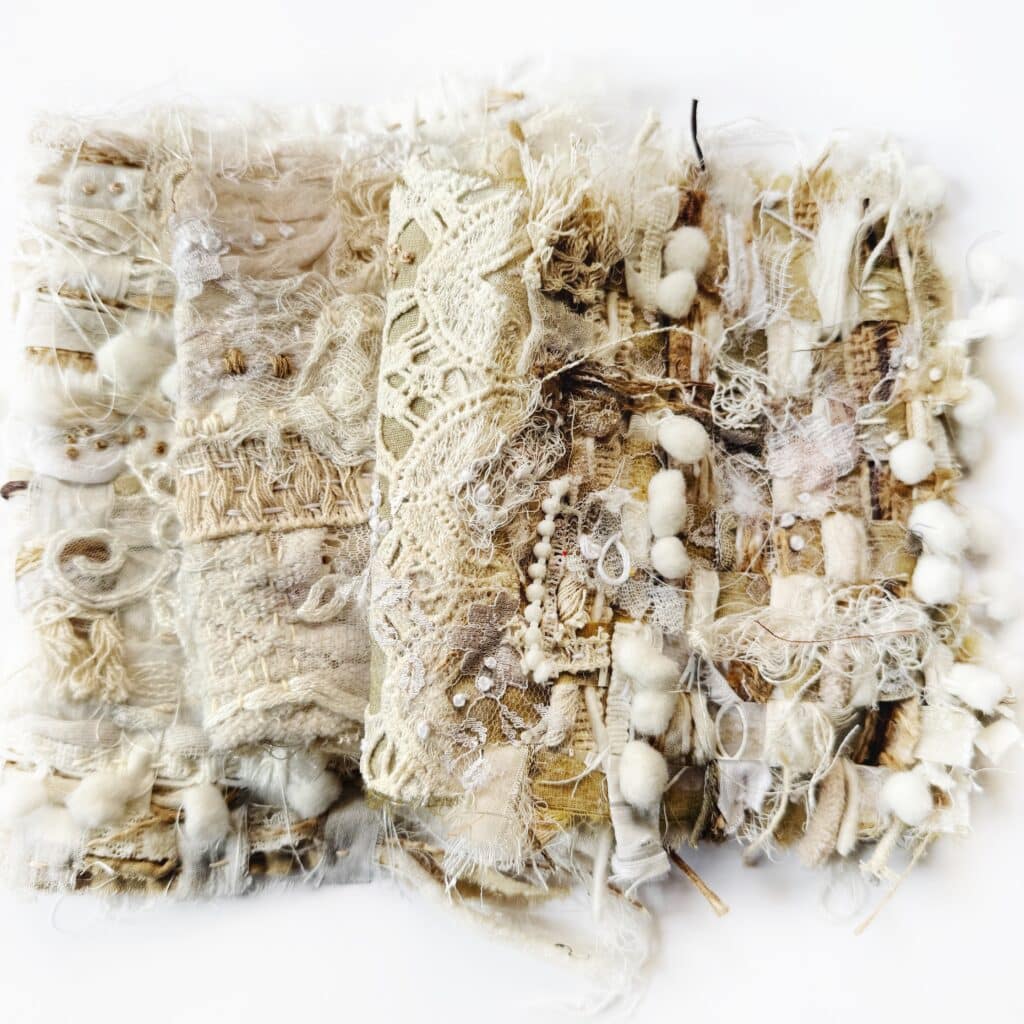
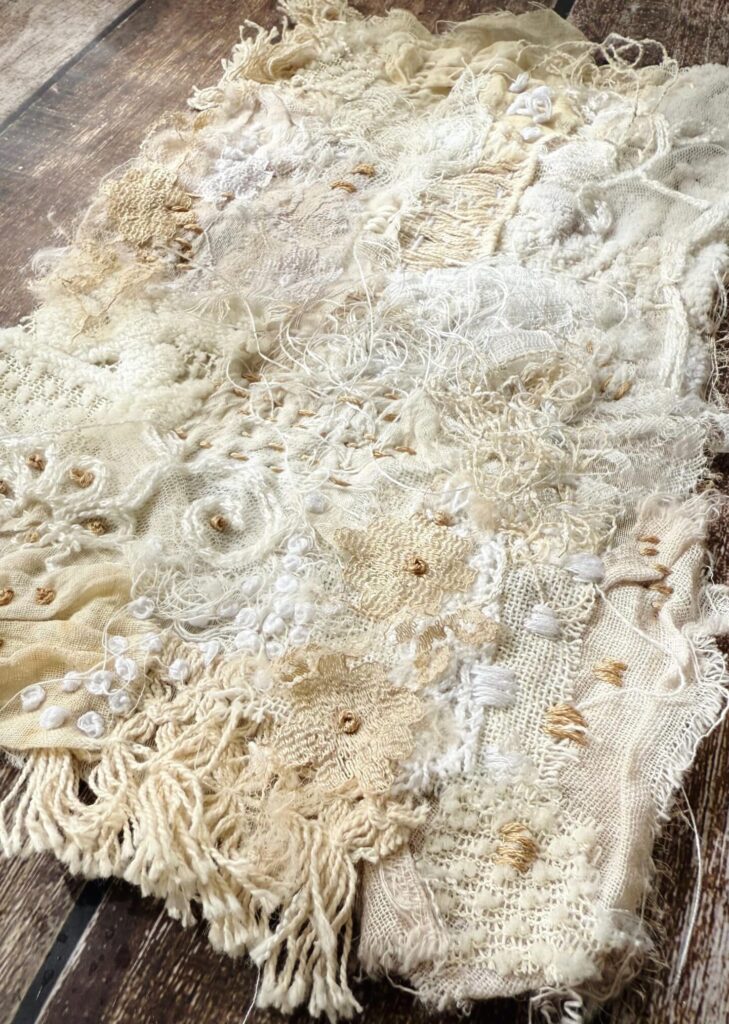
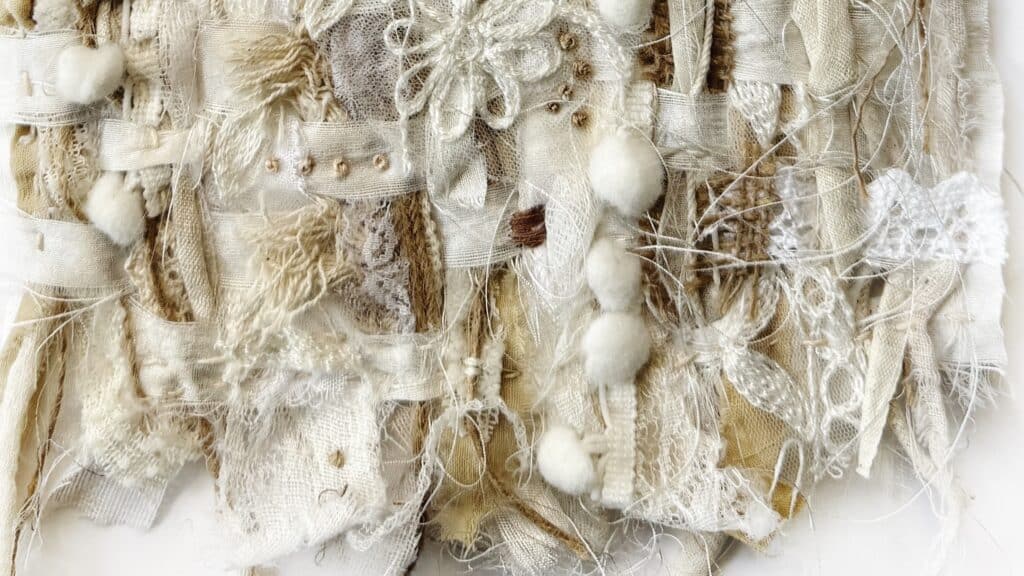
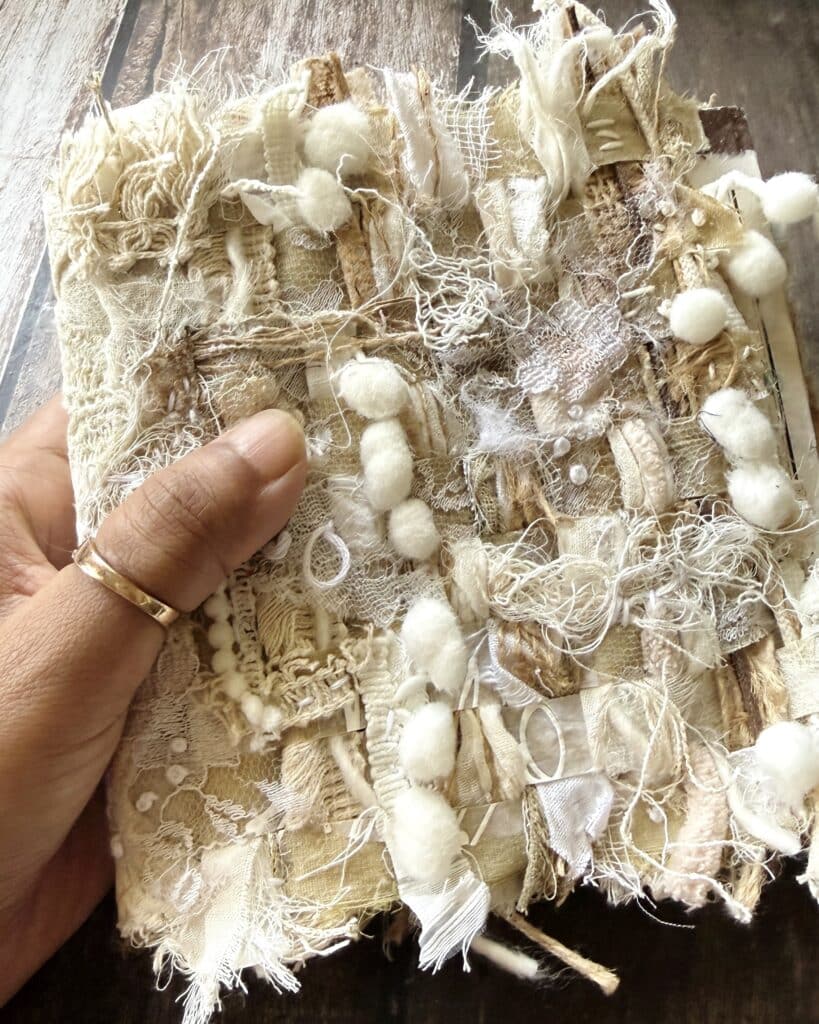
15-18: White-on-White Fabric Collage
Among all fabric collage ideas, working in white-on-white is one of the most powerful exercises in subtlety.
When color is removed, what remains?
- Texture.
- Shadow.
- Layer.
- Stitch.
These pieces shift attention away from pattern and toward surface. They invite the viewer to look closely — to notice raised edges, overlapping muslin, soft lace, raw gauze, and delicate thread marks.
This is where textile collage art becomes quiet but deeply expressive.
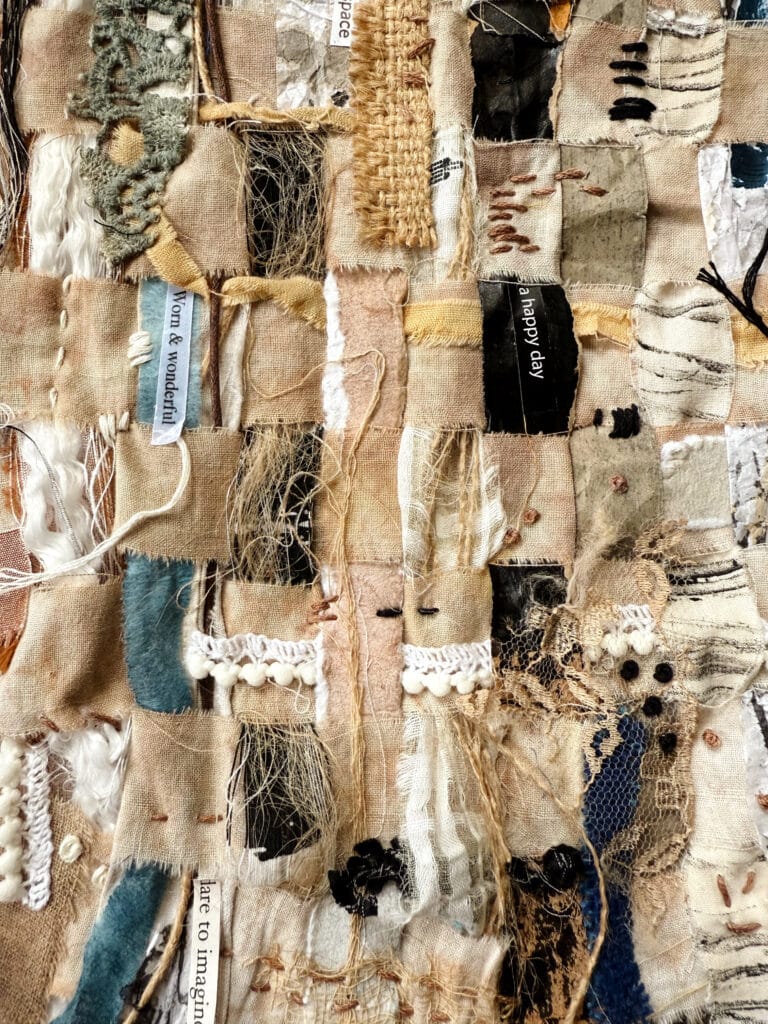
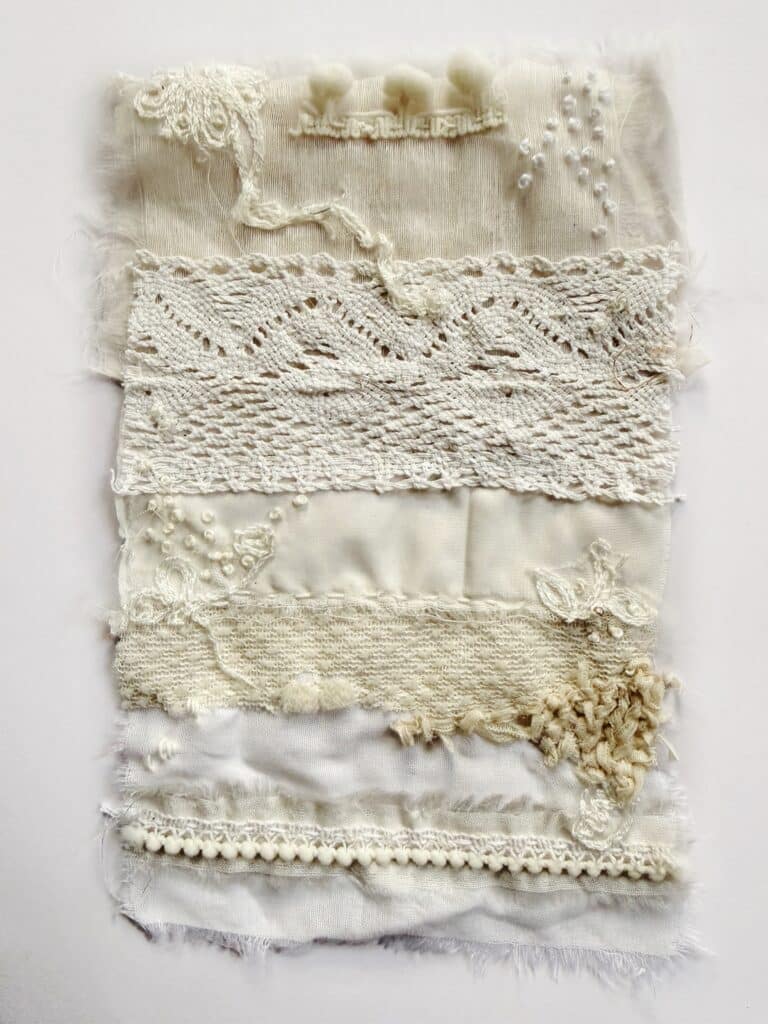
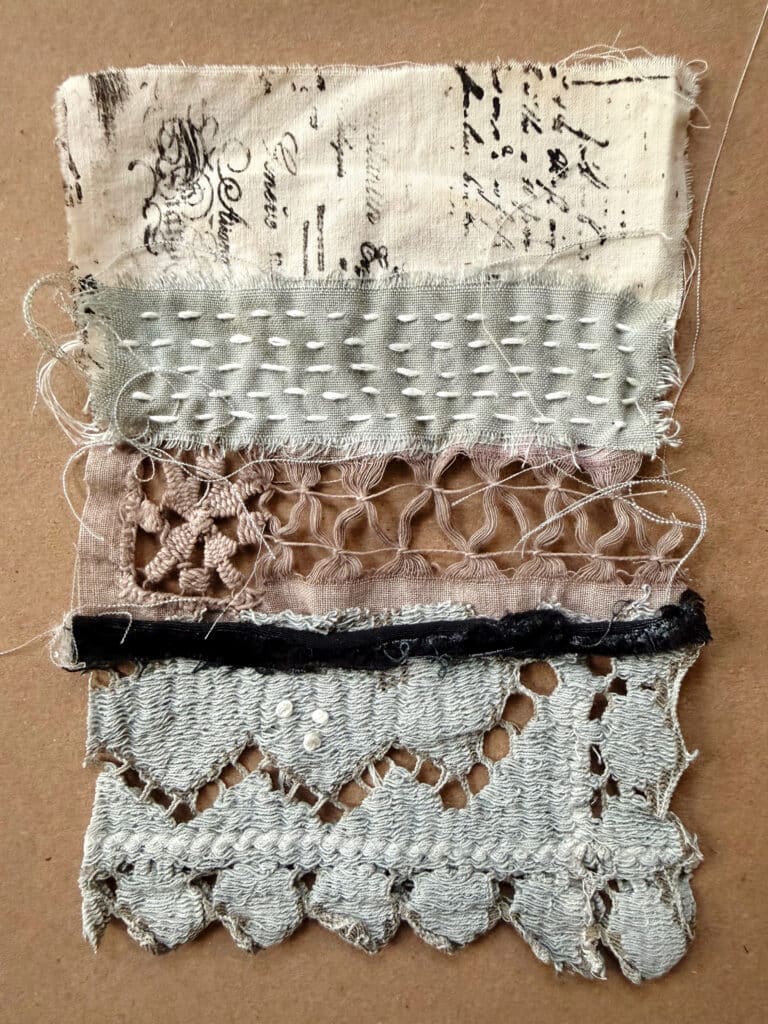
19-21: Grid-Like Fabric Collage Ideas
Another powerful direction within your fabric collage ideas is working in a structured, grid-like layout.
Instead of allowing the scraps to overlap freely, you divide the surface into sections — squares, rectangles, or uneven blocks — and place fabric fragments intentionally within each space.
This approach brings quiet order to expressive materials.
A grid gives rhythm and visual pause. Each section becomes its own moment, yet together they form a cohesive whole.
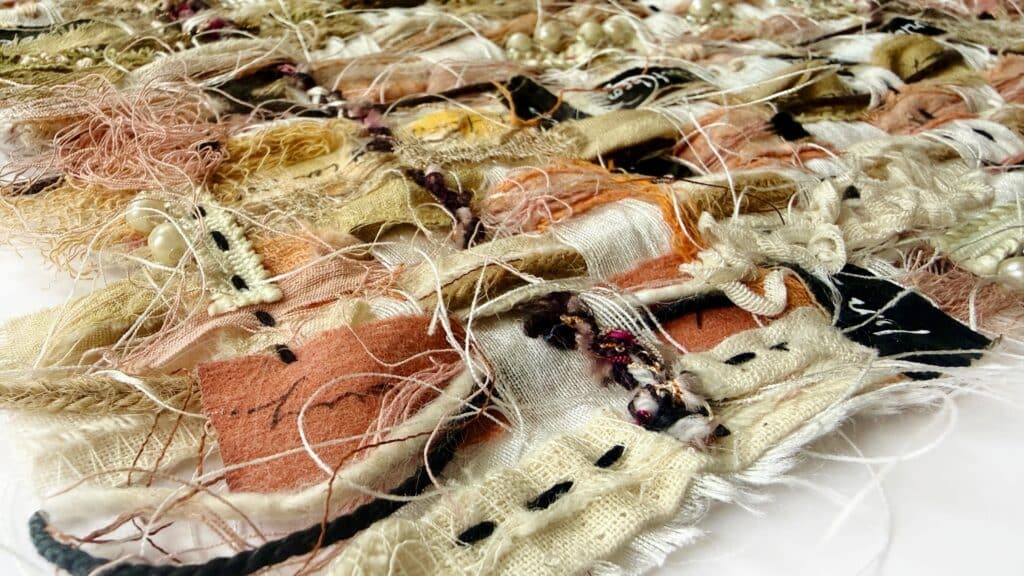
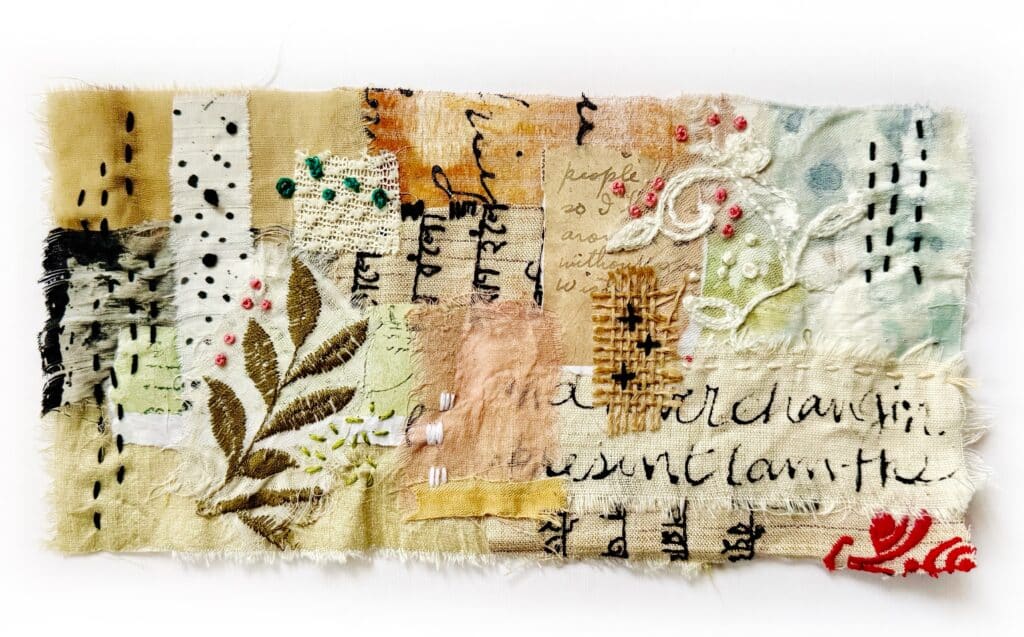
Mixed Media Fabric Collage Explorations
Introduce:
- Paper fragments
- Vintage book pages
- Light acrylic washes
- Embroidery thread
This expands your practice into mixed media fabric collage, creating depth and contrast between soft and rigid surfaces.
You can keep each piece small — 4×4 inches, 6×6 inches — turning them into intimate small textile art works.
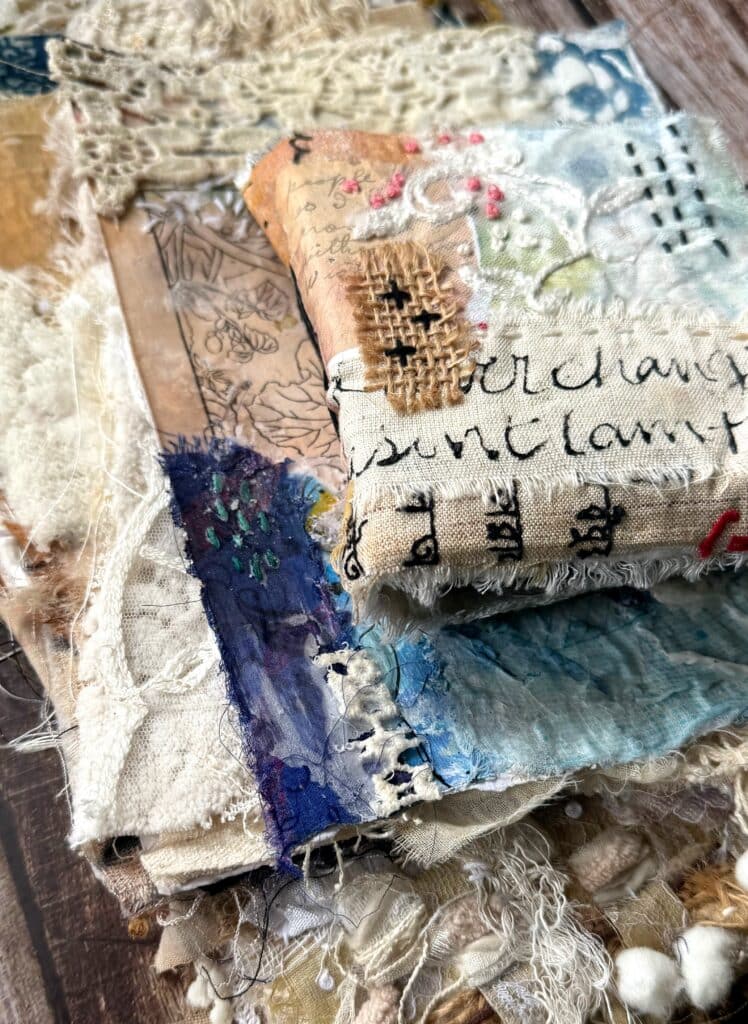
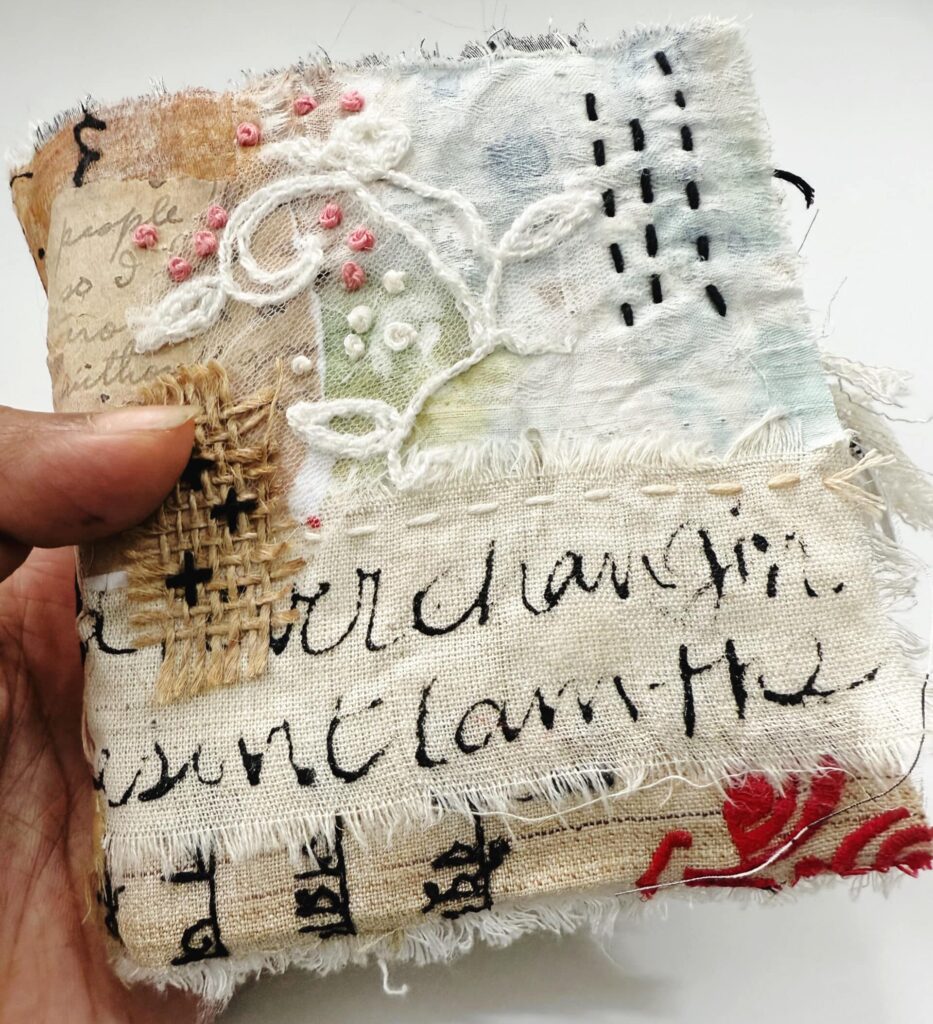
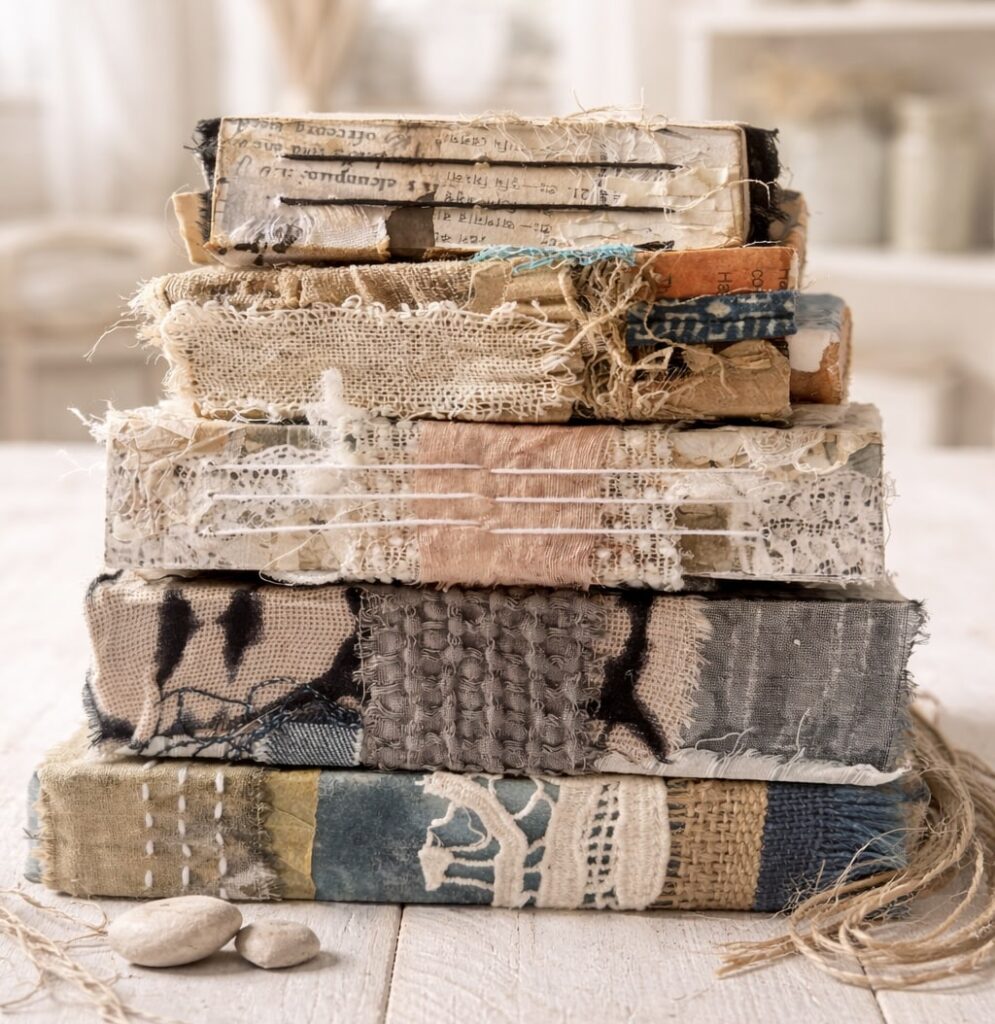
Using Fabric Collages as Art Journal Covers
Many of these fabric collage ideas naturally lend themselves to becoming art journal covers.
Because the pieces are already layered, stitched, and textured, they can be mounted onto a hardcover journal, wrapped around a handmade book, or stitched directly onto a fabric base.
The tactile quality of textile collage art makes holding the journal feel intimate and personal.
The collage remains art first — and then, if you choose, it becomes a cover.
For artists creating textile art, this is a beautiful way to let your fabric collage pieces live beyond the wall and become something you can hold, use, and return to again and again.
Learn how to use found papers, fabric scraps & discarded boxes, and turn them into beautiful art journals that feels inviting to work in.
How to Make a Fabric Collage (Simple Beginner Method)
If you’re wondering how to make a fabric collage, start here:
Choose a base – Cotton canvas, thick fabric, or stabilised muslin.
Gather scraps – Different textures create interest.
Arrange loosely – Do not glue immediately. Play first.
Secure lightly – Use fabric glue or temporary stitch.
Add stitching – Running stitch works beautifully.
Trim edges – Let some raw threads remain visible.
That’s it.
No complex tools. No expensive materials. Just intuitive layering.
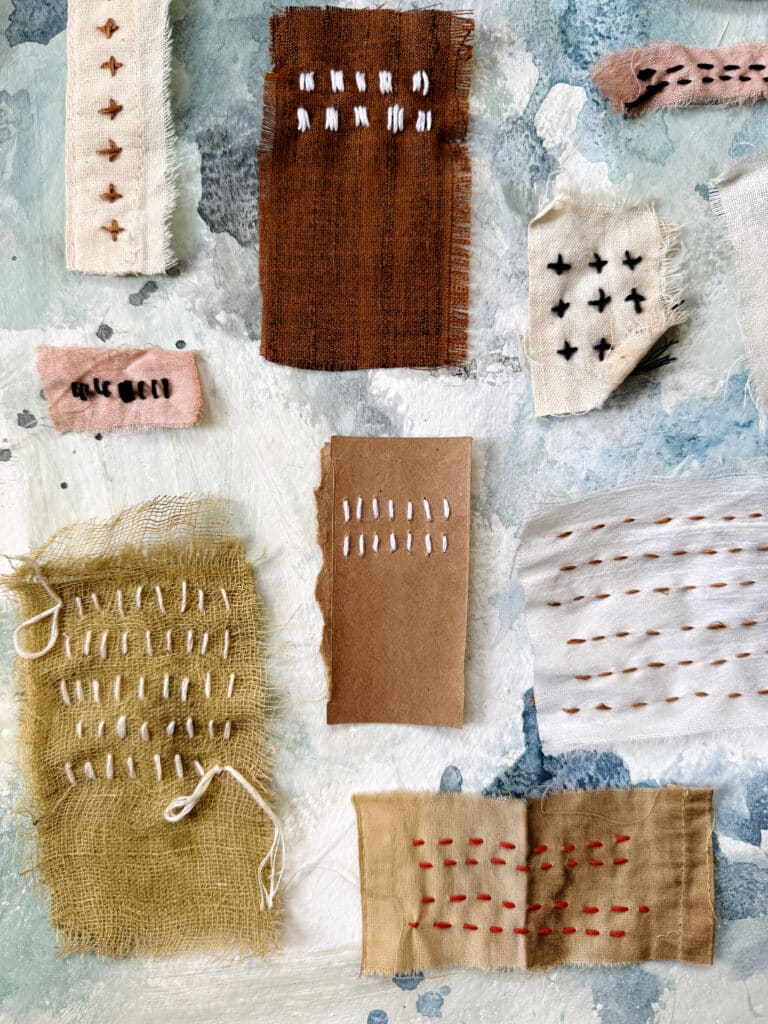
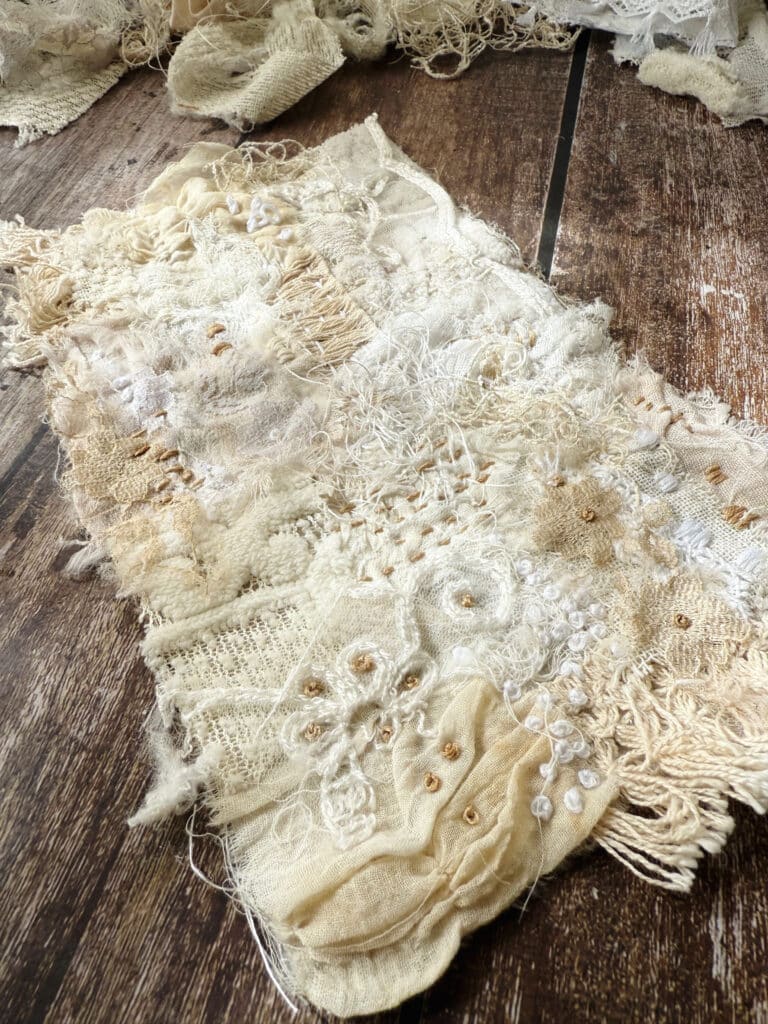
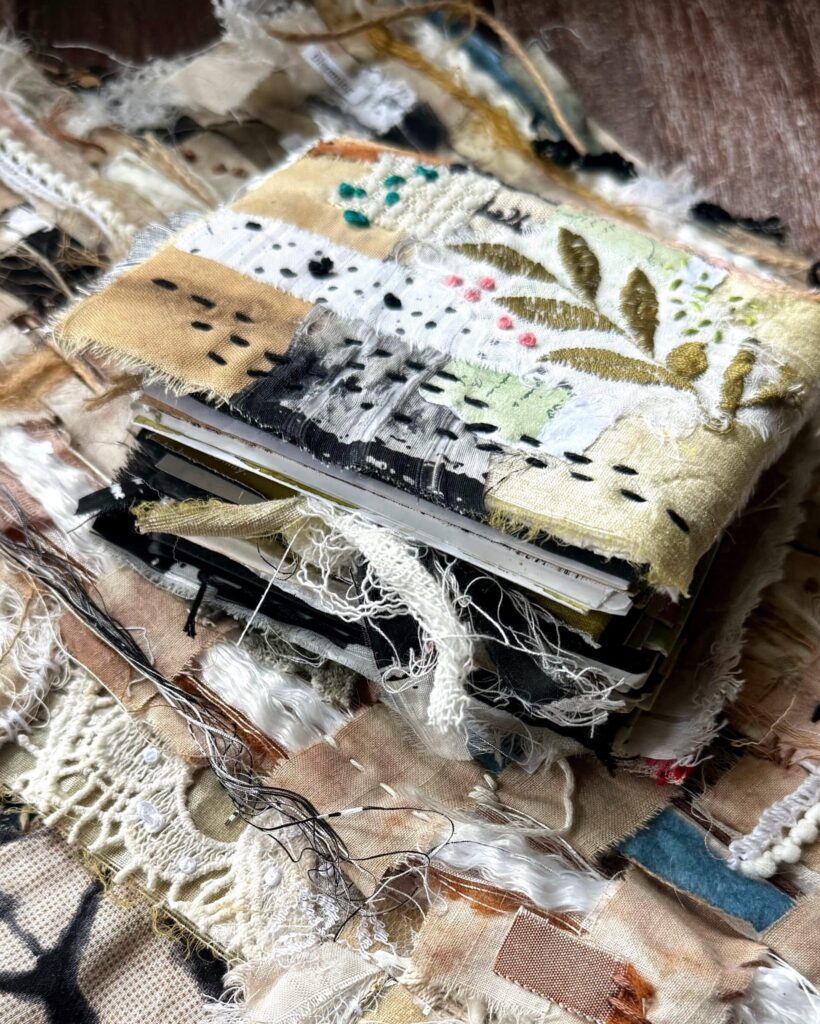
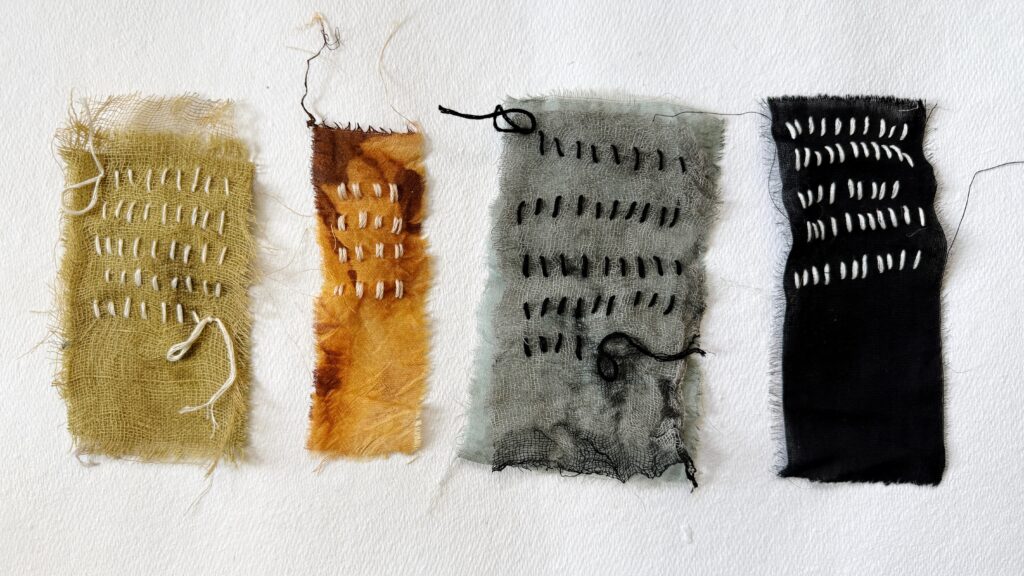
Building Fabric Collages with Pre-Stitched Scraps
One of the most beautiful ways to deepen your fabric collage ideas is to begin before you actually “compose” the collage.
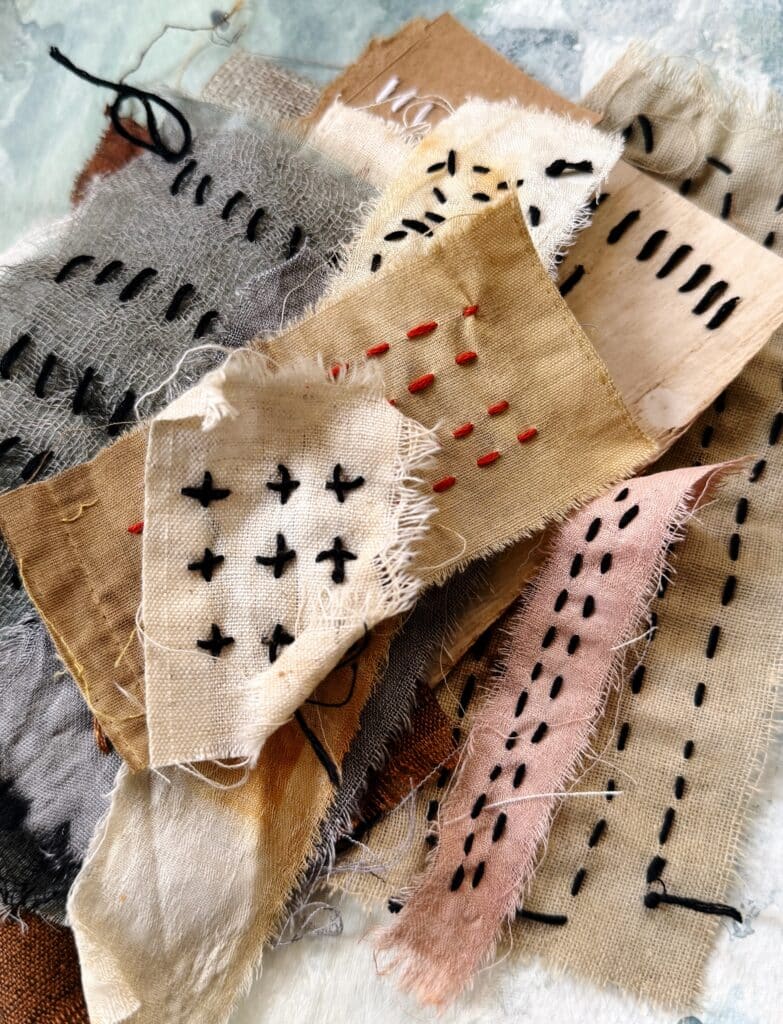
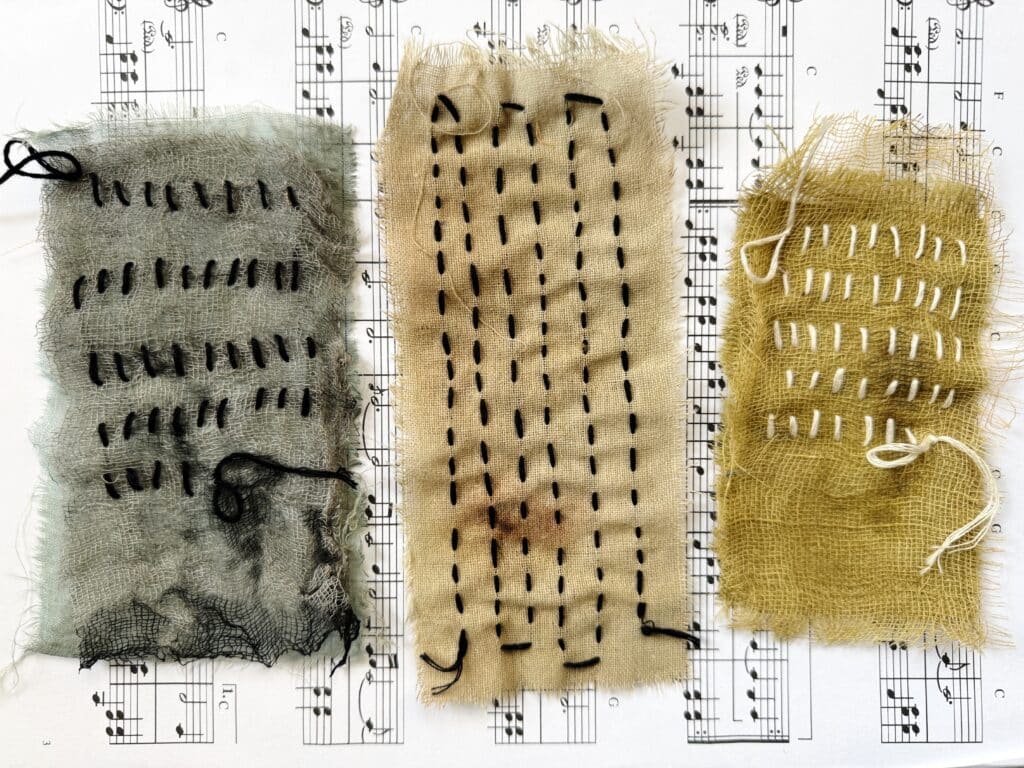
Instead of layering plain fabric directly onto your base, you can prepare small stitched fragments first — and then build your composition around them.
These pre-stitched pieces become textured building blocks within your textile collage art practice.
Why Work with Pre-Stitched Fabric Scraps?
When you slow stitch on small scraps separately, something interesting happens:
- The pressure to “finish a full piece” disappears.
- You experiment more freely.
- Texture develops naturally.
- Stitching becomes meditative rather than decorative.
Later, when you create your fabric collages, these fragments already carry depth and character.
How This Method Supports Intuitive Making
Pre-stitched scraps allow you to separate two creative processes:
- Stitching as a slow, intuitive practice
- Composing as a structural decision
On one day, you might simply sit with a basket of fabric remnants and add running stitches, cross stitches, or loose thread marks.
On another day, you arrange those fragments into a larger piece of mixed media fabric collage.
This reduces overwhelm. You’re not trying to design and stitch at the same time. You’re building slowly.
Learn More About Slow Stitching on Fabric Scraps
If you’d like more ideas specifically on preparing and stitching small fabric scraps before incorporating them into larger work, I’ve shared a dedicated guide here:
👉 Slow Stitching on Fabric Scraps – 20+ Inspiring Ideas
That post explores different stitching approaches you can experiment with before adding those fragments into your fabric scrap collage art pieces.
Bringing It Back to Collage
Once you have a collection of stitched scraps:
- Use them as focal points in your layout
- Contrast them with quieter fabric areas
- Let visible threads add movement
- Combine them with woven or layered sections
Pre-stitched fragments allow your small textile art pieces to feel more intentional and layered — without making the process heavy or technical.
Sometimes, the most compelling textile collage ideas begin with something small you stitched on an ordinary day.
Turning Fabric Collages into Small Textile Art
One powerful shift is seeing your work not as “practice” but as textile collage art.
Frame a 5×5 inch composition. Mount it on handmade paper. Leave the threads visible. Let it breathe.
Many artists underestimate the value of fabric scrap collage art. But collectors often respond deeply to texture and authenticity.
Your scraps are not leftovers. They are language.
Tips for Creating Textile Collage Art with Confidence
Limit your palette to 3–5 colors for cohesion.
Mix textures, not just prints. Smooth + coarse creates dimension.
Let some threads hang — imperfection adds movement.
Don’t over-stitch. Pause and observe.
Photograph your layout before final stitching.
Remember: fabric collage ideas grow when you experiment without pressure.
Mixed Media Artist Resource Library
500+ free printables, collage papers, creative prompts
I’ve put together a free resource library designed just for you, packed with everything you need to fuel your creativity. It’s my way of giving back to the mixed media community with resources to inspire your next project. Click here to join.
⁉️ FAQs
1. What fabric works best for fabric collage?
Natural fabrics like cotton, linen, muslin, and lightweight canvas are ideal for fabric collage because they are easy to stitch and layer.
2. Can beginners create textile collage art?
Absolutely. Many fabric collage art ideas for beginners rely on simple layering and basic running stitches.
3. Do I need a sewing machine?
No. Slow stitching fabric collage is often done entirely by hand.
4. How do I stop fabric from fraying too much?
You can use a light fabric glue seal or embrace fraying as part of the aesthetic in textile collage art.
5. Can I mix paper with fabric?
Yes. That becomes mixed media fabric collage, adding visual contrast and depth.
✨ Bonus Tips
Try working in a series of 9 small pieces to explore variations.
Use tea or coffee to naturally dye scraps.
Combine embroidery with minimal acrylic paint.
Mount finished pieces on deckled-edge handmade paper.
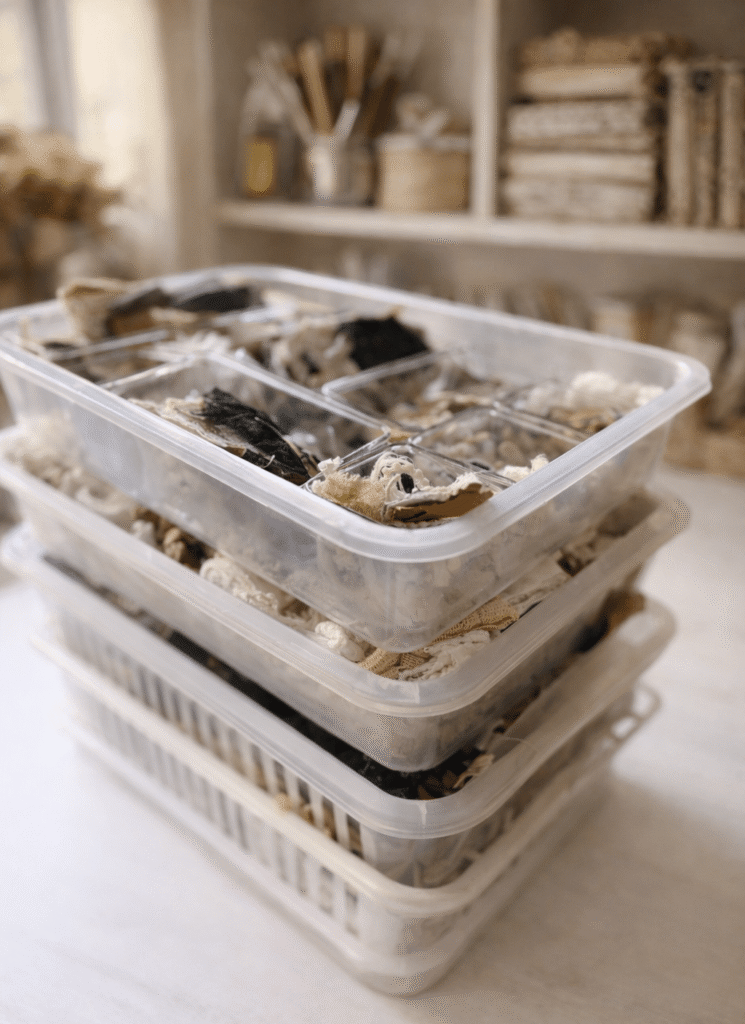
Keep a “scrap basket” near your workspace to build a habit of reuse.
Final Thoughts
At its core, slow stitching on fabric scraps is not about productivity.
It is about presence.
It is about building a quiet, sustainable hand stitching practice that supports your creativity rather than exhausting it.
Over time, your collection of stitch swatches becomes a visual diary — a resource for future mixed media stitching ideas and expressive artwork.
Now I’d love to ask you:
Do you stitch with a plan — or would you be open to trying slow stitching meditation just for calm?
Share your thoughts in the comments below. I would love to hear how stitching feels in your hands.