Slow Stitching on Fabric Scraps – 20+ Inspiring Ideas for Meditative & Mixed Media Art

Have you ever picked up a needle and thread with no plan — just to feel the quiet rhythm of stitching?

That simple act is the heart of slow stitching on fabric scraps.

Not a project. Not embroidery perfection.
Just thread moving slowly through cloth.

For creative beginners and intuitive artists, this practice becomes more than stitching. It becomes meditative stitching, a calming ritual that gently builds into something beautiful and useful for future artwork.

In this post, I’ll share how to begin your own hand stitching practice, along with 20+ slow stitching ideas you can explore right away.

Before we begin — have you ever stitched just for the feeling of it, without trying to “finish” something? Let me know in the comments.

What Is Slow Stitching on Fabric Scraps?

Slow stitching on fabric scraps is the intentional act of stitching small leftover pieces of fabric without pressure or strict rules.

You are not sewing garments.
You are not following a pattern.

You are practicing presence.

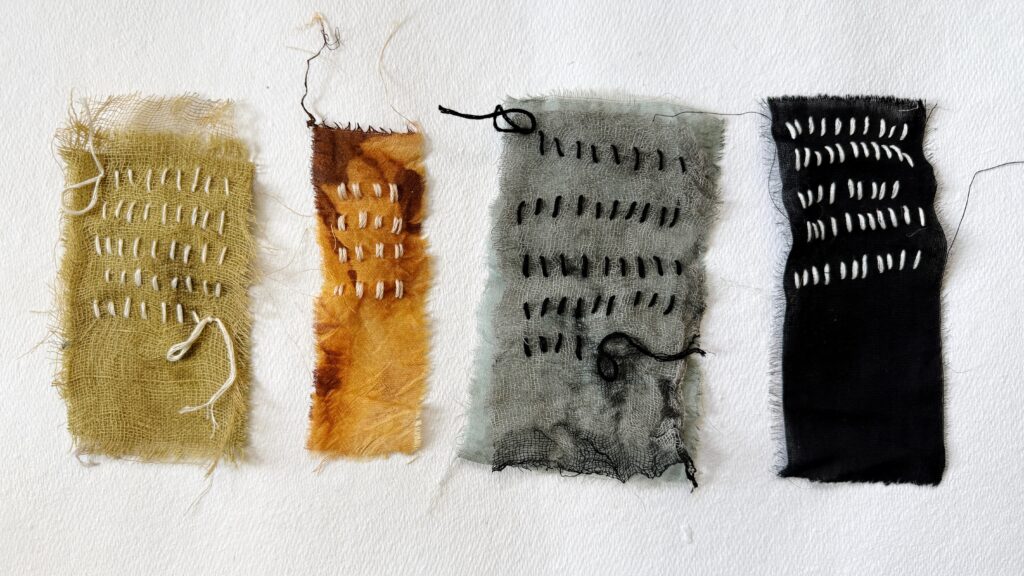
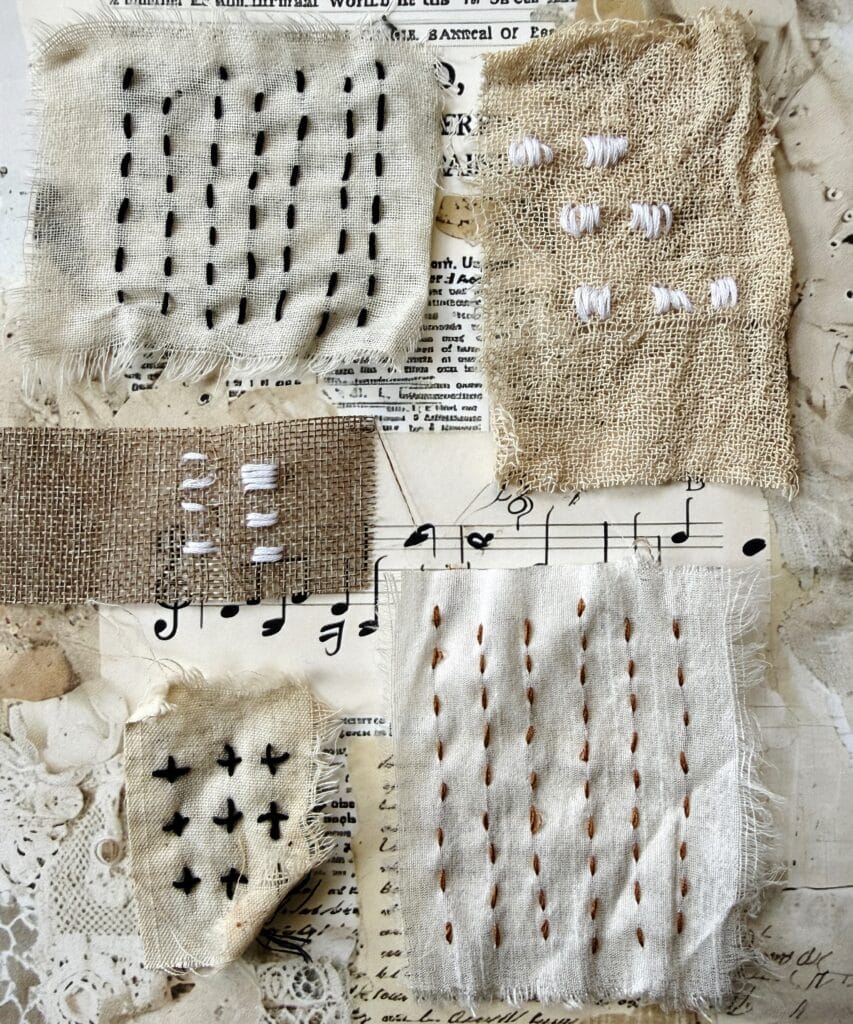
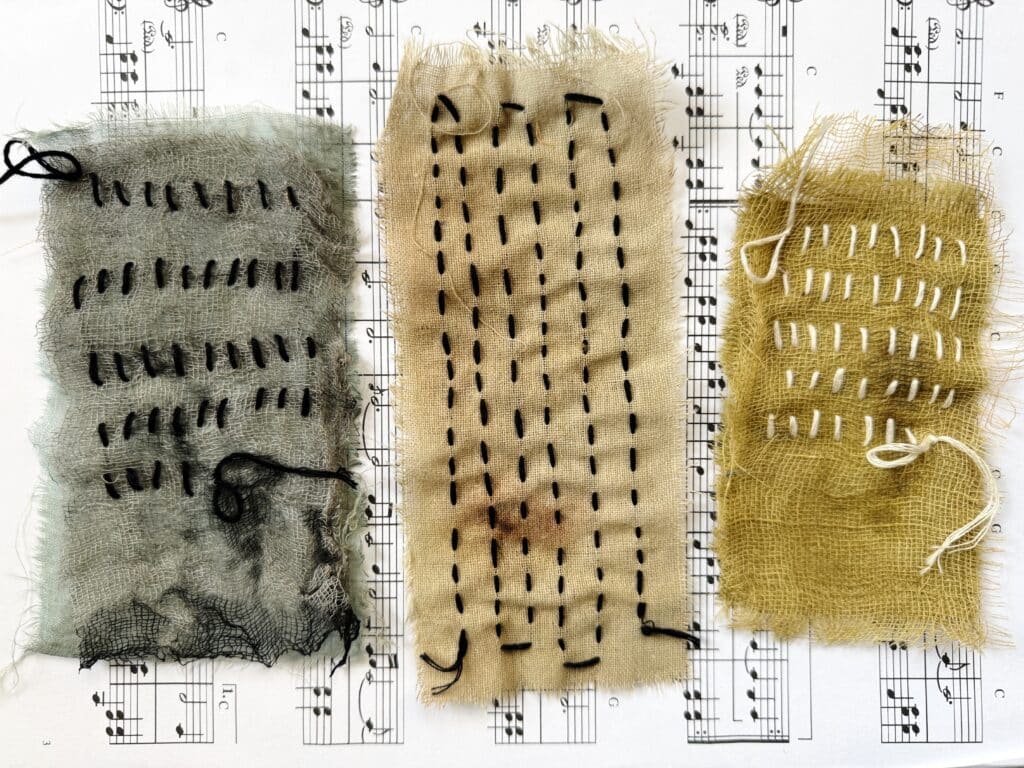
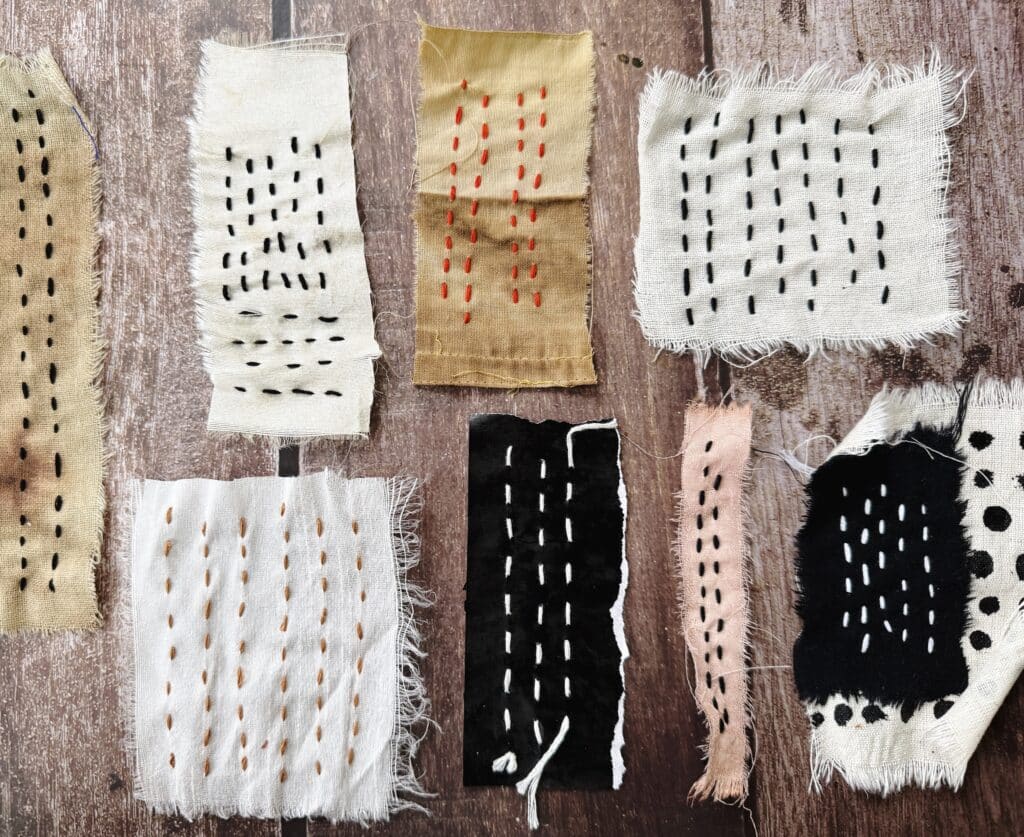
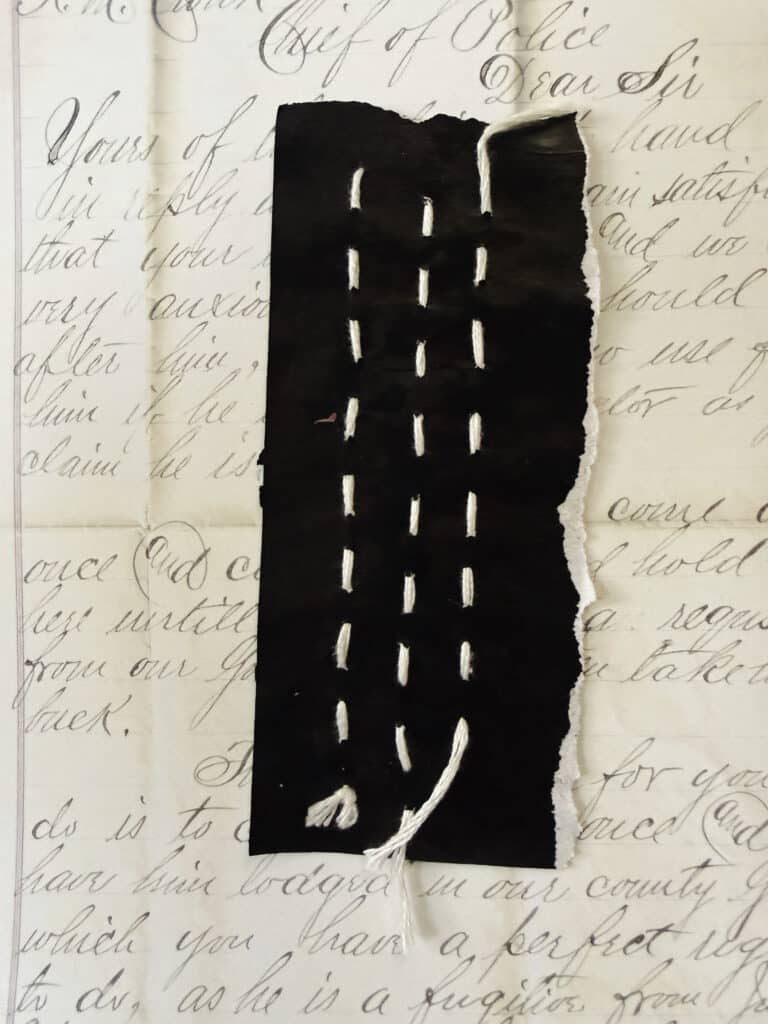
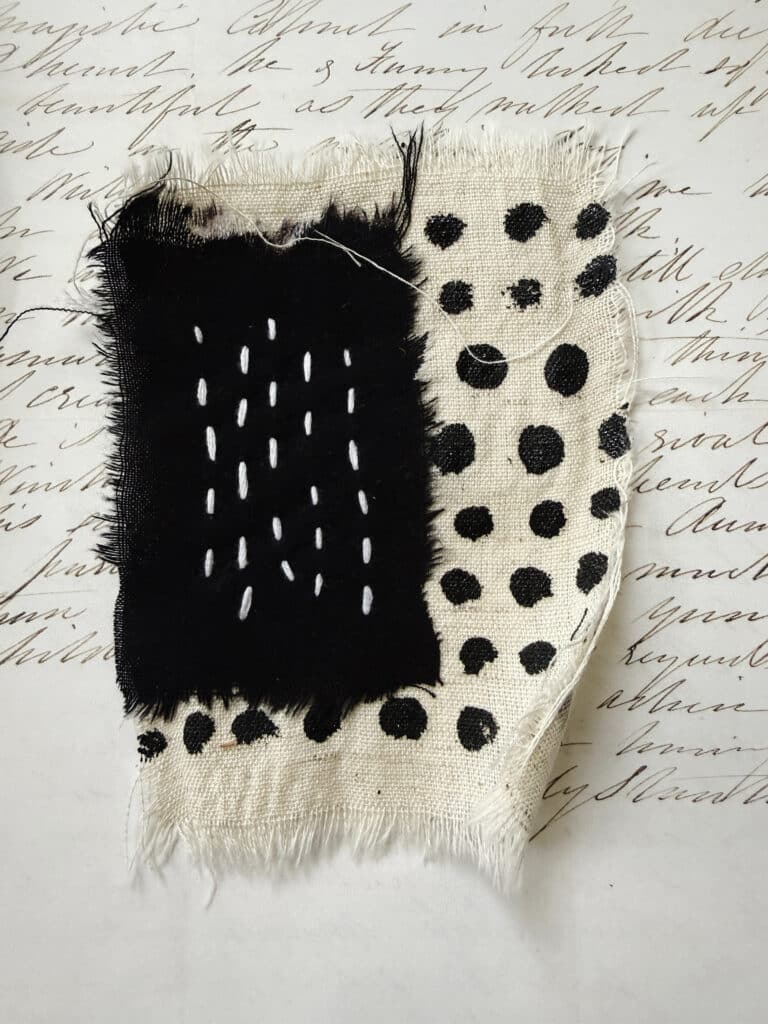
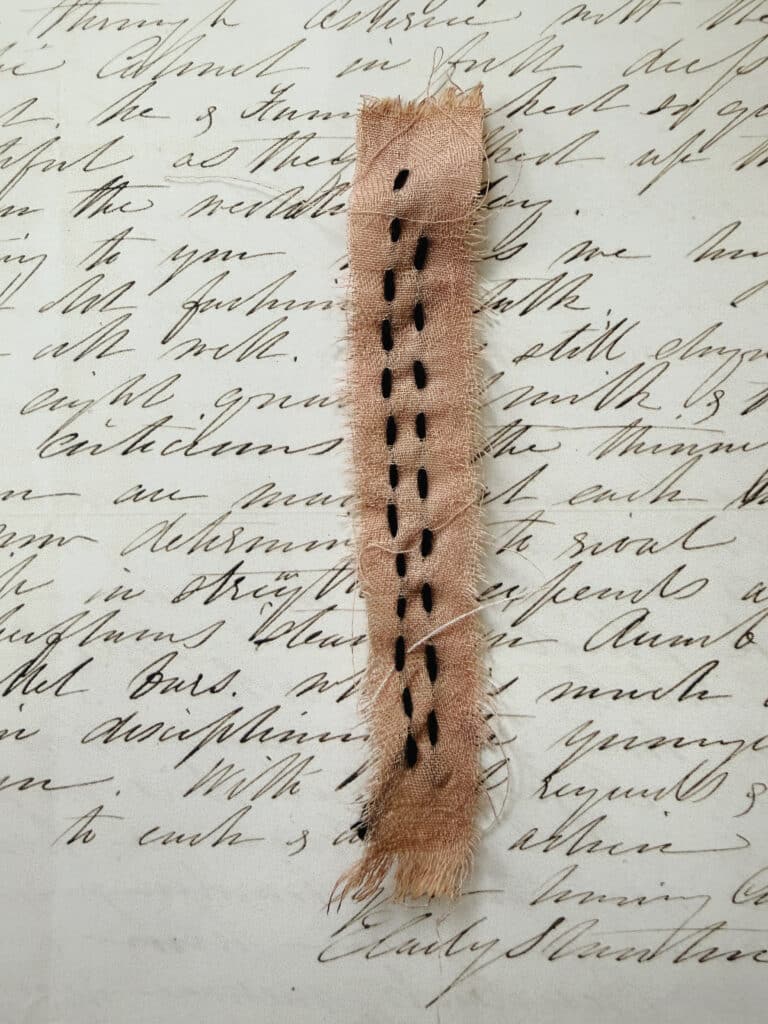
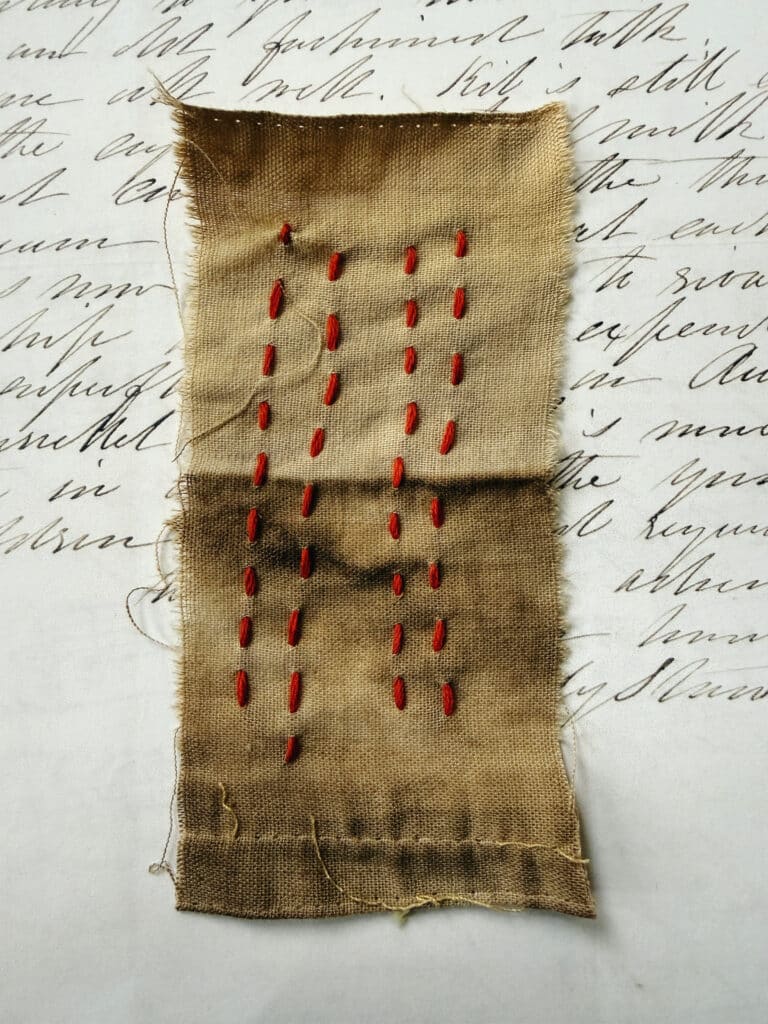
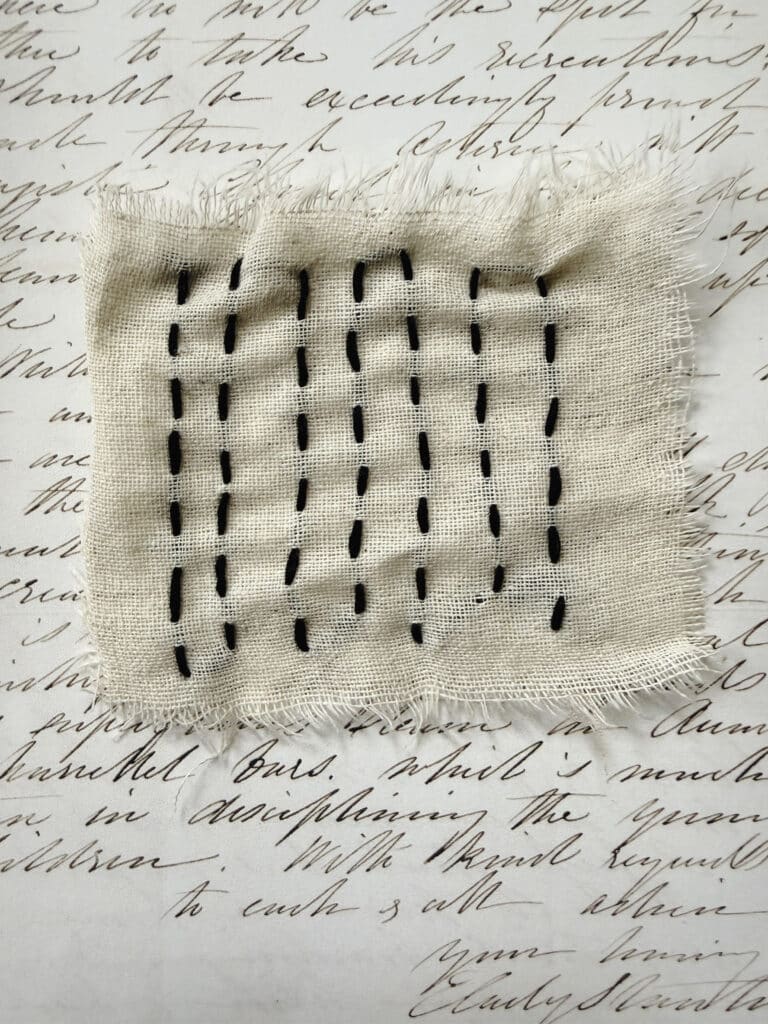
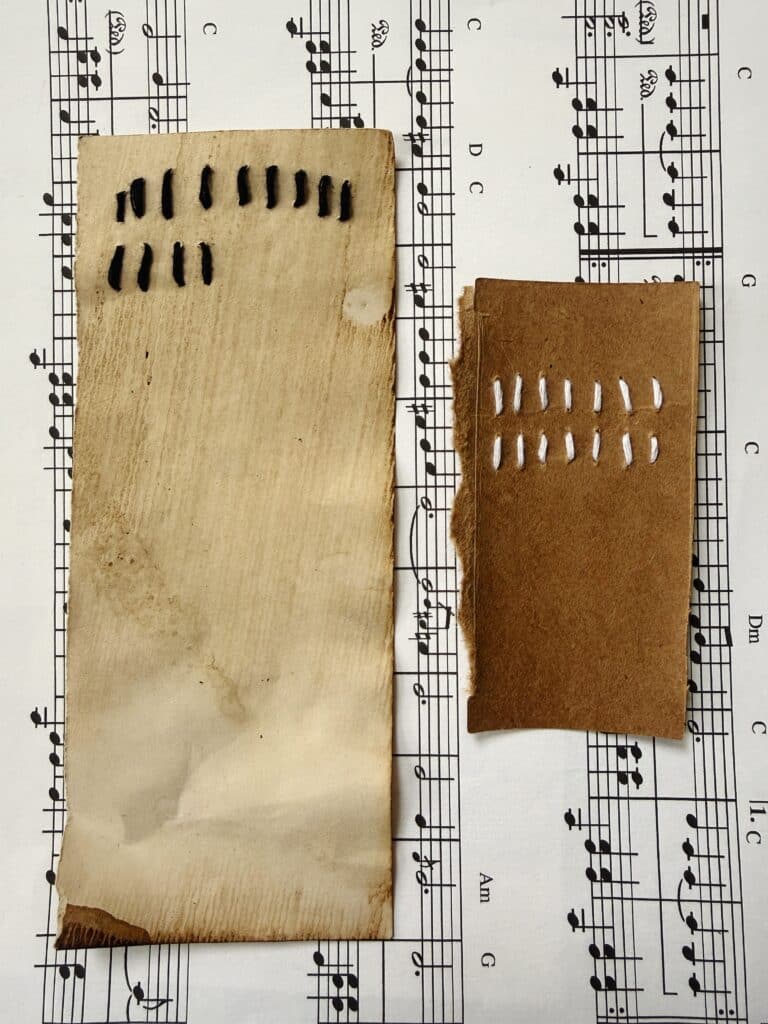
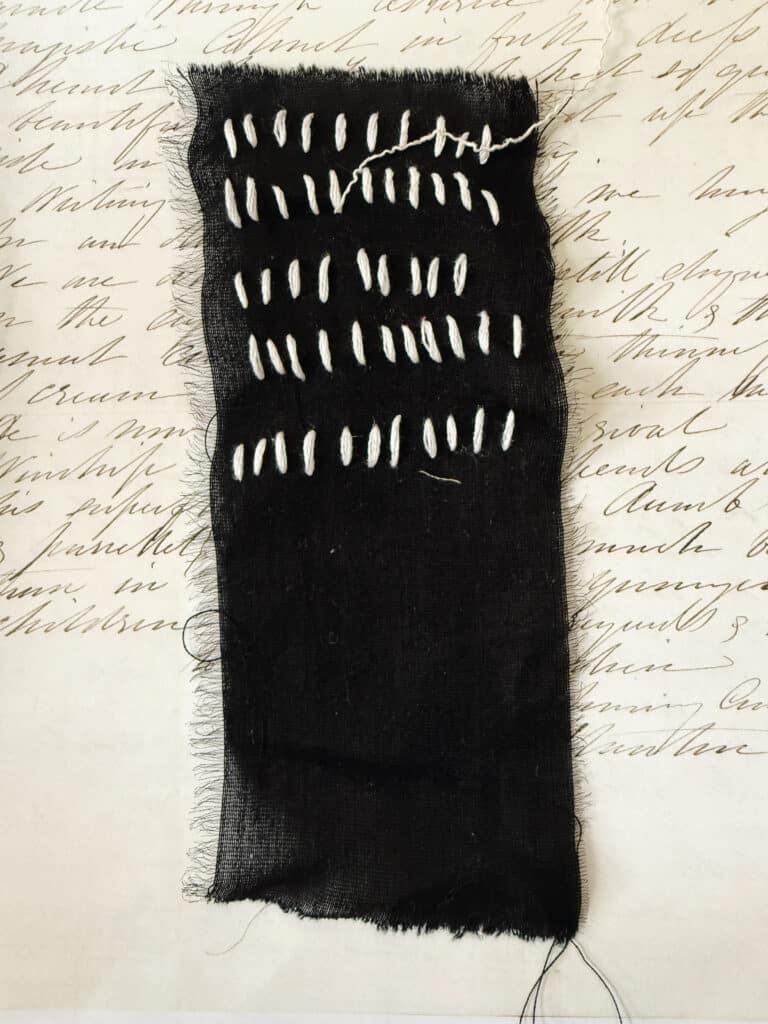
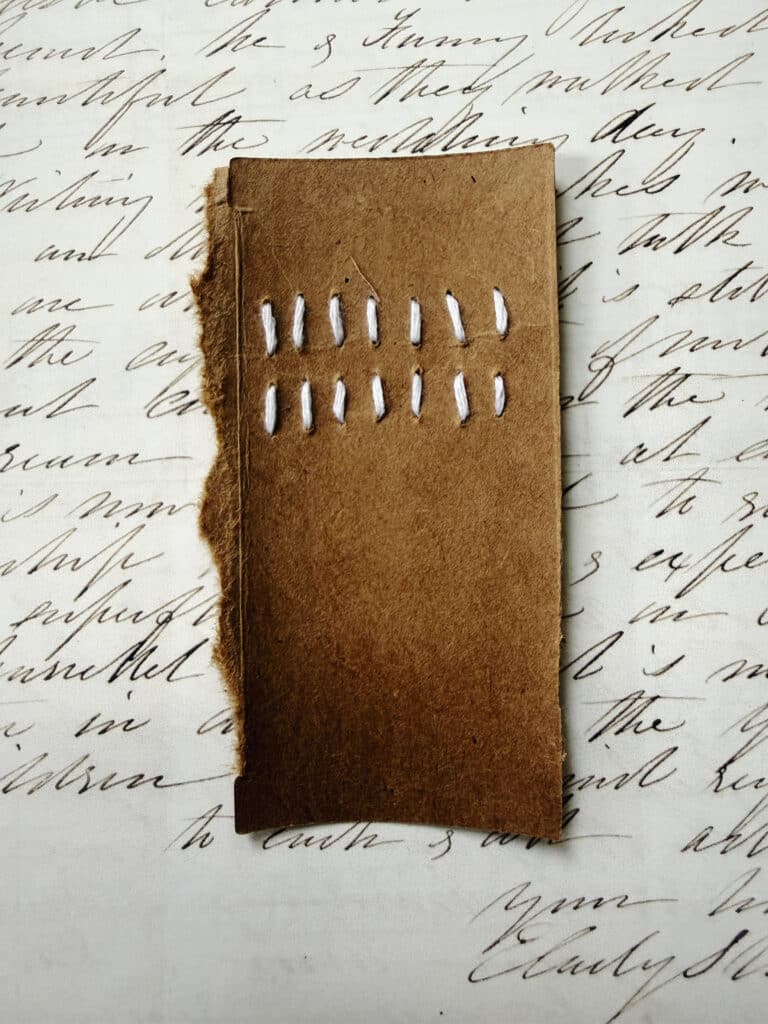
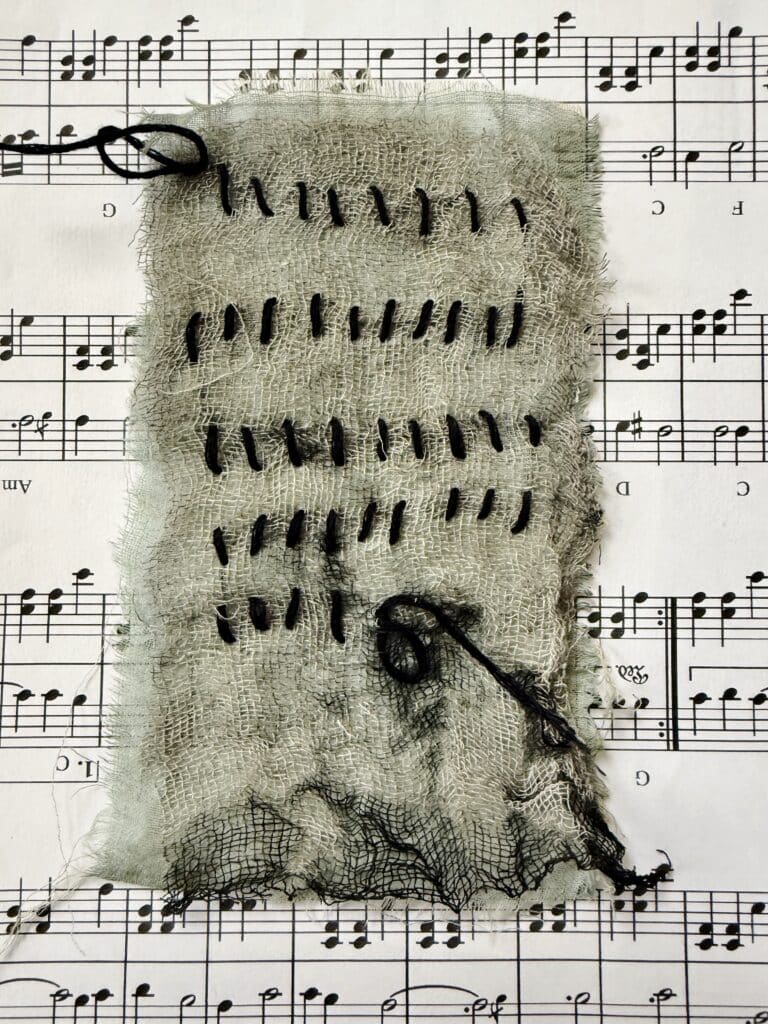
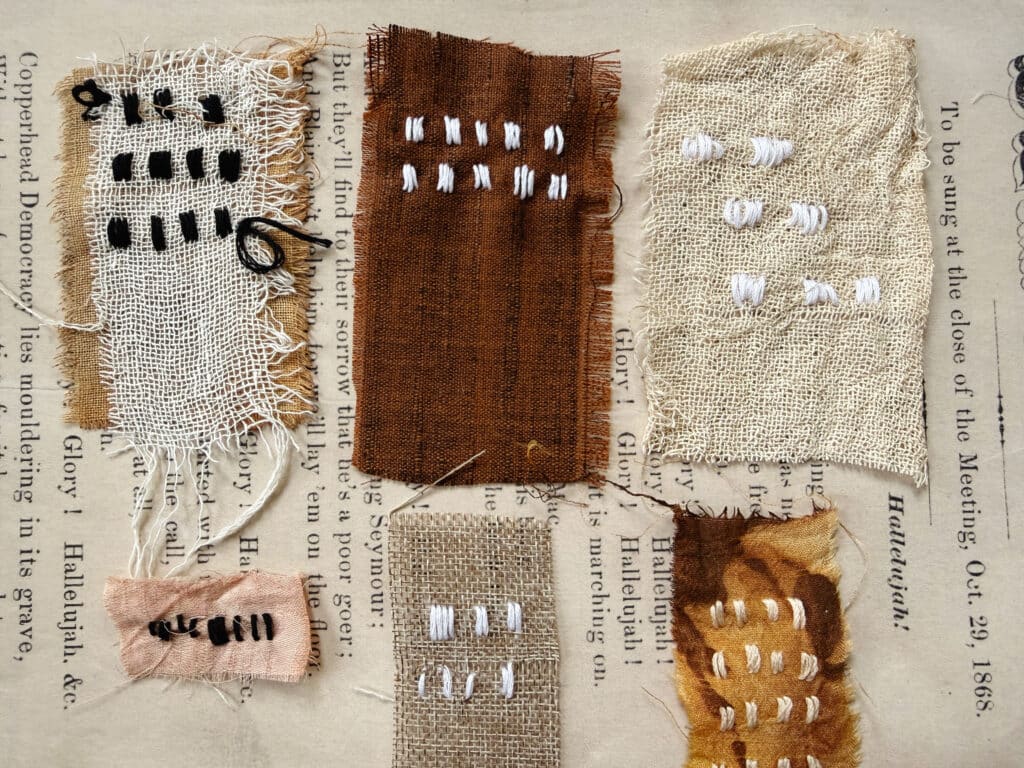
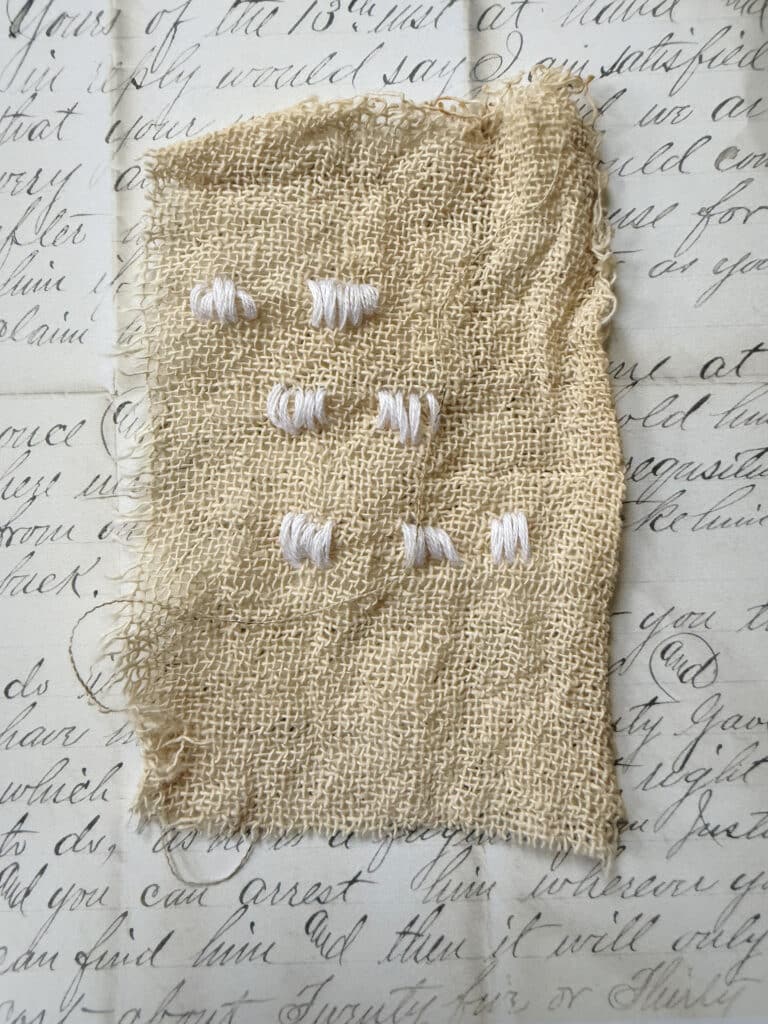
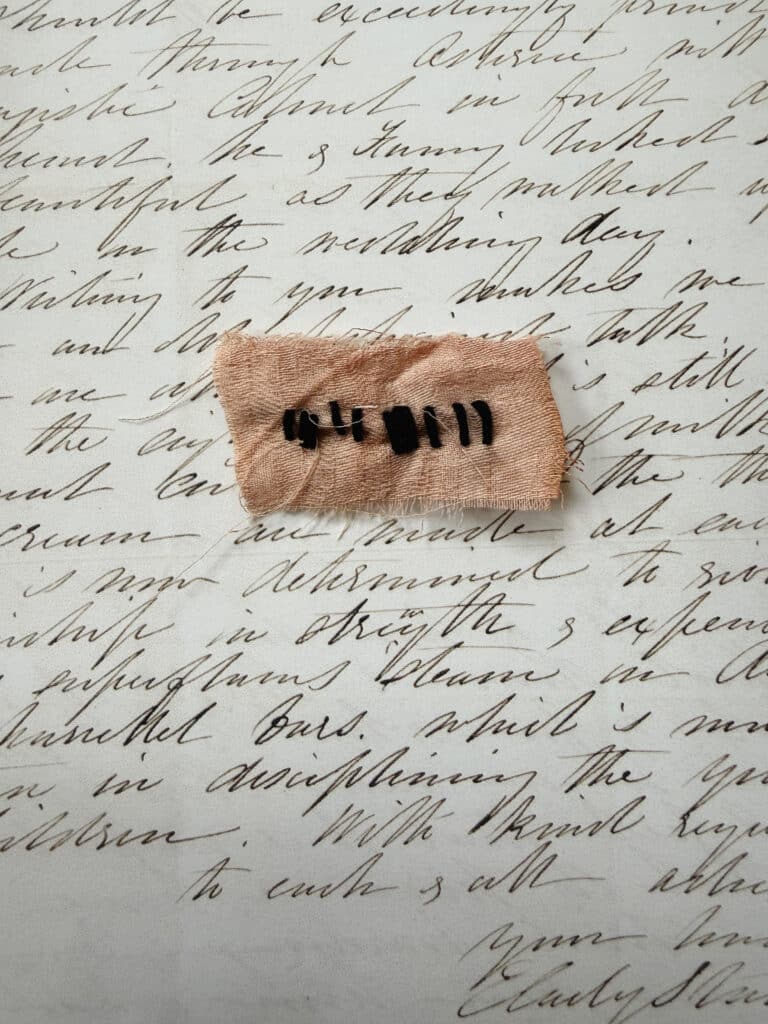
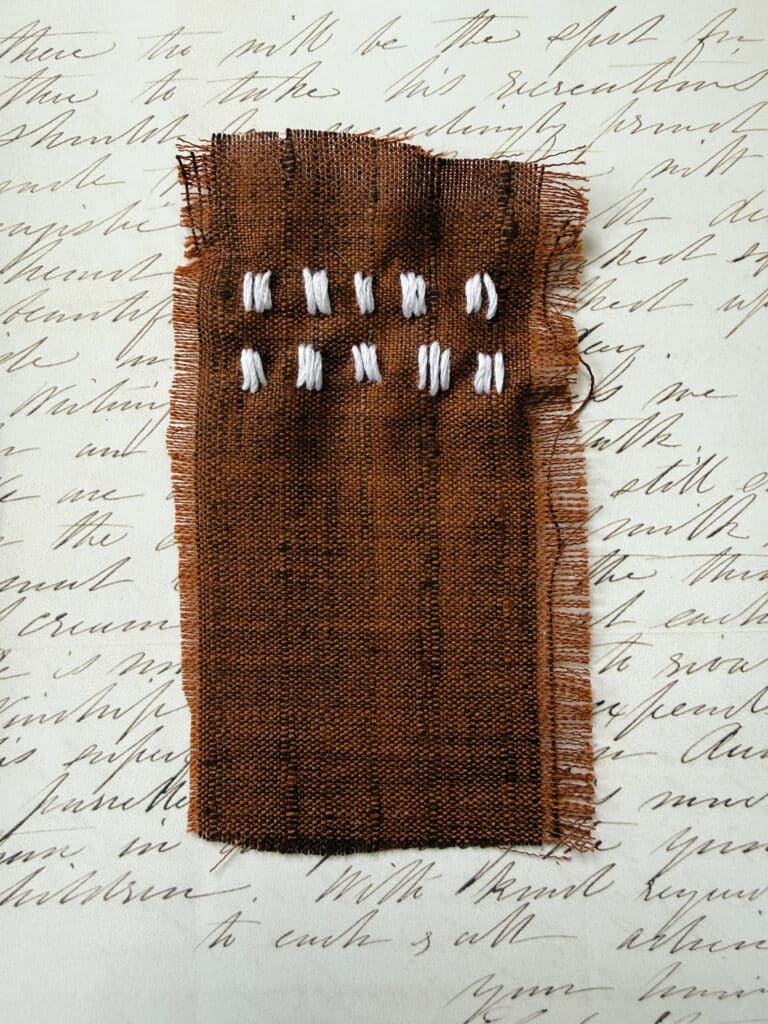
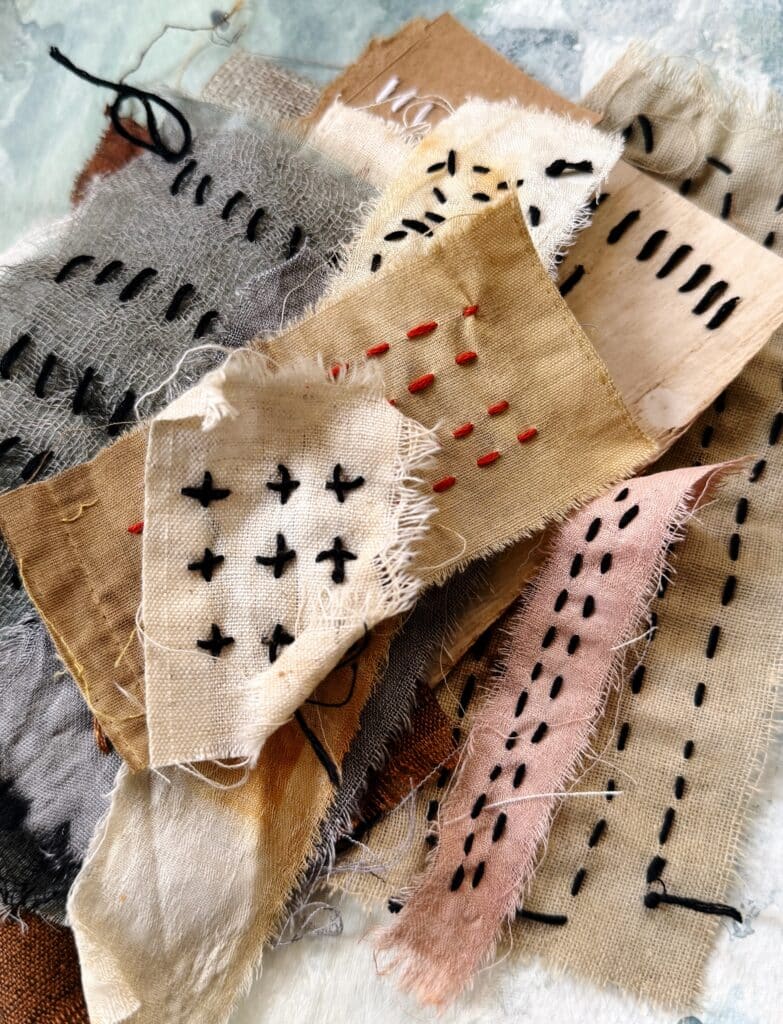
These small pieces — sometimes called stitch swatches — become tiny studies in texture, rhythm, and mark-making.

It is a quiet form of textile art stitching where process matters more than outcome.

Why This Practice Feels So Grounding

1. The Calm of Meditative Stitching

The repetition of needle and thread naturally slows your breathing. Your hands move steadily. Your thoughts soften.

This is why meditative stitching feels restorative.

Each stitch becomes an anchor.

You don’t rush. You don’t correct. You simply continue.


2. The Rhythm of Slow Stitching Meditation

In slow stitching meditation, the focus is not on finishing — it’s on feeling.

The fabric in your hands.
The slight resistance of thread.
The quiet pull of each stitch.

This is a form of mindful textile art — where creativity and calm exist together.

How to Begin a Gentle Hand Stitching Practice

Starting your own hand stitching practice is simple.

Choosing Materials

Look around your studio. Gather small scraps of:

  • Cotton
  • Linen
  • Gauze
  • Old clothing
  • Fabric remnants from past projects

This is about using fabric scraps creatively, not buying new supplies.

Small rectangles or irregular shapes work beautifully.


Simple Stitches to Explore

Begin with basic stitches:

  • Running stitch
  • Back stitch
  • Cross stitch
  • French knots
  • Random freeform stitches

This is textile art stitching in its most intuitive form.

Let your stitches be uneven. Let them wander.

These small studies become your personal collection of stitch swatches — ready to use in future work.

A Free Art Journaling Class for Beginners

Learn how to use found papers & discarded boxes, and turn them into beautiful art journals that feels inviting to work in. Click here to join.

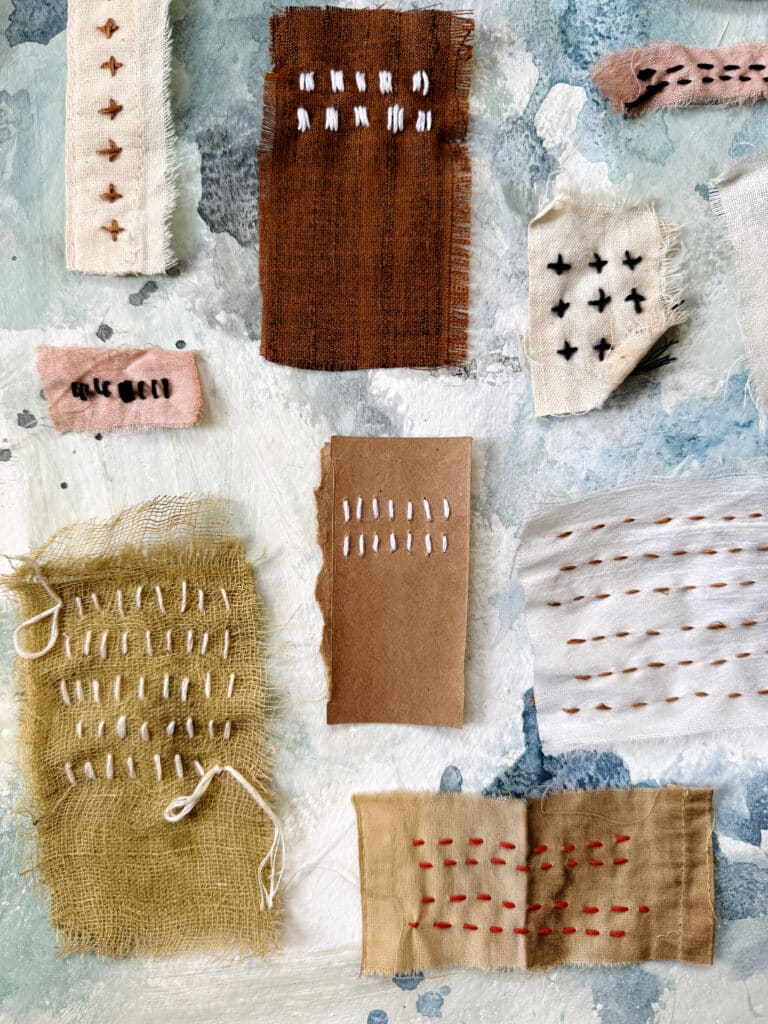
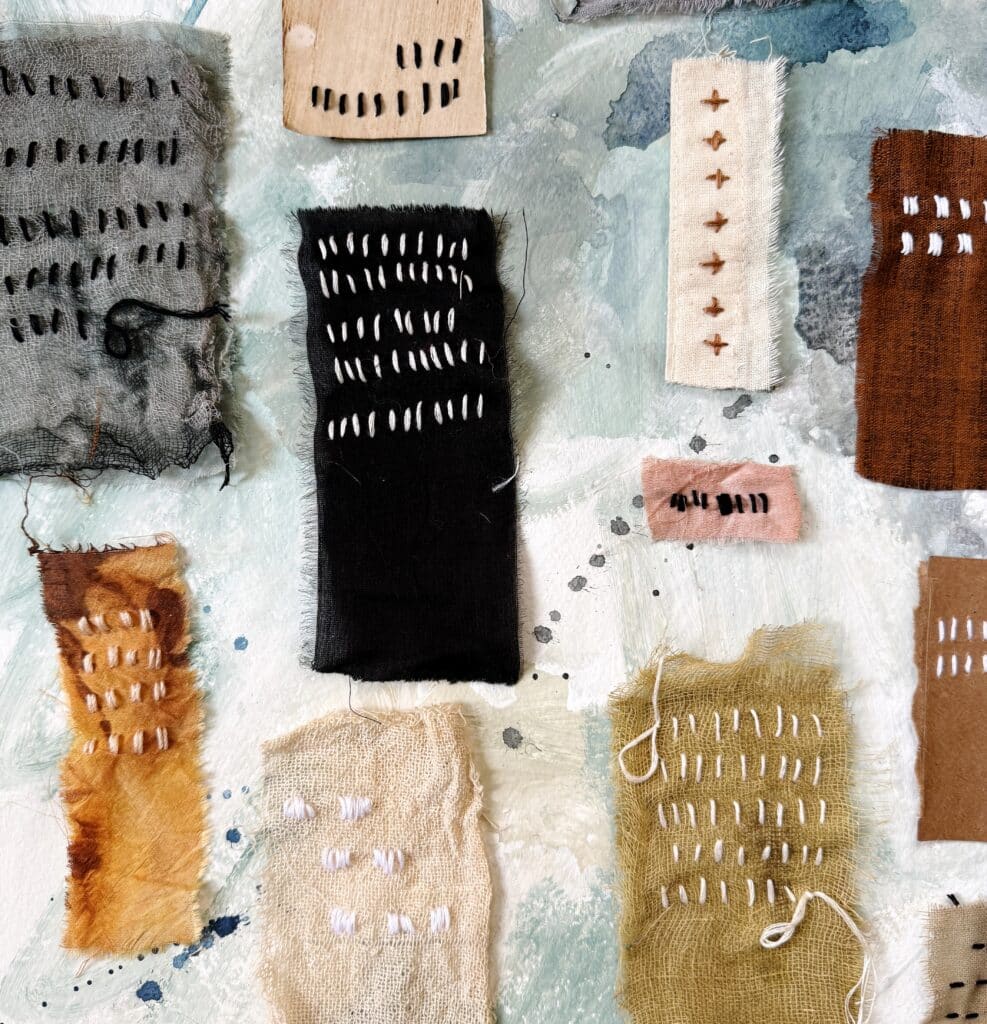
Slow Stitching on Fabric Scraps – Visual Gallery

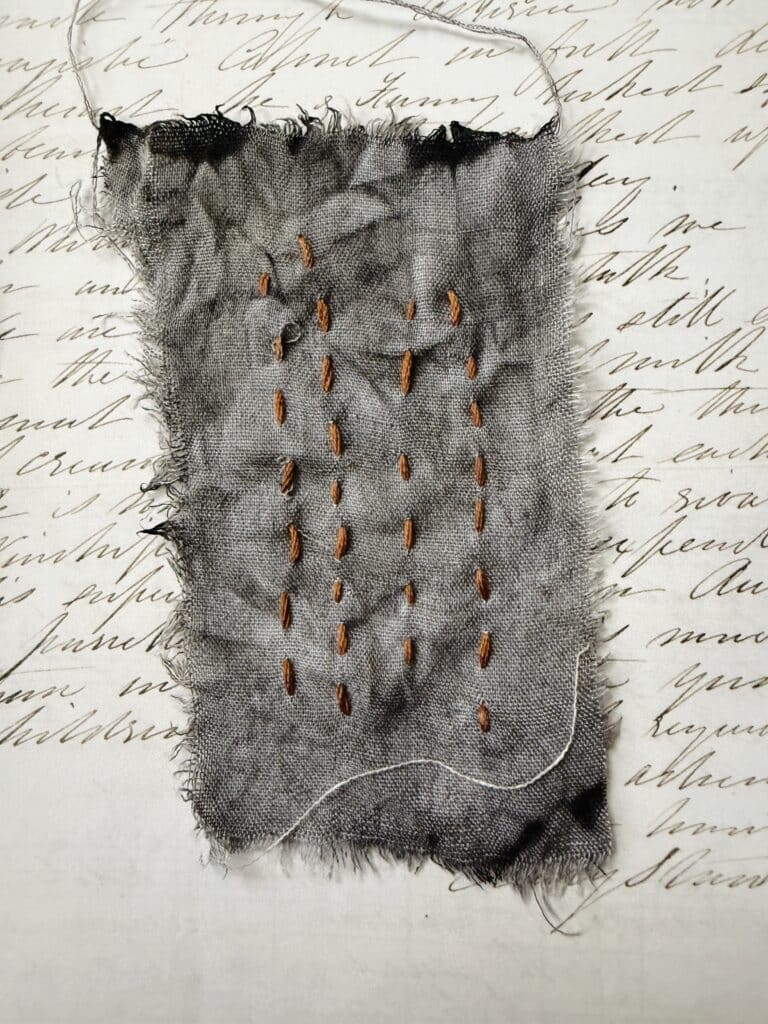
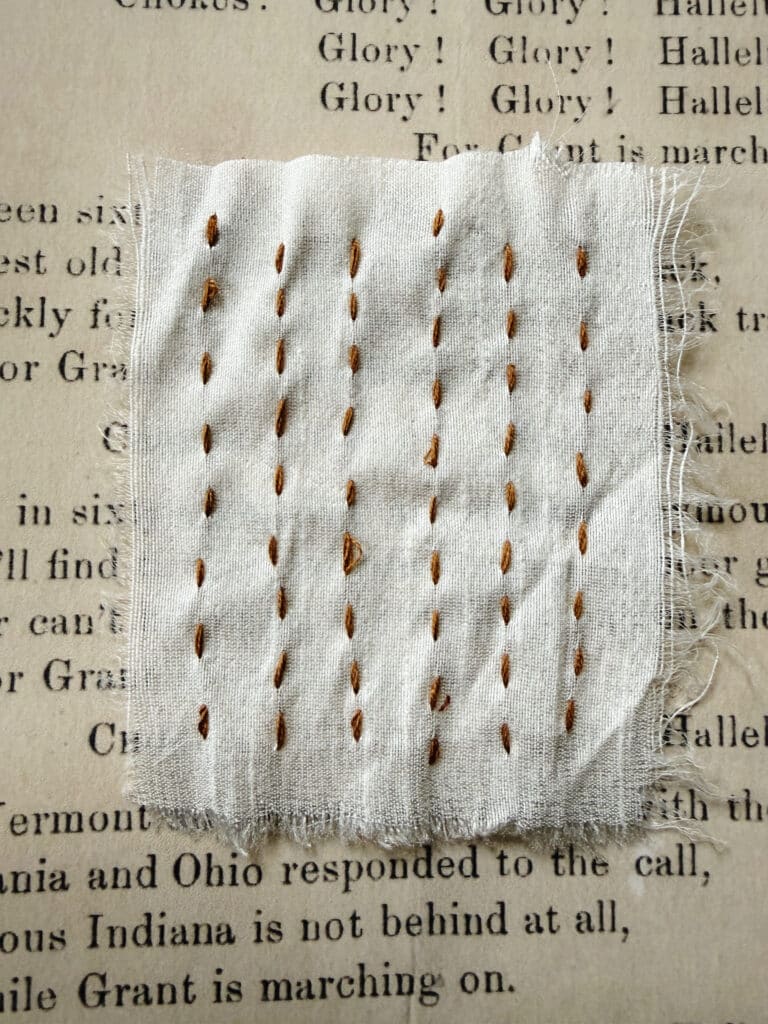
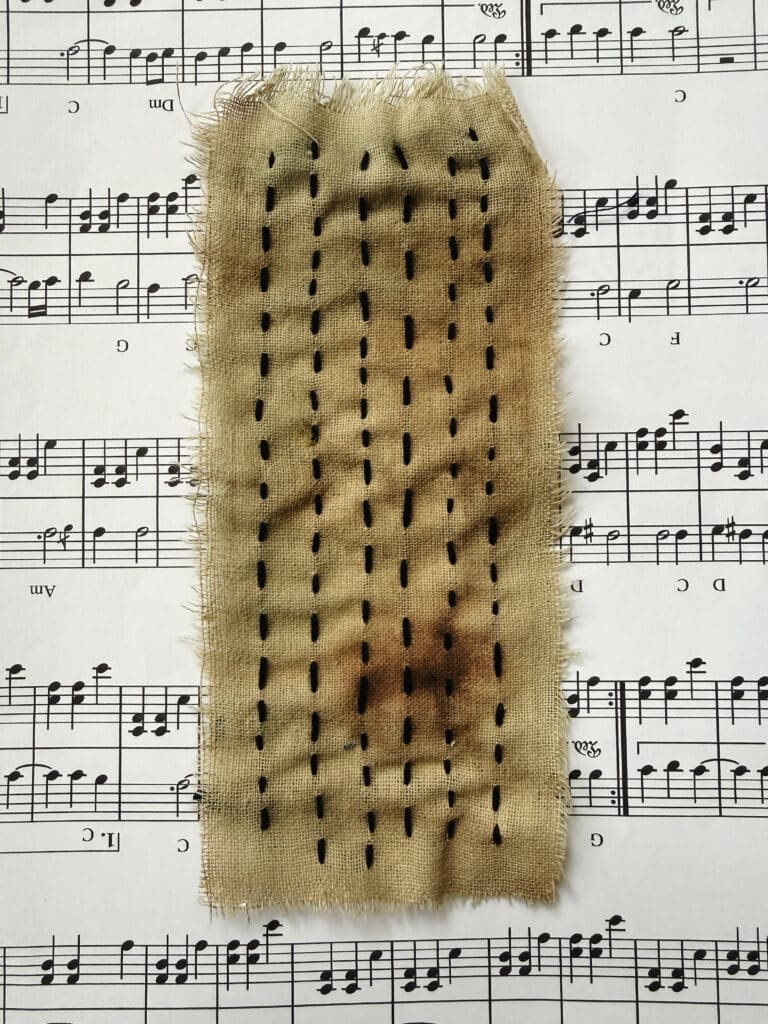
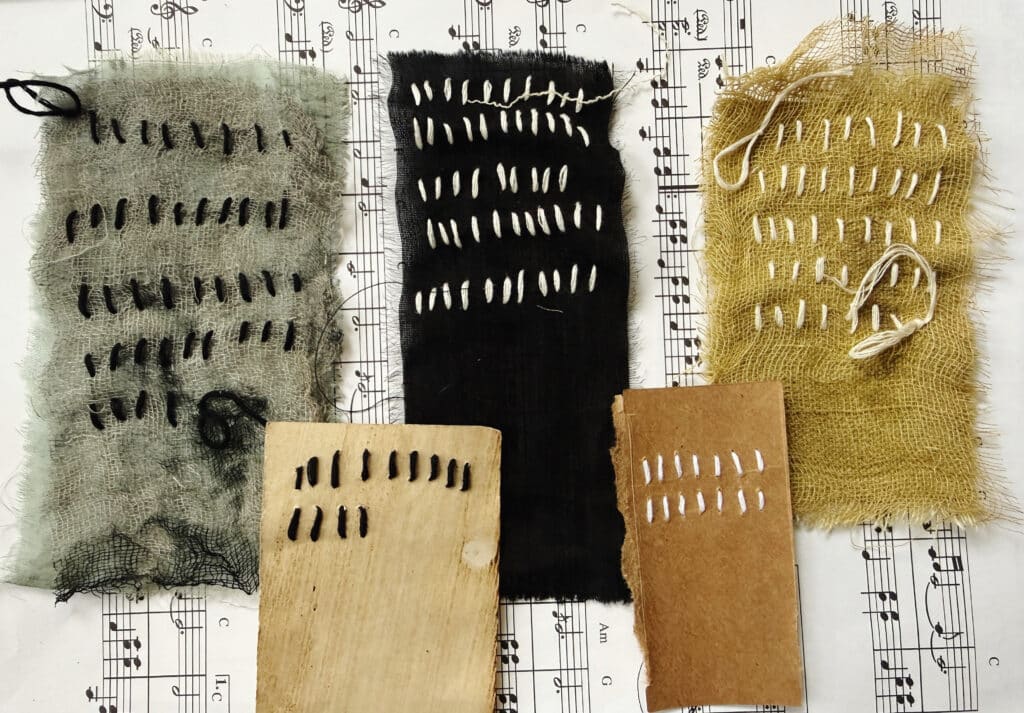
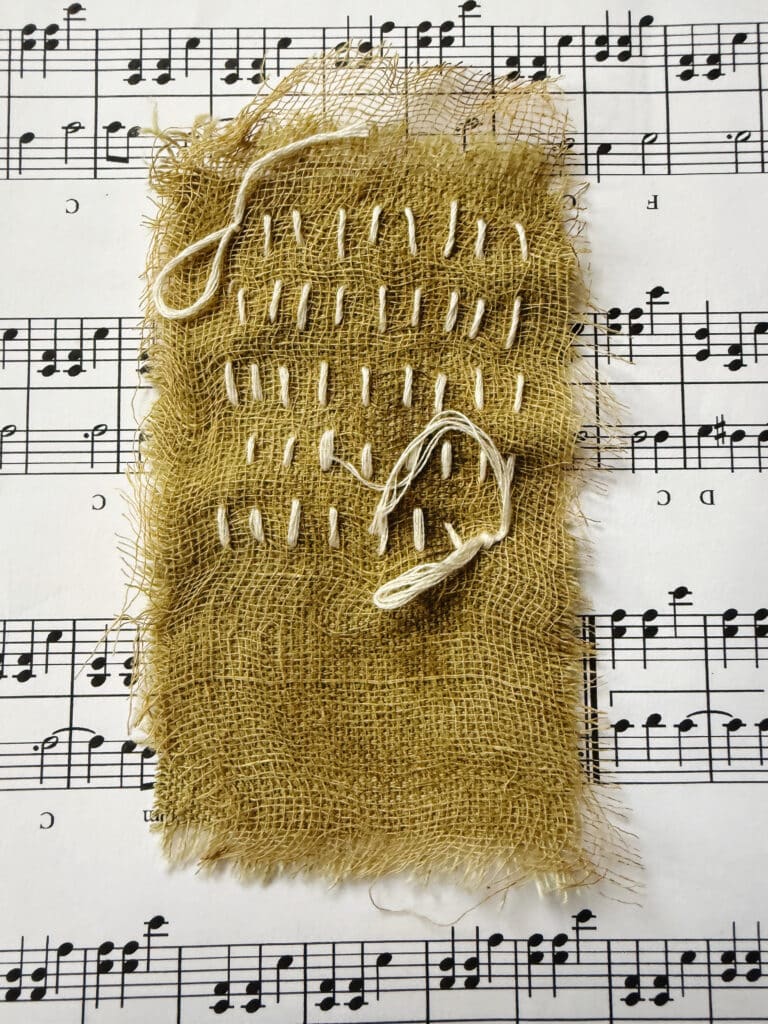
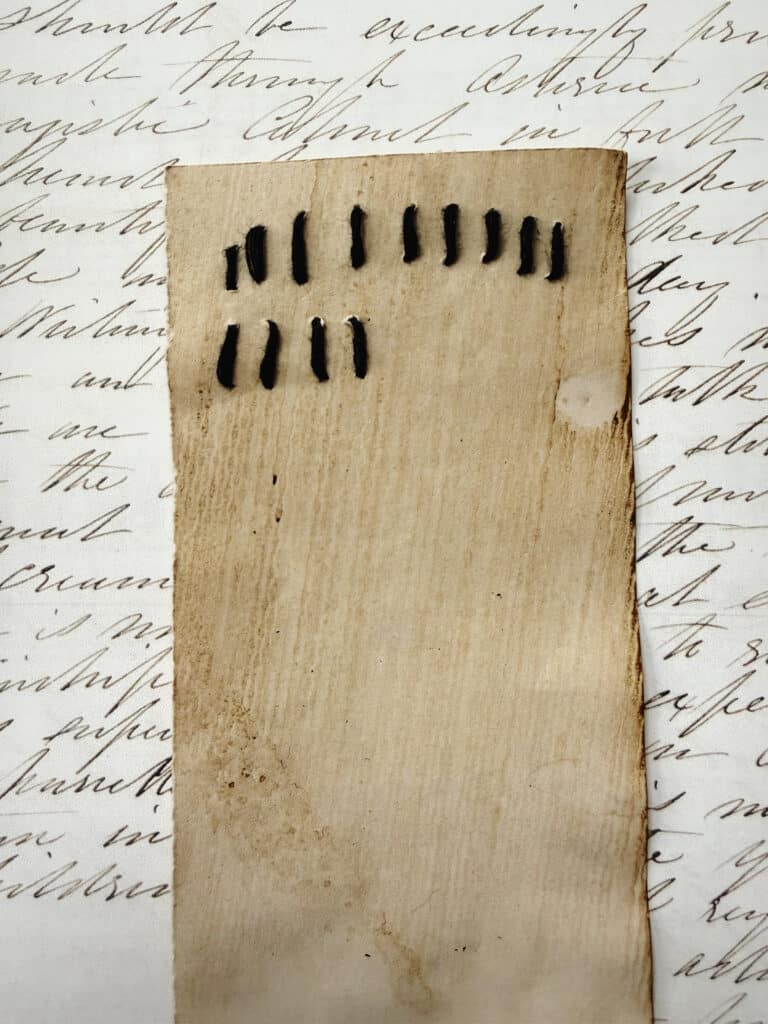
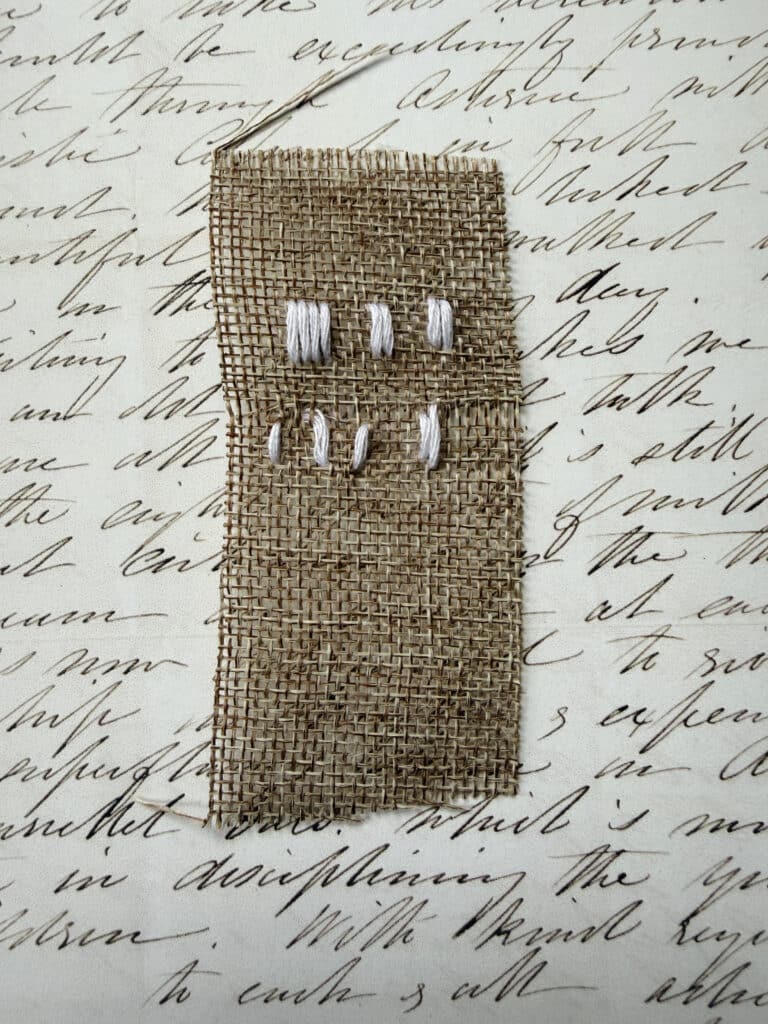
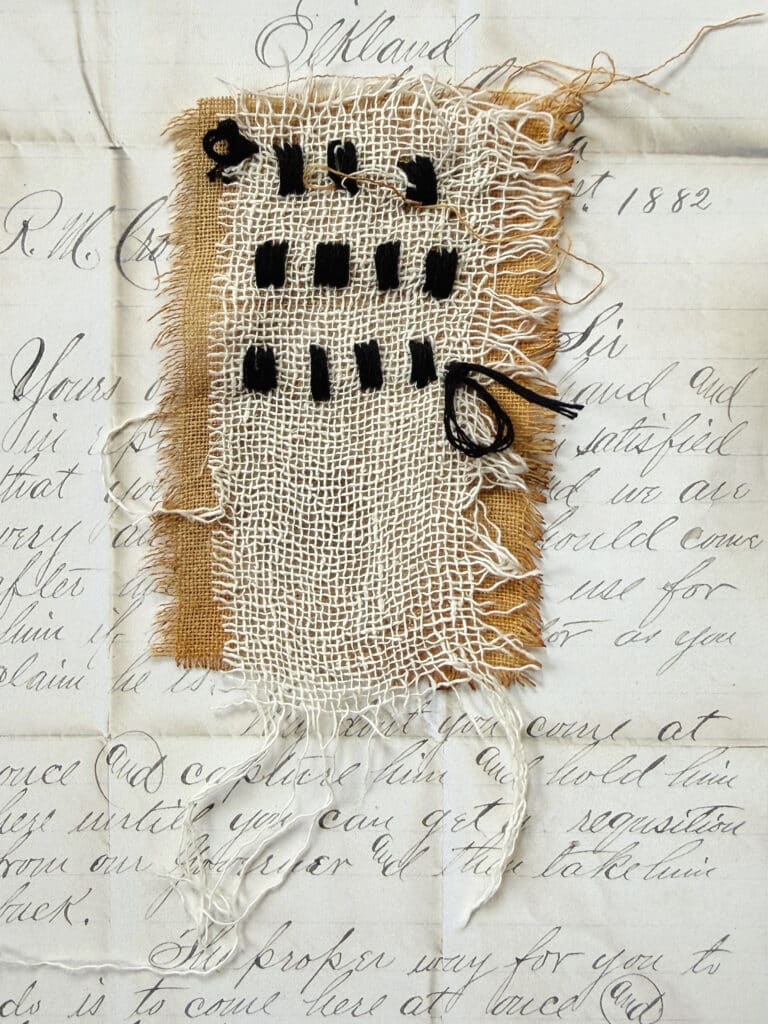
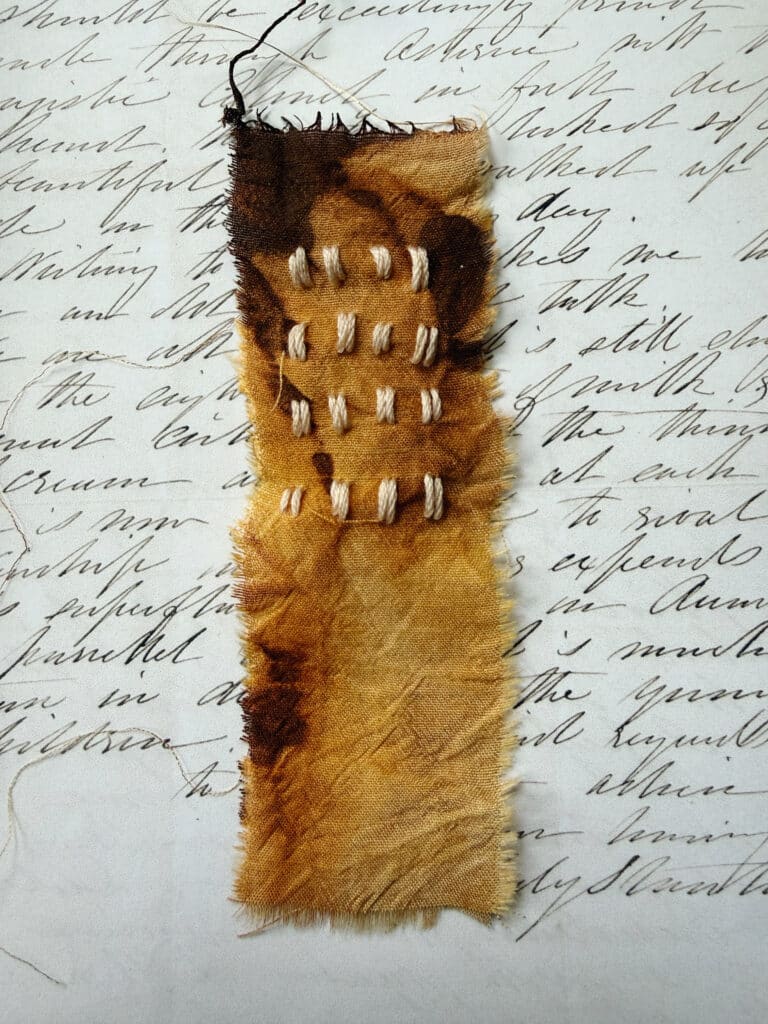
Below you’ll find a collection of my stitched fabric pieces — small studies created through slow stitching on fabric scraps.

Each one began as a quiet moment of meditative stitching, without a fixed outcome in mind. Some are minimal. Some are layered. Some explore contrast and texture.

As you scroll, notice the variations in rhythm, density, and thread movement. These small stitch swatches are not finished projects — they are part of an evolving hand stitching practice and a growing library for future mixed media stitching ideas.

Which one speaks to you the most?

20 Slow Stitching Ideas to Try on Fabric Scraps

  1. Straight running stitch rows
  2. Uneven rhythmic lines
  3. Dense cluster stitching
  4. Minimal scattered marks
  5. Cross stitch grids
  6. Stitch around fabric tears
  7. Stitch over painted fabric
  8. Layer two scraps and stitch through both
  9. Use contrasting thread on dark fabric
  10. Create stitch borders
  1. Organic curved stitch paths
  2. Repeated symbol stitching
  3. Subtle stitched words
  4. Stitch only in one corner
  5. Vertical column stitches
  6. Random mark-making patterns
  7. Combine thick and thin thread
  8. Stitch through fabric + gauze
  9. Leave long trailing threads intentionally
  10. Create tiny stitched focal points

Turning Small Pieces into Mindful Textile Art

After a few weeks of practice, you’ll notice something powerful.

Your scraps become a resource.

They are no longer random fabric pieces. They are textured elements of mindful textile art.


Using Fabric Scraps Creatively

Your stitched scraps can become:

  • A focal point on an art journal page

  • Layered into collage

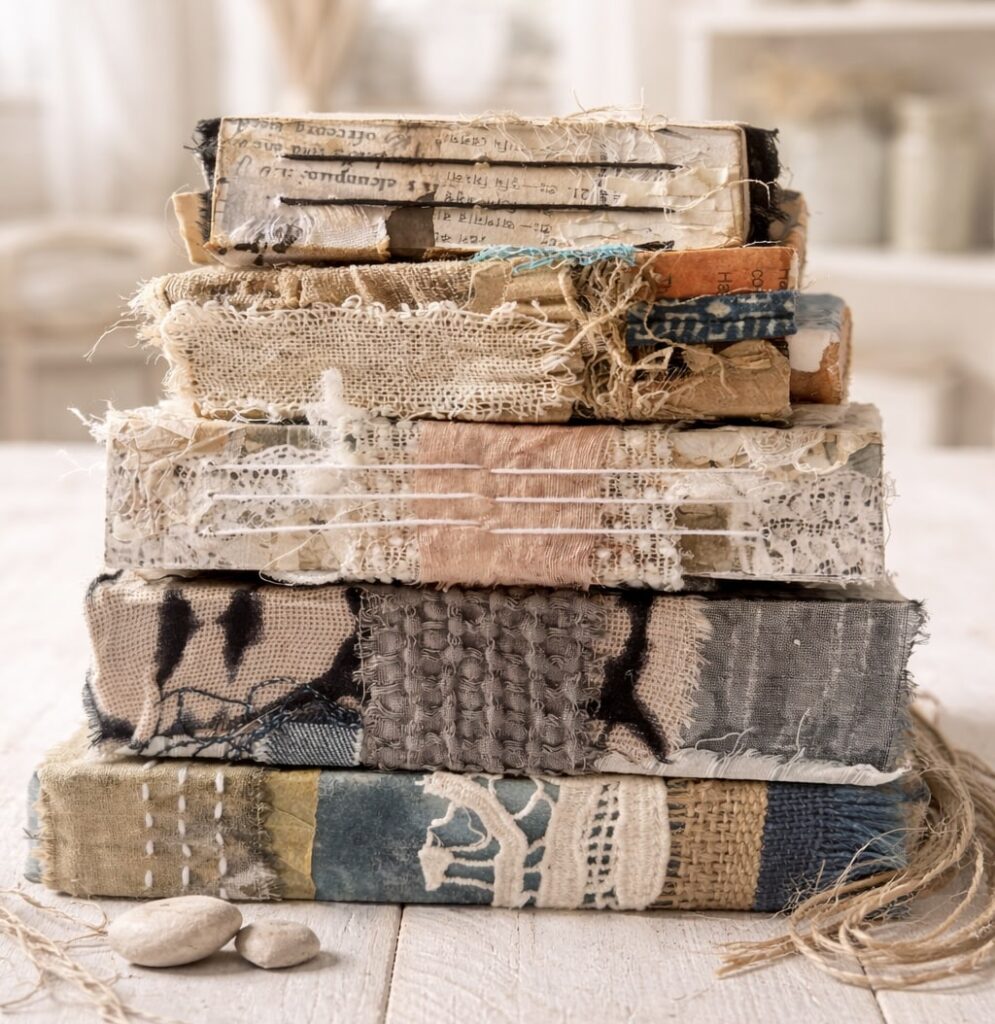
  • Sewn into artist books

  • Attached to canvas

  • Combined into larger textile compositions

This is where using fabric scraps creatively transforms simple practice into meaningful artwork.


Easy Mixed Media Stitching Ideas

If you work in mixed media, try these mixed media stitching ideas:

  • Attach stitched scraps onto painted backgrounds

  • Layer stitched fabric over tissue paper

  • Use neutral threads for subtle texture

  • Use bold thread colors for graphic contrast

  • Stitch directly onto canvas for tactile interest

Because the scraps are small, they integrate easily into larger compositions.

This is the beauty of slow stitching on fabric scraps — nothing is wasted.

Mixed Media Artist Resource Library

500+ free printables, collage papers, creative prompts

I’ve put together a free resource library designed just for you, packed with everything you need to fuel your creativity. It’s my way of giving back to the mixed media community with resources to inspire your next project. Click here to join.

⁉️ FAQs

1. Is slow stitching on fabric scraps good for beginners?

Yes. It is one of the most accessible ways to begin meditative stitching without pressure.

2. Do I need embroidery experience?

No. A simple running stitch is enough to begin a hand stitching practice.

3. What fabrics work best?

Natural fabrics like cotton and linen are ideal for textile art stitching.

4. How can I use my stitched pieces later?

They work beautifully in mixed media stitching ideas, art journals, and collage.

5. How often should I practice?

Even 10–15 minutes of slow stitching meditation can feel grounding.

✨ Bonus Tips

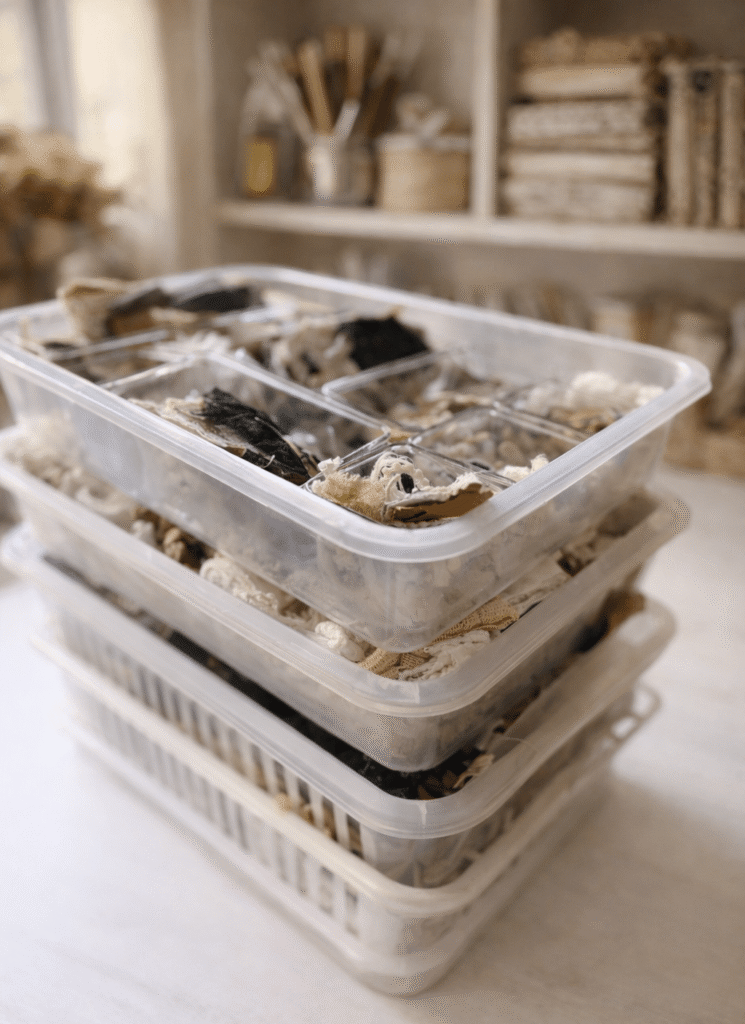
  • Keep a small basket of scraps near your workspace.

  • Pre-thread needles for spontaneous stitching.

  • Date the back of each scrap.

  • Experiment with neutral color palettes.

  • Try stitching while listening to calming music.

  • Don’t aim for perfection — aim for presence.

💬 Final Thoughts

At its core, slow stitching on fabric scraps is not about productivity.

It is about presence.

It is about building a quiet, sustainable hand stitching practice that supports your creativity rather than exhausting it.

Over time, your collection of stitch swatches becomes a visual diary — a resource for future mixed media stitching ideas and expressive artwork.

Now I’d love to ask you:

Do you stitch with a plan — or would you be open to trying slow stitching meditation just for calm?

Share your thoughts in the comments below. I would love to hear how stitching feels in your hands.

Leave a Comment

Your email address will not be published. Required fields are marked *

Scroll to Top