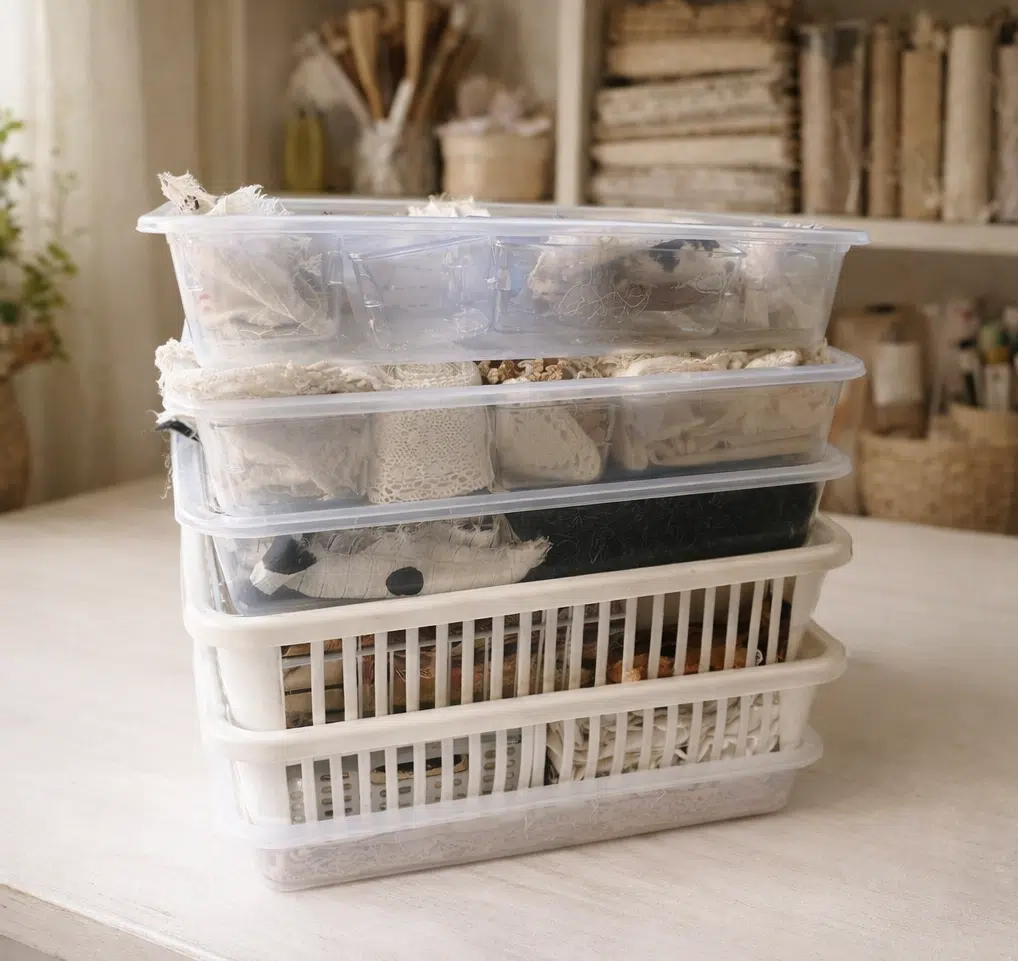
If you’re wondering how to store fabric scraps without feeling overwhelmed, you’re not alone.
For years, I struggled with fabric scrap storage. I would collect beautiful bits of lace, dyed cotton, burlap, gauze, stitched leftovers — and then… pile them somewhere. I tried baskets. Zip pouches. Folding systems. Color-coded stacks.
Some worked for a while. None lasted.
After 3–4 years of experimenting with different fabric scrap organization methods, I finally found something that works beautifully — and stays working.
Today I want to share exactly how I organize my scraps using drawer organizers and tray systems, and why this simple solution has transformed my creative flow.
Before we begin, tell me in the comments later —
Do your scraps inspire you… or stress you out?
Why Storing Fabric Scraps Matters More Than You Think
Your fabric scrap storage system directly affects your creativity.
If your scraps are:
- Hidden
- Mixed randomly
- Hard to access
- Overstuffed
You will avoid using them.
But if your fabric scraps are visible, separated, and easy to pick from, they become an invitation to create.
My Journey: 4 Years of Trying Different Fabric Scrap Storage Systems
Over the past few years, I have tried:
- Big open baskets
- Folding scraps like fat quarters
- Ziplock bags
- One large “everything” box
- Color sorting without structure
Each system worked temporarily.
But what kept happening was:
- I couldn’t see what I had
- Small pieces disappeared
- I wasted time digging
I realized I didn’t need more storage.
I needed smaller compartments inside bigger baskets.
The Fabric Scrap Storage System That Finally Worked
Here is what I did.
I bought:
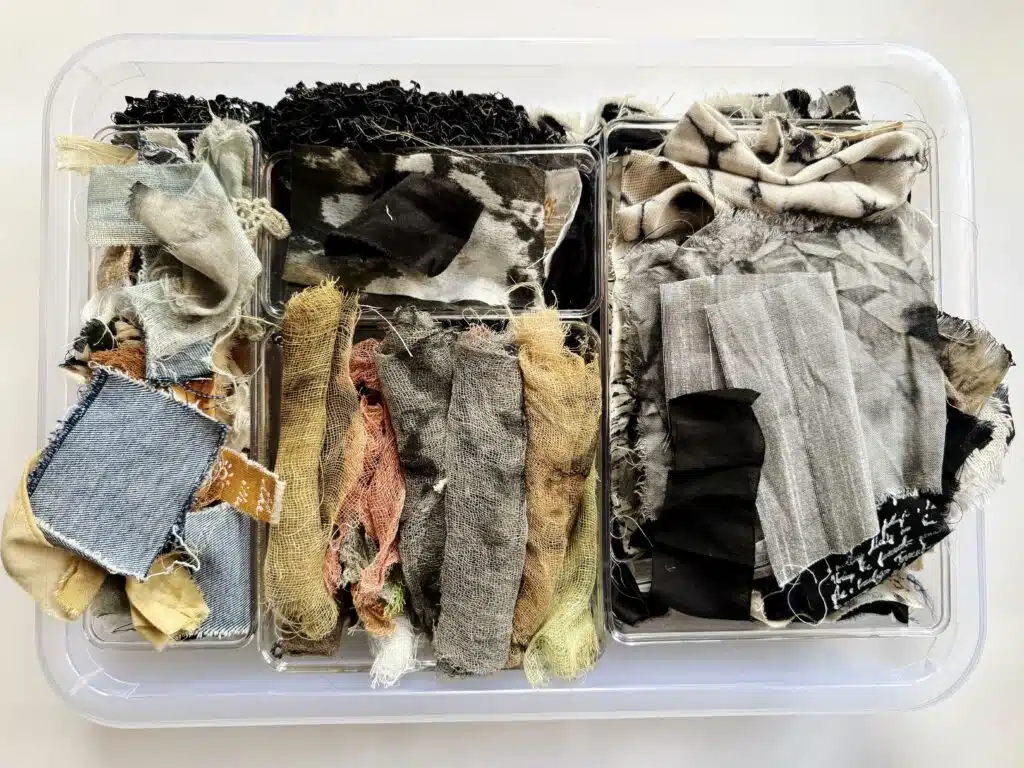
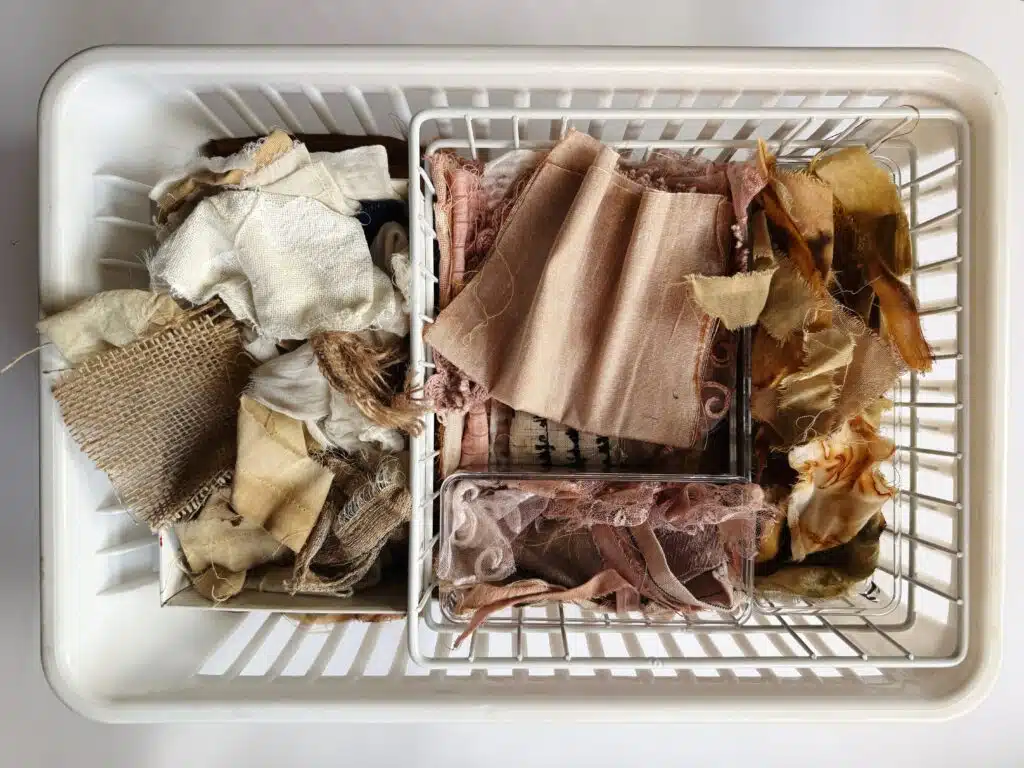
- Drawer organizers (the kind used for makeup drawers)
- Small tray organizers
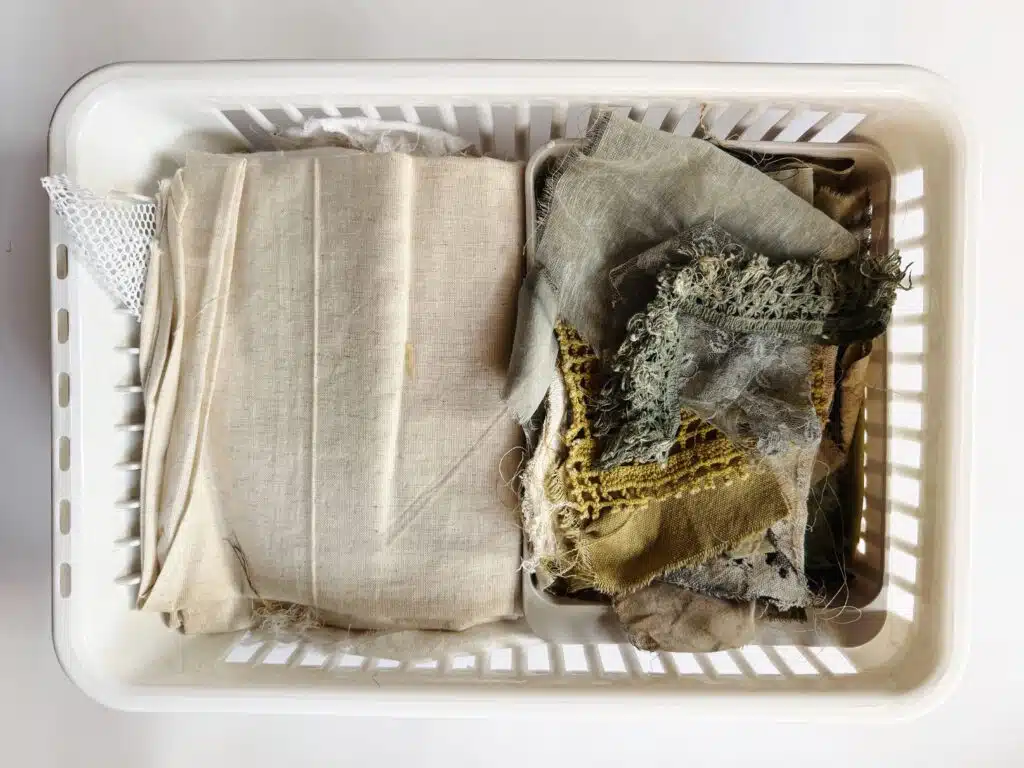
- Larger outer baskets to hold everything
All from Amazon.
Then I created a layered system.
Step 1 – Separate by Category
Instead of just sorting by color, I grouped by type and use:
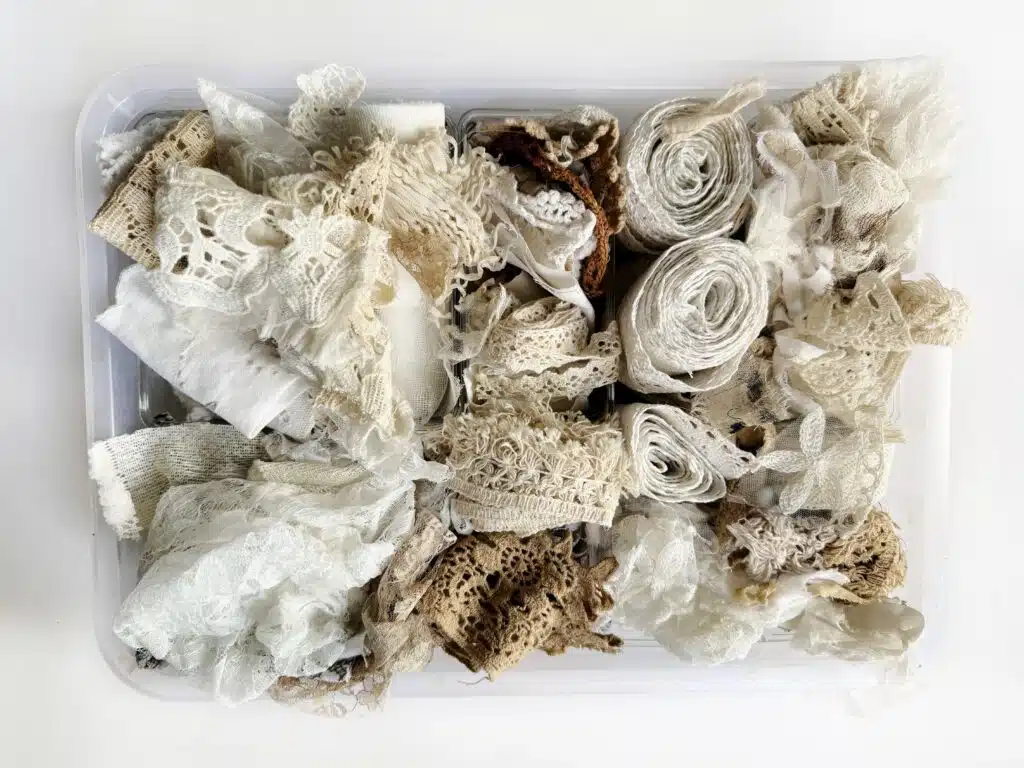
- Lace and trims
- Dyed cotton scraps
- Gauze and cheesecloth
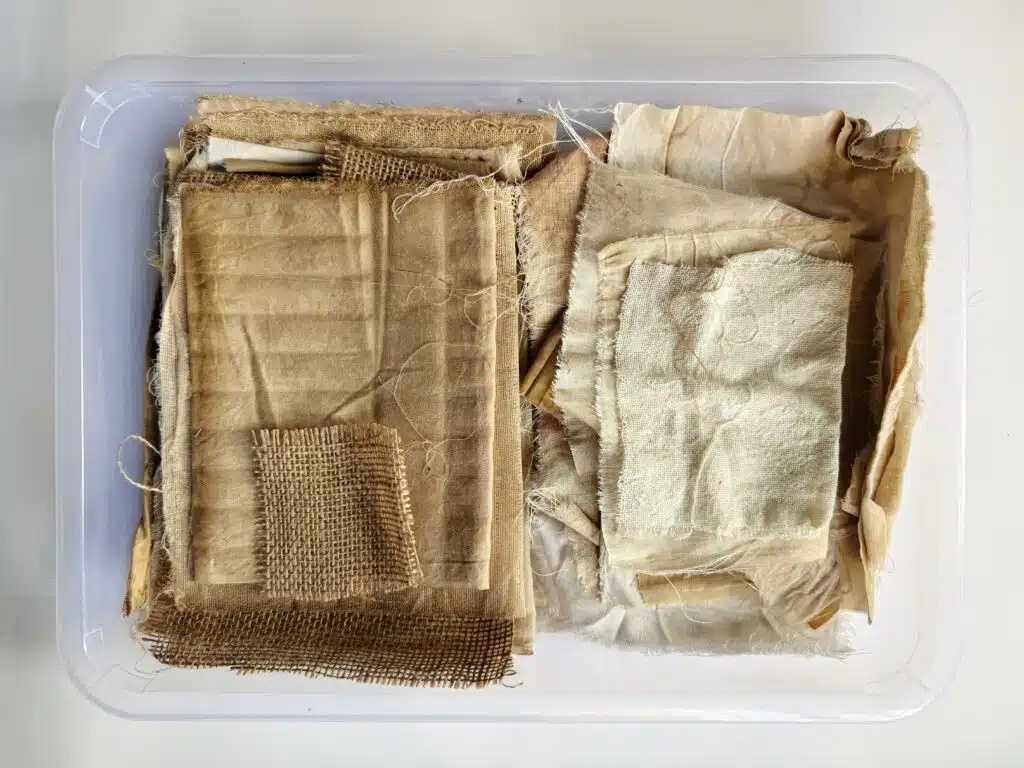
- Neutral base fabrics
- Textured pieces (burlap, stitched samples, layered experiments)
This made my fabric scrap organization more intuitive.
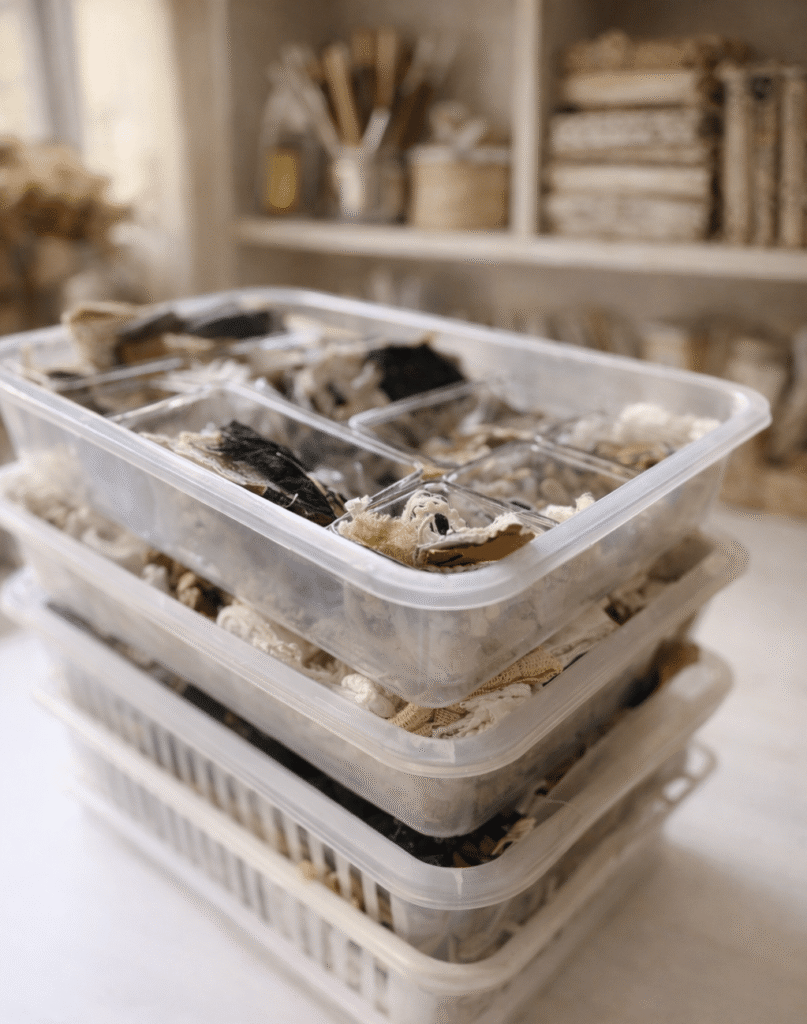
Step 2 – Use Drawer Organizers Inside Larger Baskets
This was the game-changer.
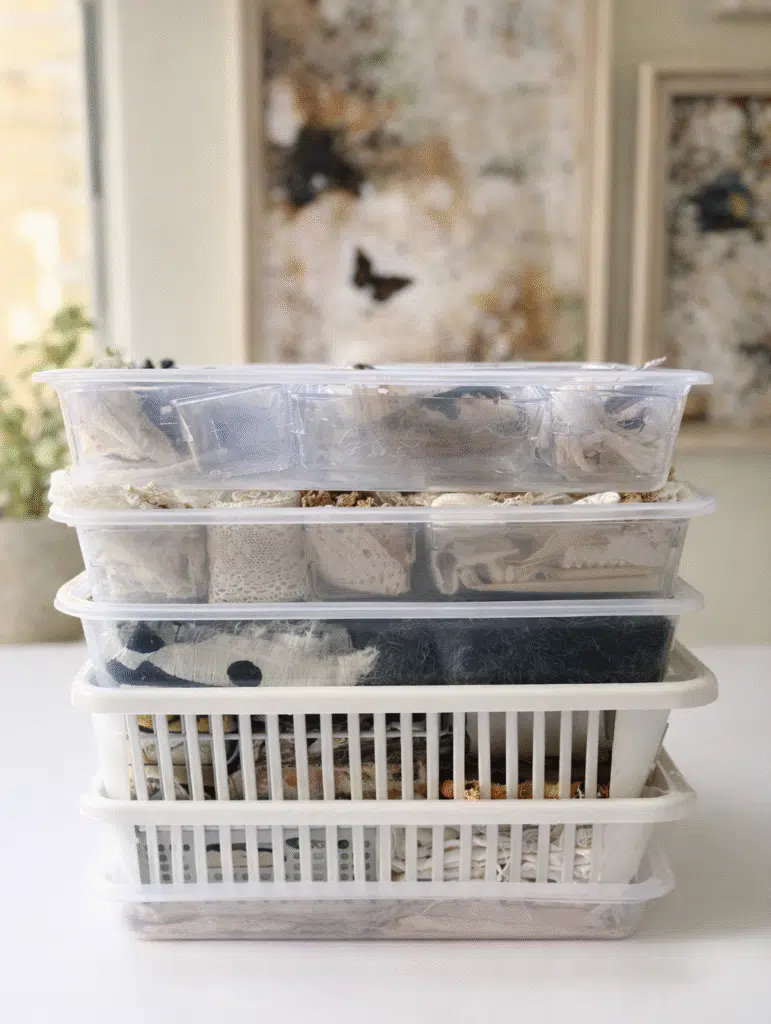
I placed small drawer organizers inside larger trays and baskets.
Each small compartment holds:
- Tiny lace fragments
- Rolled strips
- Folded rectangles
- Small stitched leftovers
Now nothing floats around loosely. Everything has a boundary.
Step 3 – Stackable Trays for Easy Access
I also bought stackable tray organizers.
This allows me to:
- Pull out one tray
- Place it on my table
- Work directly from it
- Return it neatly afterward
This is incredibly helpful for mixed media and textile collage sessions. Instead of dumping everything out, I simply pick the box I need to work with.
Step 4 – Make It Visible and Pickable
The reason this fabric scrap storage idea works is visibility.
- Clear containers.
- Open tops.
- Divided sections.
I can see colors, textures & shapes.
And that visual stimulation feeds my creativity.
A Free Art Journaling Class for Beginners
Learn how to use found papers & fabrics & discarded boxes, and turn them into beautiful art journals that feels inviting to work in. Click here to join.
7 Fabric Scrap Storage Ideas You Can Try
1. Use Small Drawer Organizers Inside Larger Baskets
Instead of one large container, divide scraps into smaller compartments so they don’t mix and disappear.
2. Sort by Fabric Type Before Color
Separate lace, gauze, base cotton, textured pieces, and dyed scraps first. Then refine by color if needed.
3. Create Stackable Tray Systems
Use trays you can lift out and place directly on your table. This prevents dumping everything out.
4. Roll Strips Instead of Folding Them
Rolled strips take less visual space and are easier to browse quickly.
5. Keep One “Current Project” Scrap Tray
Maintain a working tray only for your active piece. Rotate scraps in and out intentionally.
6. Use Clear Containers for Visibility
Clear bins reduce friction and increase creative stimulation because you can see textures instantly.
7. Avoid Overfilling Compartments
Leave breathing space. Overstuffed bins create visual chaos and decision fatigue.
Why This Fabric Scrap Organization Method Works So Well
This system works because:
- It reduces decision fatigue
- It protects delicate scraps
- It allows quick selection
- It prevents re-messing everything
Most importantly, it supports flow.
When I sit down to create, I don’t want to organize.
I want to make.
How This Supports My Creative Practice
As someone who works with layered textiles and teaches fabric-based art (like my Woven Stories class), accessibility matters.
When scraps are organized:
- I experiment more
- I layer more intuitively
- I waste less material
- I feel less overwhelmed
Organization, for me, is not about perfection.
It’s about removing friction.

Mixed Media Artist Resource Library
500+ free printables, collage papers, creative prompts
I’ve put together a free resource library designed just for you, packed with everything you need to fuel your creativity. It’s my way of giving back to the mixed media community with resources to inspire your next project. Click here to join.
Slow Stitching on Fabric Scraps
Once you figure out how to store fabric scraps, the next step is using them.
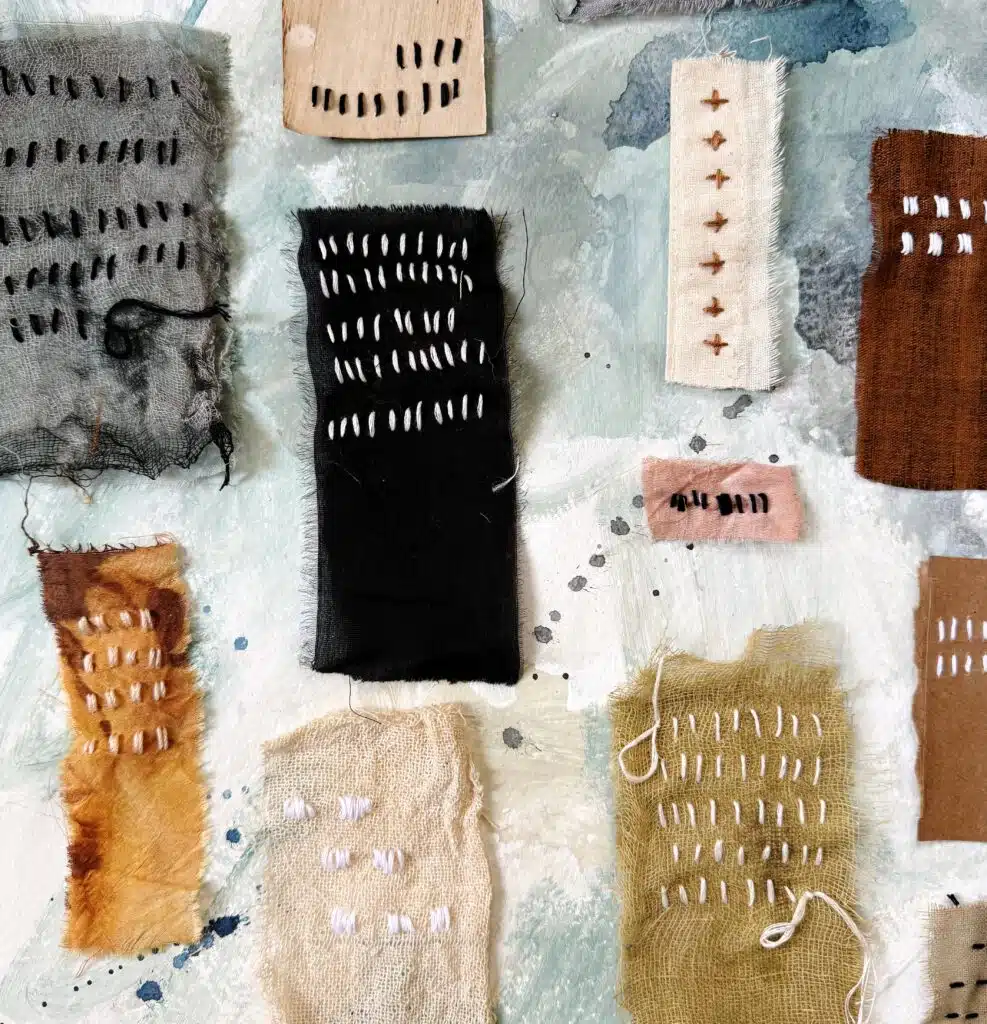
One of my favorite ways is slow stitching on fabric scraps.
Because my fabric scrap storage system keeps small pieces visible and separated, I can easily pick:
- A neutral base scrap
- A small lace fragment
- A textured overlay
Then I simply add hand stitches — running stitch, seed stitch, simple layering.
These tiny stitched pieces often become textile patches or collage elements.
If you enjoy mindful, tactile work, you may love exploring my post on
👉 Slow Stitching on Fabric Scraps – 20+ Creative Ideas
Fabric Collage Ideas Using These Scraps
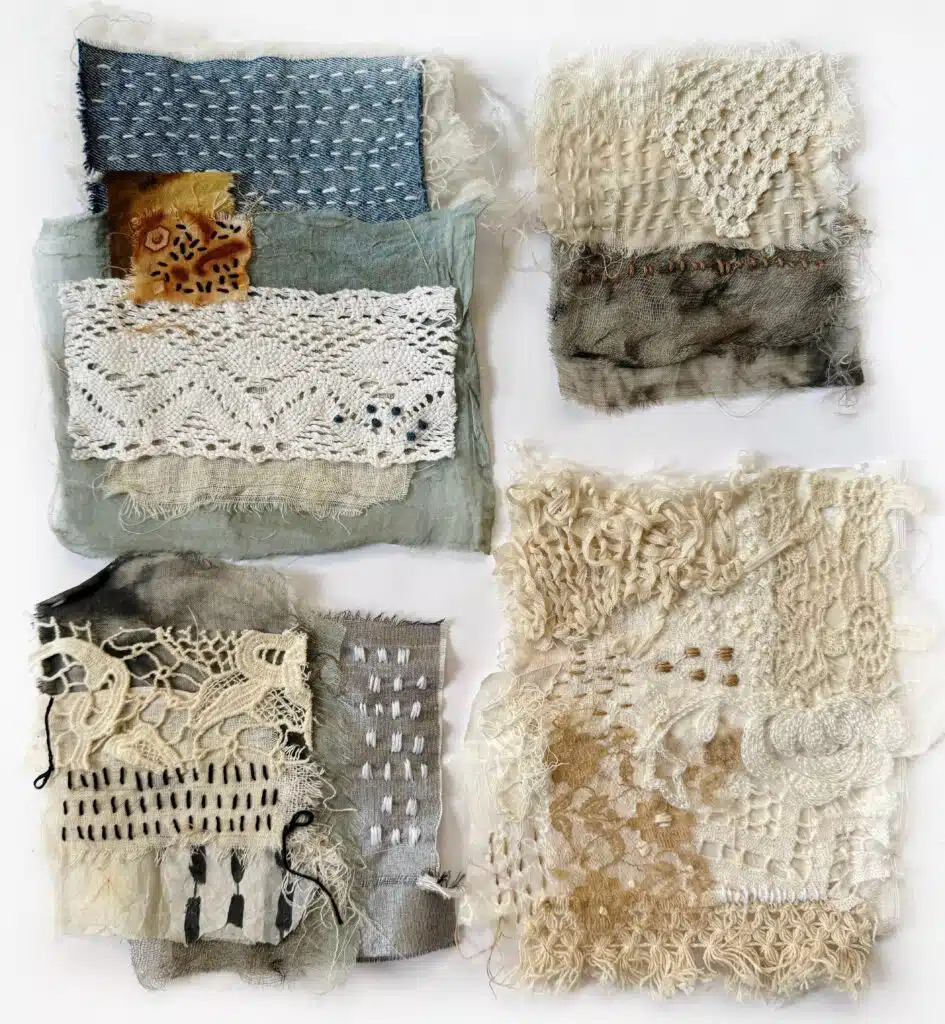
Another beautiful way to use organized scraps is through fabric collage.
When your fabric scraps are sorted and easy to access, collage becomes intuitive.
Over time, I’ve created so many fabric collages, all from these organized trays.
You can see different examples and inspiration here:
👉 20+ Fabric Collage Ideas Using Fabric Scraps
Proper fabric scrap organization doesn’t restrict creativity — it makes experimentation effortless.
⁉️ FAQs
1. What is the best way to store fabric scraps?
The best way to store fabric scraps is in small compartments inside larger containers so pieces stay separated and visible.
2. Should I sort fabric scraps by color or type?
Sorting by fabric type first is often more practical, then by color within that group.
3. How do I store very tiny fabric pieces?
Use drawer organizers or small divided trays to prevent them from getting lost.
4. Can I store fabric scraps in plastic containers?
Yes. Clear containers are excellent for fabric scrap organization because they improve visibility.
5. How often should I declutter fabric scraps?
Every 6–12 months, review pieces you realistically use.
✨ Bonus Tips
Keep only scraps larger than a usable minimum size
Store delicate lace flat
Avoid overfilling compartments
Label baskets if needed
Maintain one active working tray
 Final Thoughts
If you’ve been searching for how to store fabric scraps in a way that actually supports your creativity — this simple system might help.
It took me years to arrive at something sustainable.
And sometimes that’s how organization works — slow refinement.
Now I’d love to hear from you:
How are you currently storing your fabric scraps?
What’s working — and what isn’t?
Tell me in the comments below. 💛