There’s something about reaching the halfway point of a project.
You’re no longer figuring things out from the beginning… but you’re also not at the end yet. You’re somewhere in between—more settled, a little more trusting of your process.
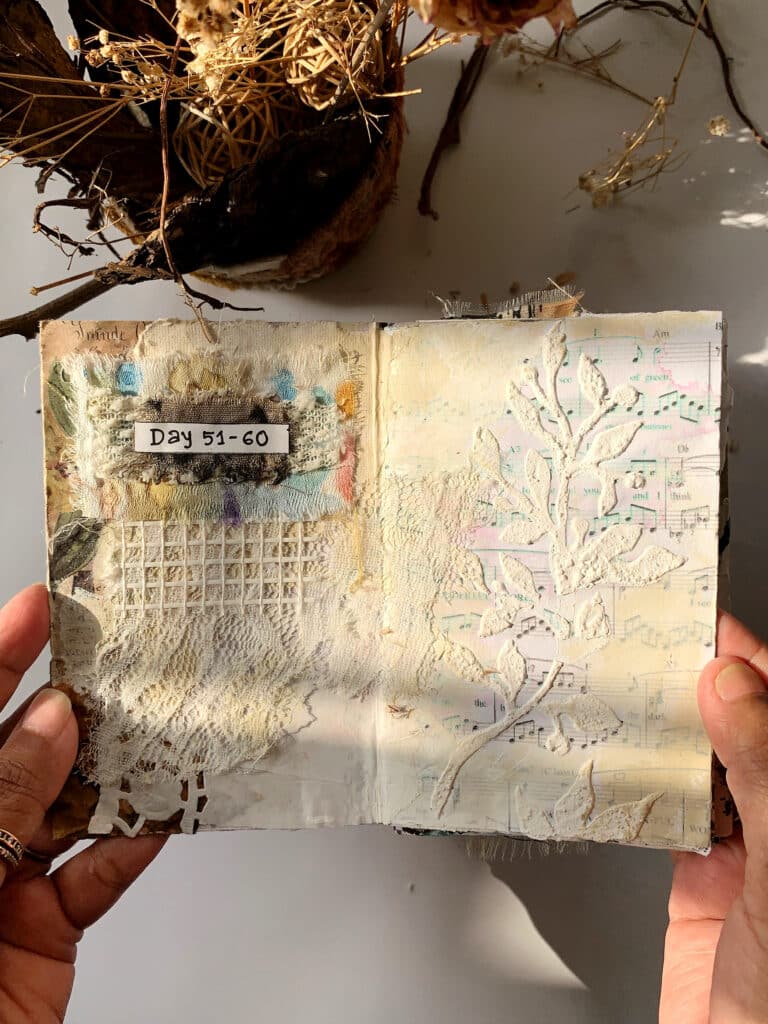
I’ve completed Days 1 to 50 of my 100-day book, and now I’ve turned the book around to begin the second half—Days 51 to 100.
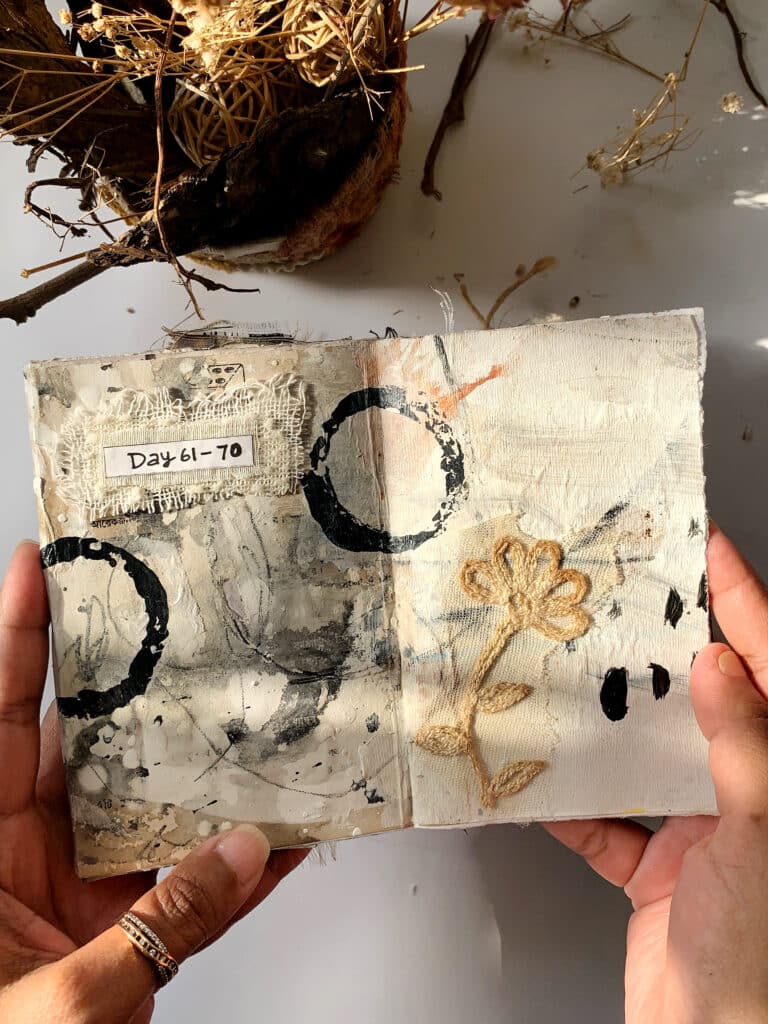
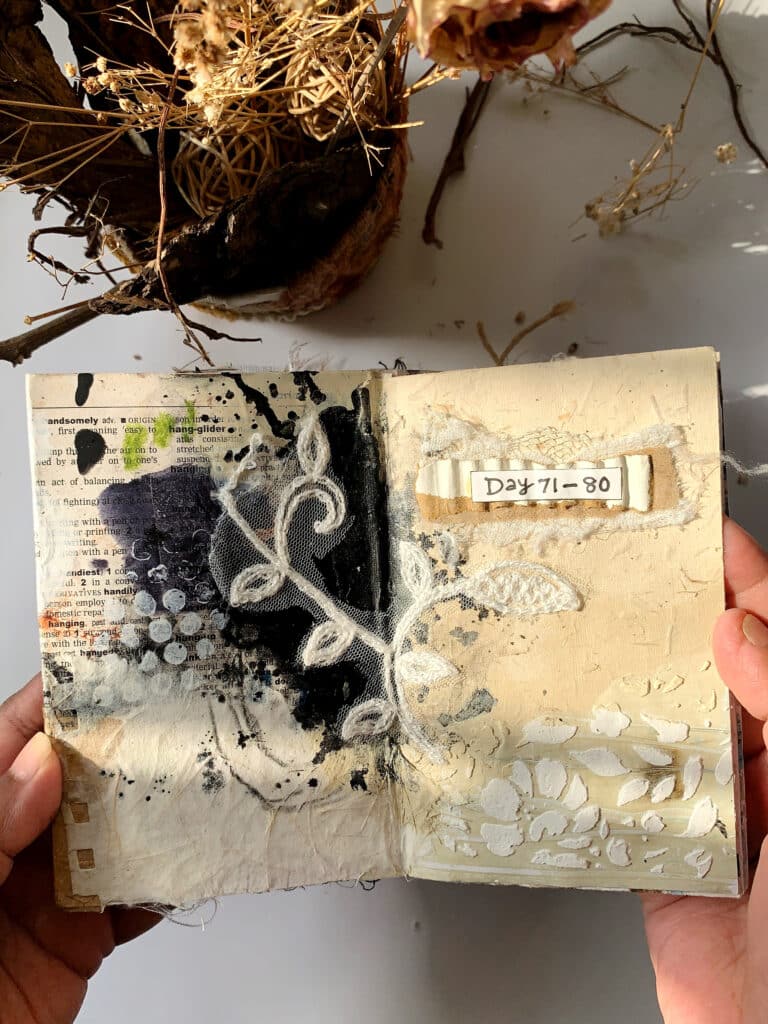
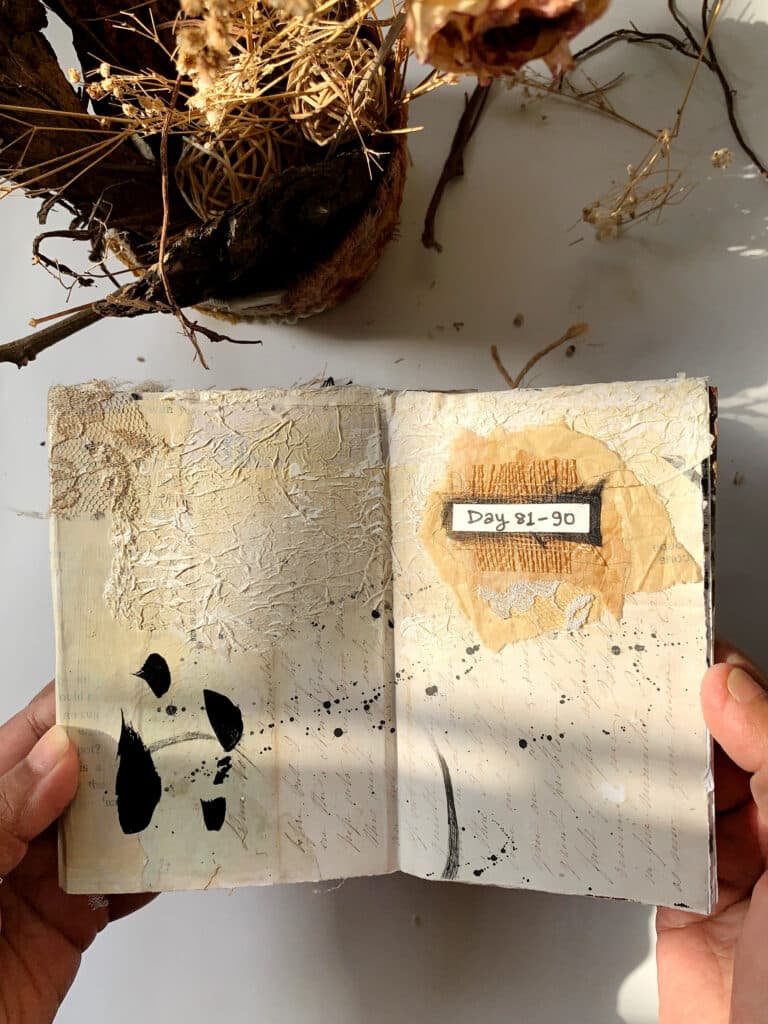
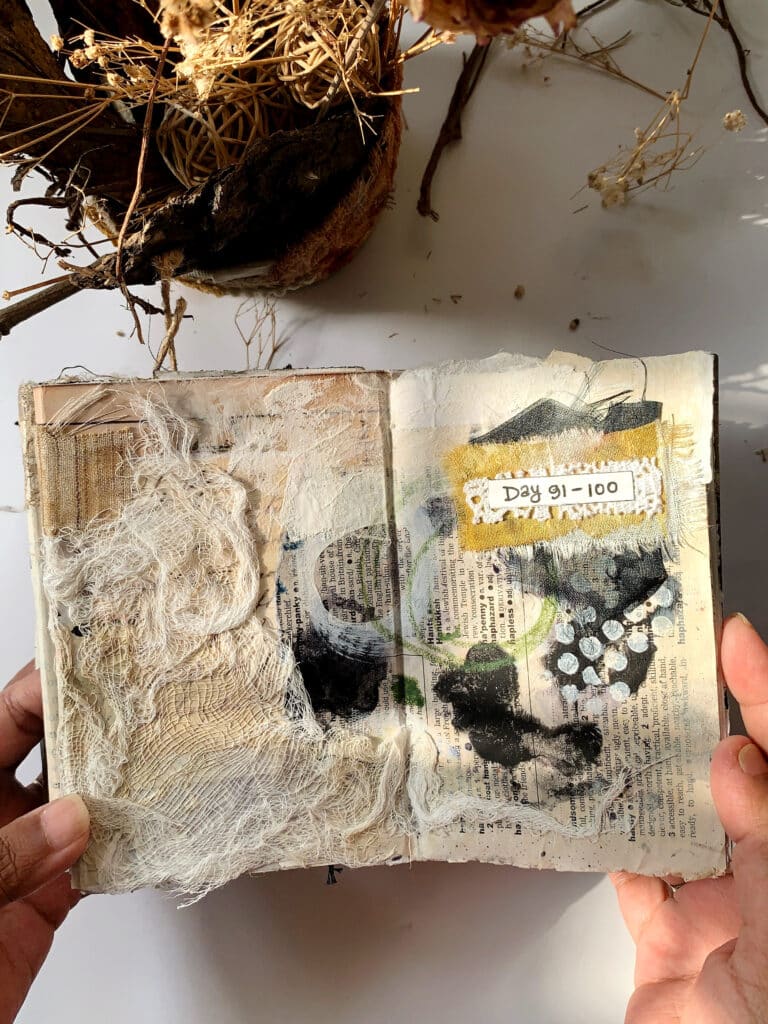
In this post, I’m sharing how I created the cover pages of each booklet using collage papers, layering papers and fabrics, letting textures overlap, and then finishing each page with a small, quiet focal point.
Nothing too planned. Just responding to what’s in front of me.
▶️ Watch the Full Process on YouTube
In this video, I’m creating five collage art journal pages—layering, blending, and slowly building each one without a fixed outcome in mind.
If You’re Following This Series
This is part of an ongoing process, and if you’d like to see how this book began, you can watch the earlier videos here:
Each part builds into the next, and this section feels like a natural continuation of that rhythm.
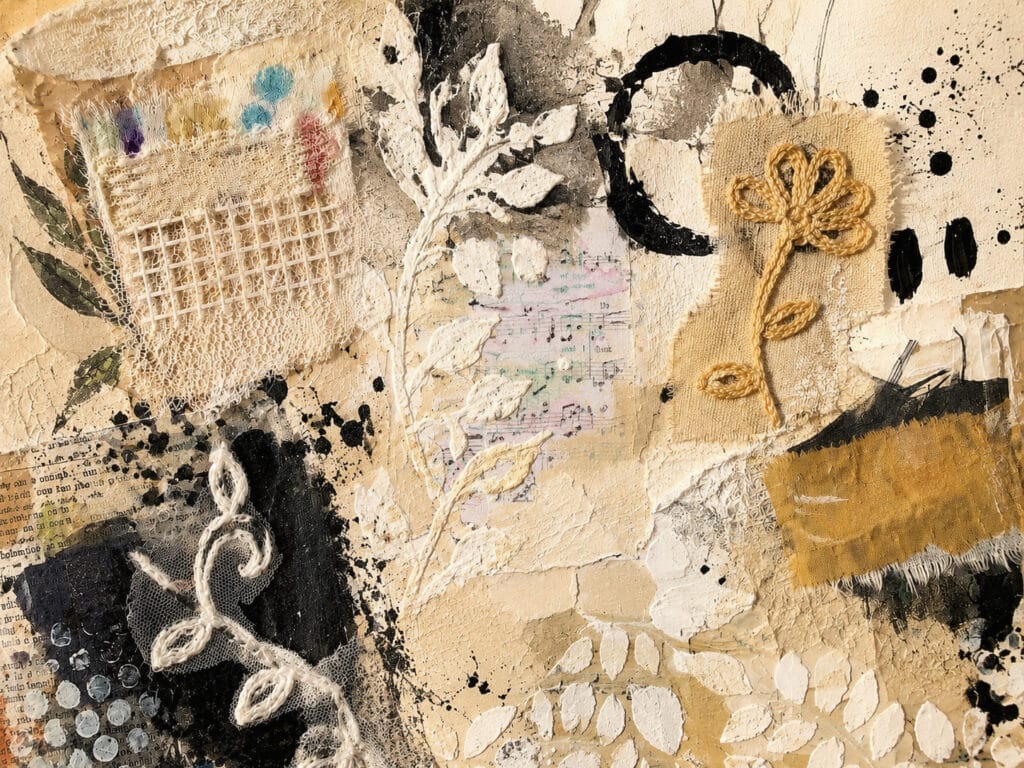
The 5 Collage Art Journal Pages
Each page holds its own mood.
Some feel heavier with layers, some feel softer and more open. But all of them come from the same place—starting without a plan and allowing the page to unfold.
How These Pages Come Together
I don’t follow a strict method, but there are a few steps that naturally repeat as I work.
1. Starting with collage layers
I begin by adding torn papers, book pages, fabric scraps, or anything that feels right in the moment.
There’s no right placement here. I’m just covering the surface and creating a base to respond to.
2. Blending the layers
Once the base is down, I start softening everything—sometimes with gesso, sometimes with paint, sometimes just by adding more layers.
This step helps bring all the different elements together so the page feels cohesive.
3. Building texture and depth
I might add gauze, thread, or extra pieces in certain areas.
Not everywhere—just in small sections. I like when some parts stay quiet and others hold a bit more weight.
4. Adding a focal element
At the end, I add something small—a word, a mark, or a simple element that gives the page a sense of completion.
Nothing too heavy. Just enough to hold the page together.
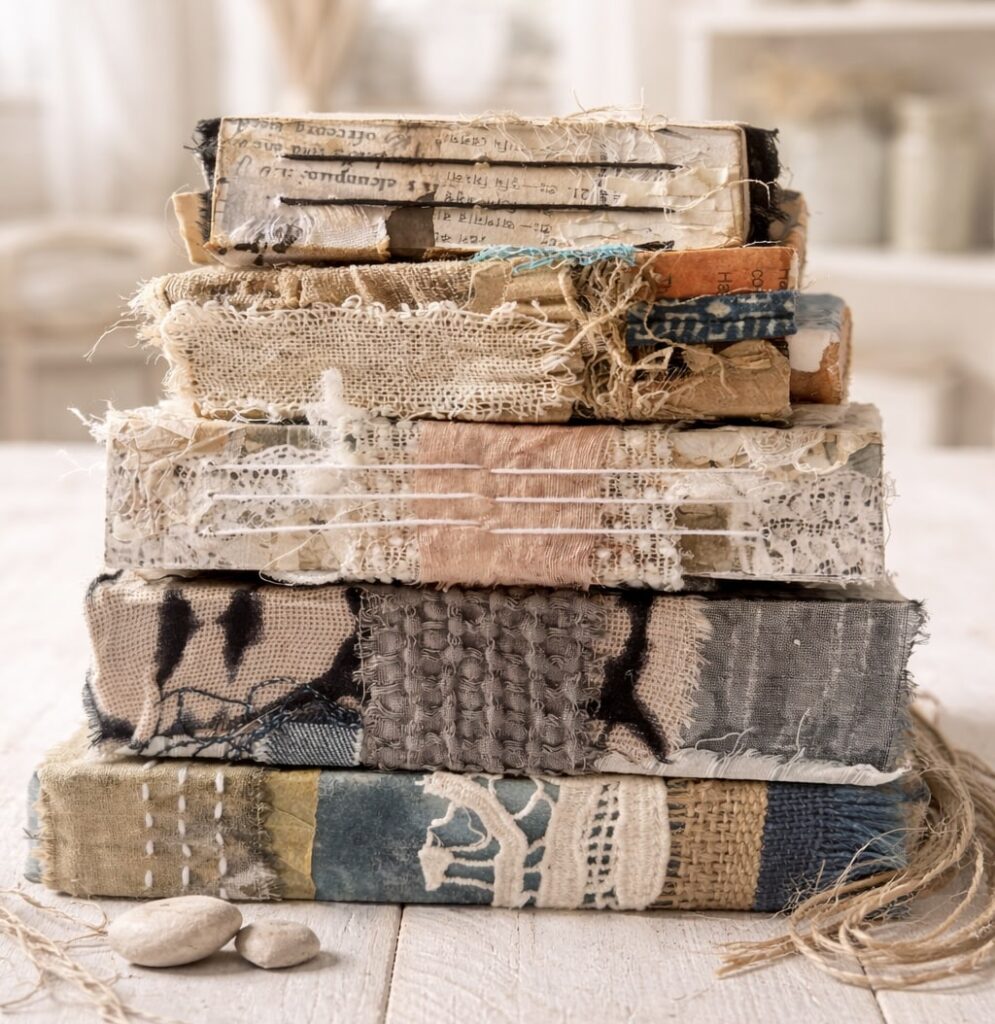
A Free Art Journaling Class for Beginners
Learn how to use found papers & fabrics & discarded boxes, and turn them into beautiful art journals that feels inviting to work in. Click here to join.
Working Without a Fixed Plan
One thing I’ve been learning through this project is that not every page needs a meaning before it begins.
Earlier, I used to think I had to decide what I was expressing before starting.
Now, I just begin.
These collage art journal pages are not about creating something perfect. They are about staying with the process, responding to what’s already on the page, and letting it evolve.
Materials I Used
You can keep this very simple. For these pages, I used:
- collage papers (old book pages, scrap papers)
- fabric pieces
- gauze
- acrylic paint / gesso
- thread and small found elements
You don’t need everything. Even a few papers and glue are enough to begin.
Mixed Media Artist Resource Library
500+ free printables, collage papers, creative prompts
I’ve put together a free resource library designed just for you, packed with everything you need to fuel your creativity. It’s my way of giving back to the mixed media community with resources to inspire your next project. Click here to join.
 Final Thoughts
Half of the book is now complete, and this feels like a quiet transition into the second half of the project.
These pages are just the beginning of Days 51 to 100.
If you’re working on your own art journal, you can try this approach—start with collage, build slowly, and let the page guide you.
And if you’d like to see the full process, don’t forget to watch the video linked above.