Art Journaling Doesn’t Need a Plan
Art journaling is often misunderstood as something that needs a theme, a clear idea, or a finished look. In reality, an art journal works best when it becomes a place to respond rather than plan. It’s a space where you meet the page as it is — with curiosity instead of expectation.
For many mixed media artists and creative beginners, the hardest part is knowing what to do next. Not because there’s a lack of ideas, but because there’s too much pressure to do it right. This is where gentle art journaling ideas help. They give you a way to begin without locking you into an outcome.
This blog brings together practical, intuitive art journaling ideas you can return to again and again. There is no sequence you need to follow. Each idea stands on its own and can be adapted to your own materials, mood, and pace.
Why Art Journaling Is About Responding?
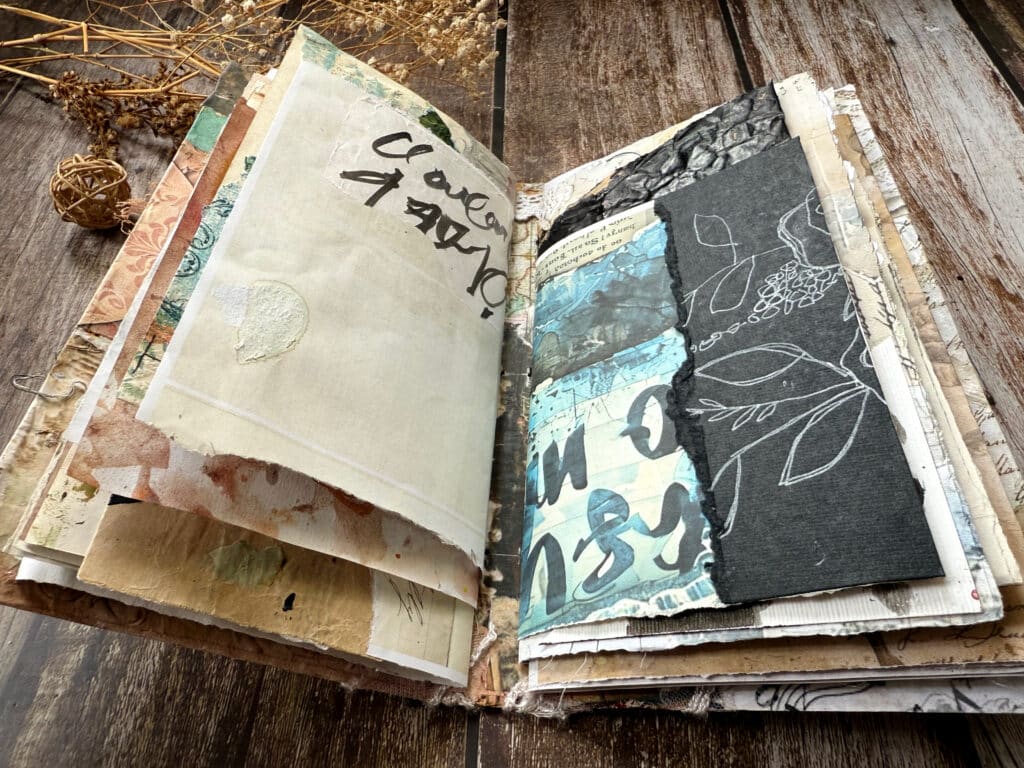
In mixed media art journaling, much of the work has already been done before you consciously decide what to create. Layers, textures, stains, marks, and scraps are already present. The journal page holds history.
Rather than starting fresh every time, art journaling becomes a practice of responding:
responding to colour already on the page
responding to textures that catch your eye
responding to how your body and emotions feel in the moment
When you work this way, the journal stops being about performance or productivity. It becomes a space of conversation and trust.
Using Found Materials as a Starting Point
Found papers and everyday materials are powerful because they remove pressure. Envelopes, packaging, old book pages, fabric scraps, tickets, and paper bags already carry texture, wear, and imperfection.
When these materials form the base of your mixed media art journal:
you stop worrying about wasting good supplies
you feel freer to experiment and play
mistakes become part of the surface, not something to hide
This approach supports both beginner art journaling and more experienced intuitive practices.
Mixed Media Artist Resource Library
500+ free printables, collage papers, creative prompts
I’ve put together a free resource library designed just for you, packed with everything you need to fuel your creativity. It’s my way of giving back to the mixed media community with resources to inspire your next project. Click here to join.
The Art Journal You Need To Implement These Ideas
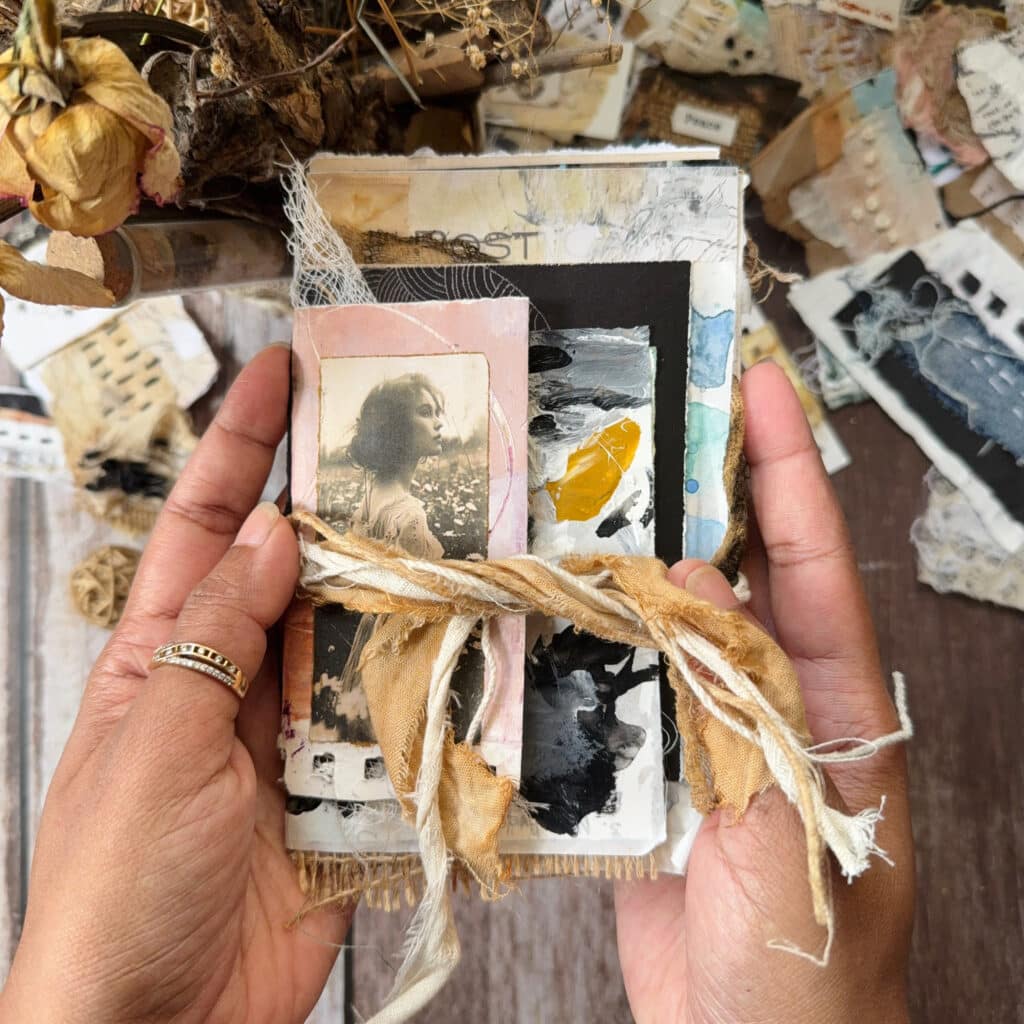
Before working through the ideas in this post, it helps to have an art journal that is already made using painted papers.
Painted papers simply mean papers that already have some paint, marks, colour, or texture on them. They don’t need to look finished or pretty. In fact, messy and imperfect pages work best.
If you don’t yet have an art journal made with painted papers, I recommend starting there first. I’ve created a free beginner-friendly class called Gathered Art Journals, where I show you step by step how to gather everyday papers, add paint and intuitive marks, and bind them into a simple handmade art journal.
Once your journal is ready, you can come back to this post and use any of the ideas below as gentle prompts, working slowly and responding to what’s already on your pages.
🌿 Free Art Journaling Class for Beginners
In this class you learn how to use found papers & discarded boxes, and turn them into beautiful art journals that feels inviting to work in.
This beginner-friendly art journaling class is not about making something perfect. It’s about gathering, assembling, and allowing meaning to emerge—both on the page and within ourselves.
Gentle Art Journaling Ideas You Can Return to Anytime
Below are fully explained art journaling ideas meant to be explored slowly. You do not need to try all of them. Think of these as entry points you can come back to whenever your journal feels quiet or overwhelming.
1. Add Collage Clusters as Flip-Outs, Flaps, or Pockets
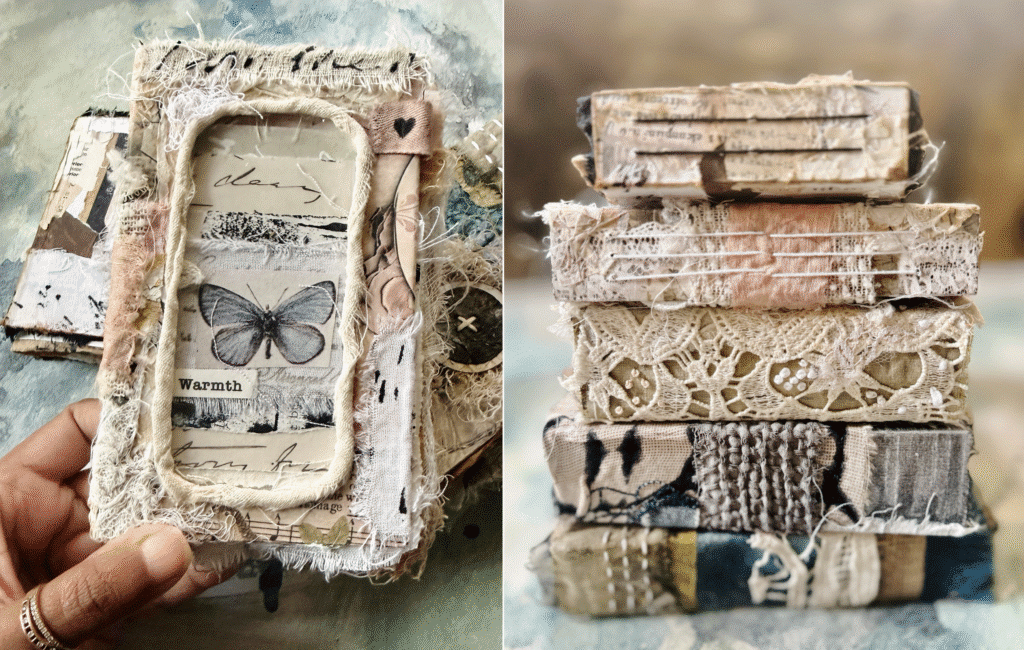
Instead of gluing collage clusters flat, let them become interactive elements. Attach clusters so they flip open, fold outward, or as pockets. You can also fragment a cluster into smaller pieces and place them across different areas of the spread.
This creates movement and encourages the journal to be handled, not just viewed.
2. Journal Your Thoughts Without Structure
Art journaling includes words, but not in a traditional journaling sense. You might write:
what you’re feeling in the moment
a few disconnected thoughts
a quote or a sentence that you want to record for future reference.
Writing can sit under paint, inside collage, or partially covered. Expression matters more than clarity.
3. Create Colour Swatches as Visual Notes
Use your art journal as a place to record colour combinations that draw you in. This might be:
a small set of swatches
colour names written beside marks
notes about why the palette feels calming, energetic, or heavy
Over time, this becomes a personal colour library you can return to for future projects.
4. Explore Colour Proportions on a Full Page
Instead of swatching small areas, paint an entire page using a limited colour palette. Change the dominance of each colour — one version where one colour leads, another where it recedes.
Once the background dries, respond with doodles, line work, or subtle marks. This helps you understand how colour relationships change the emotional tone of a page.
5. Collage First, Then Respond With Paint and Marks
Begin by collaging painted papers directly onto the journal page. Don’t worry about balance yet. Once everything is in place, use paint to unify the surface.
After that, make marks into the page. It doesn’t need to outline anything specific — it can simply move across the page, holding layers together and adding rhythm.
6. Stitch Directly Into Journal Pages
Instead of stitching only on separate clusters, stitch straight into your journal pages. Use thread as a mark-making tool:
follow the edge of a shape
repeat simple lines
stitch where the page feels too quiet
Loose threads and uneven stitches are part of the texture.
7. Doodle and Mark-Make in Response
Rather than filling the whole page, work in small areas. Let marks respond to existing stains, brushstrokes, or textures. You might repeat one shape or line to build rhythm and calm.
This kind of response-based mark-making builds trust in your intuition.
8. Cover, Rework, and Continue
If you make a mark or doodle that doesn’t feel right, don’t stop. Collage over it. Paint over it. Stitch across it.
Art journaling is not about fixing — it’s about continuing the conversation. Each layer becomes part of the story.
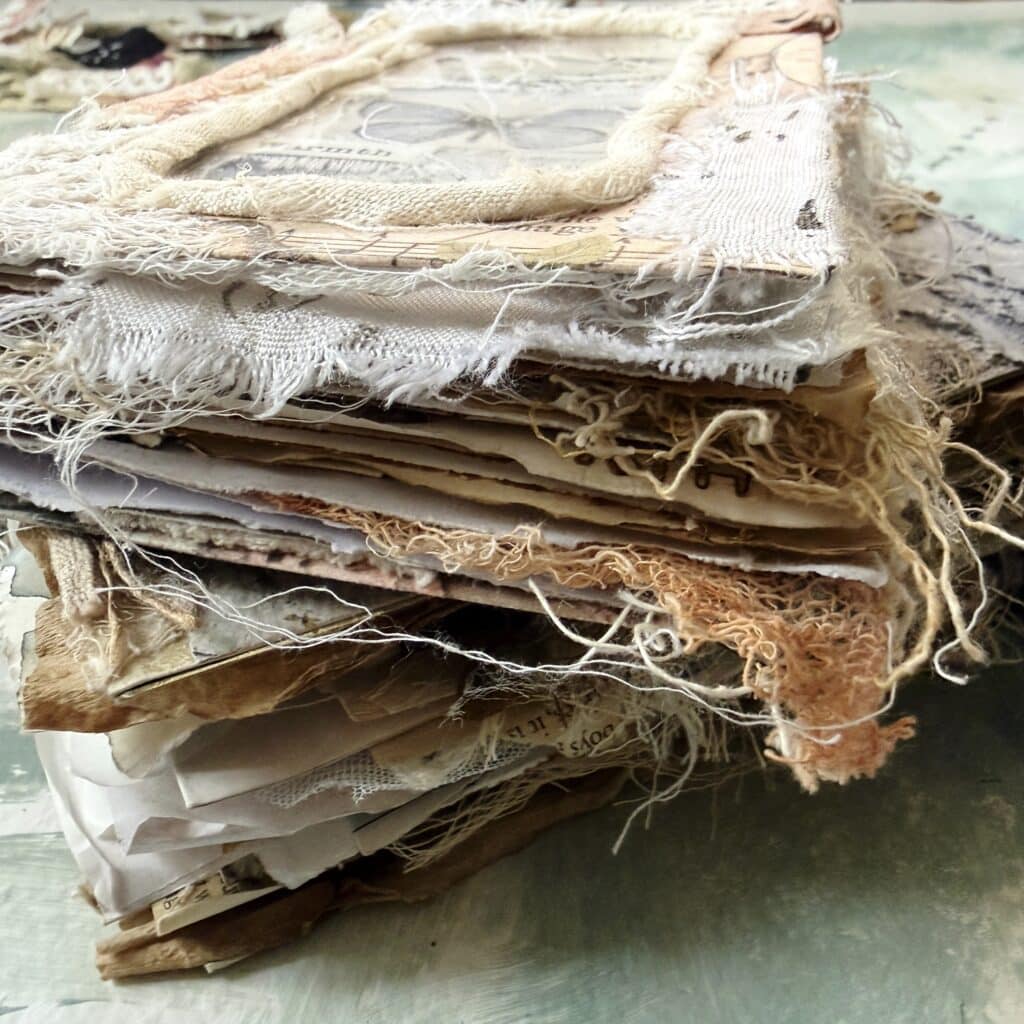
9. Add Fabric and Textile Elements
Introduce fabric scraps into your pages. Stitch, paint, or leave them raw. Fabric brings texture and contrast to paper-based pages.
You don’t need to treat fabric differently from paper — let it become part of the surface.
10. Build a Page Using Everyday Ephemera
Create a journal page using small scraps from your everyday life — the kinds of things that usually get thrown away. These pieces become the starting point for the page.
For example:
If you went to a movie, add the ticket stub, receipt, or even a torn piece of the popcorn bag
If you bought a new dress, include the clothing tag or packaging label
If you had coffee outside, add a napkin, sleeve, or receipt
If you received a package, use wrapping paper, labels, or cardboard
Glue these items onto the page first, without worrying about composition. Once they’re in place, respond with paint, marks, stitching, or doodles to bring the page together.
11. Use Repetition as a Grounding Practice
Choose one simple mark and repeat it across the page slowly. Repetition can be calming and meditative. The page builds itself without decision-making.
This is especially helpful when you feel creatively stuck.
12. Work With Negative Space
Intentionally leave large areas blank. Work only in one corner, along one edge, or in a narrow strip. Negative space gives the page breathing room and helps you unlearn the habit of filling everything.
13. Pick Just Two Materials for a Page
Limit yourself to two materials, such as:
paint + fabric
thread + paper
tissue paper + paint
Work only with those materials and observe how they interact. Limitation sharpens attention and deepens material awareness.
14. Create a Question Page
Write a single open-ended question on the page. Don’t answer it. Layer around it with paint, collage, or marks. Let the question stay open.
This turns the page into a space of inquiry rather than resolution.
15. Let Pages Stay Unfinished
Not every page needs closure. If a page feels complete for now, stop. You can always return later.
An art journal is a living object — unfinished pages invite future responses.
Why These Art Journaling Prompts Work Best on Pre-Painted Pages
These art journaling ideas work best when you’re not starting from a completely blank page.
When your journal already has pre-painted papers, marks, stains, and textures, you’re no longer trying to invent something from scratch. Instead, you’re responding — to colour, to layers, to what’s already present. This shift makes art journaling feel more natural, especially for beginners and intuitive artists.
A journal built with pre-painted pages:
removes the pressure to “make something happen”
gives you visual cues to respond to
encourages layering instead of perfection
makes journaling feel like a conversation rather than a task
If you’re new to art journaling or feel unsure about where to begin, I recommend first creating an art journal using painted papers and found materials. Once that foundation is in place, all of the ideas shared below become much easier to explore because you already have something to work with.
 Final Thoughts: Let the Art Journal Be a Place of Trust
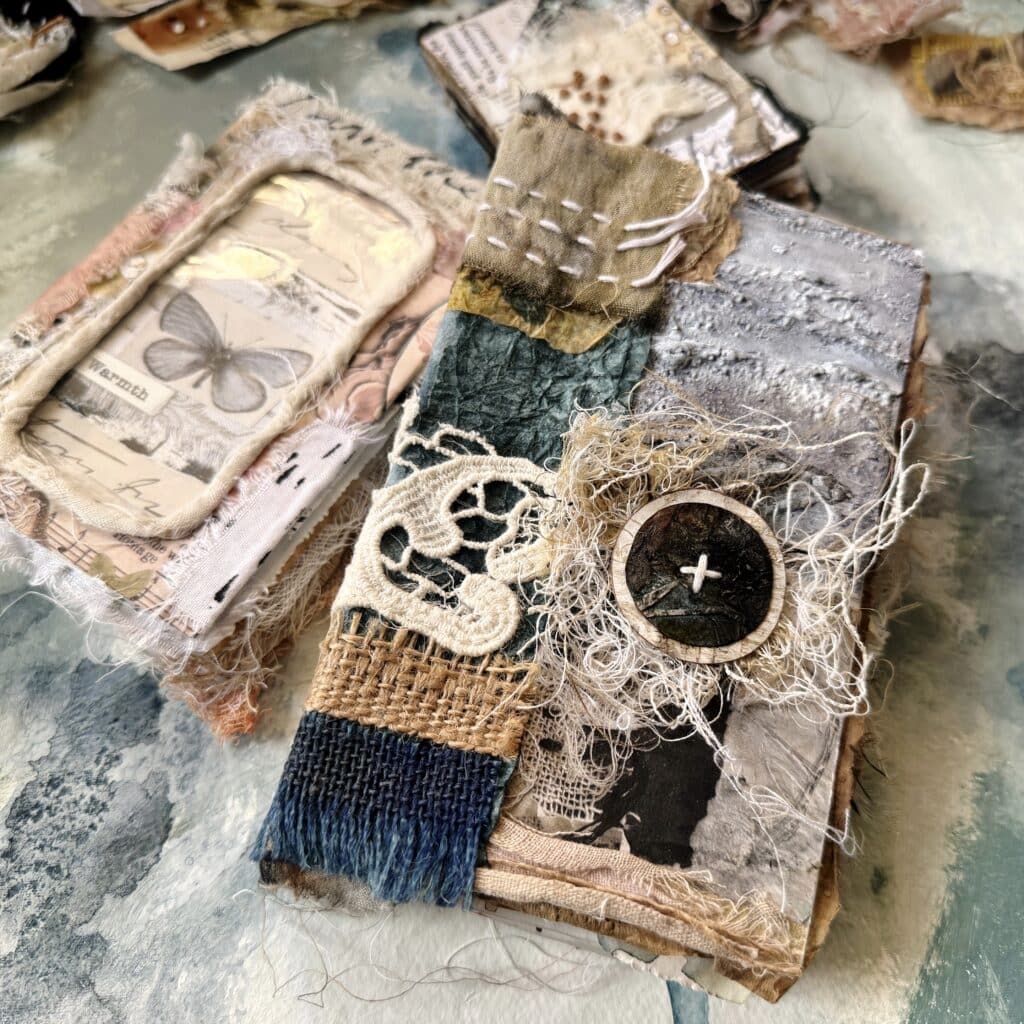
These art journaling ideas are not meant to be finished projects, but ongoing practices you can return to as your practice evolves.
Mixed media art journaling doesn’t ask for perfection, consistency, or productivity. It asks for presence. When you give yourself permission to respond rather than perform, your journal becomes a place of honesty and freedom.
Use these ideas gently. Return to them when you feel stuck. Let your journal grow slowly, one layer at a time.