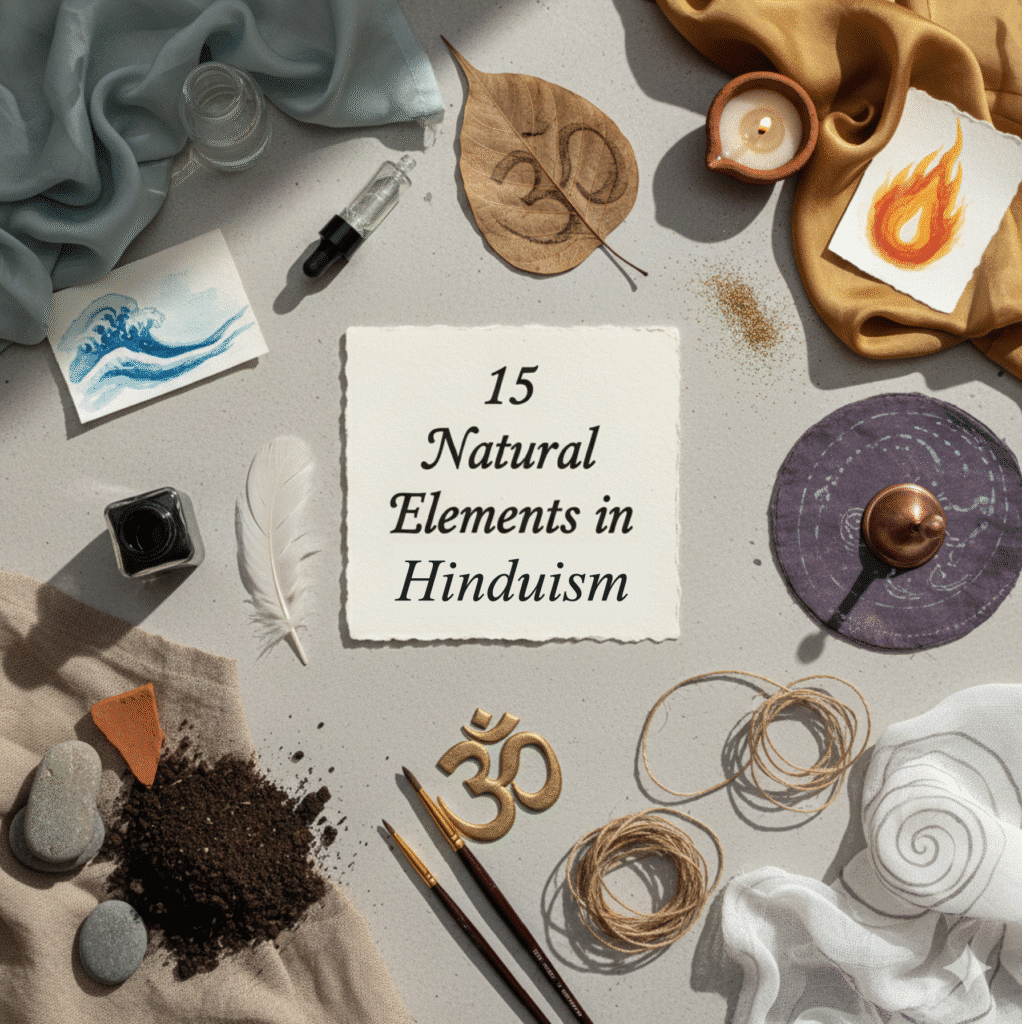
Nature has always held a sacred place in Hindu philosophy—not as something separate from the divine, but as an expression of it.
Earth, water, fire, air, and space are not merely physical elements; they are living forces that shape consciousness, rhythm, and life itself. These symbols have quietly informed art, ritual, and storytelling for thousands of years.
For mixed media artists, this symbolism offers a deeply intuitive framework. Working with texture, layers, color, and material mirrors the same elemental language found in Hindu thought. Soil becomes grounding, water becomes emotion, fire becomes transformation, and space becomes breath.
In this guide, we explore 15 natural and symbolic elements from Hinduism and how they can be thoughtfully incorporated into mixed media artwork. Rather than copying religious imagery, the focus is on translating essence into texture, color, and form—allowing ancient symbolism to inform your creative process in a subtle, personal way.
Understanding Hindu Symbolism in Nature
What Makes Nature Sacred in Hinduism?
In Hinduism, nature isn’t just a backdrop for human activity; it’s revered and deeply intertwined with spirituality. Natural elements are seen as manifestations of the divine, offering insights into life’s mysteries and spiritual truths.
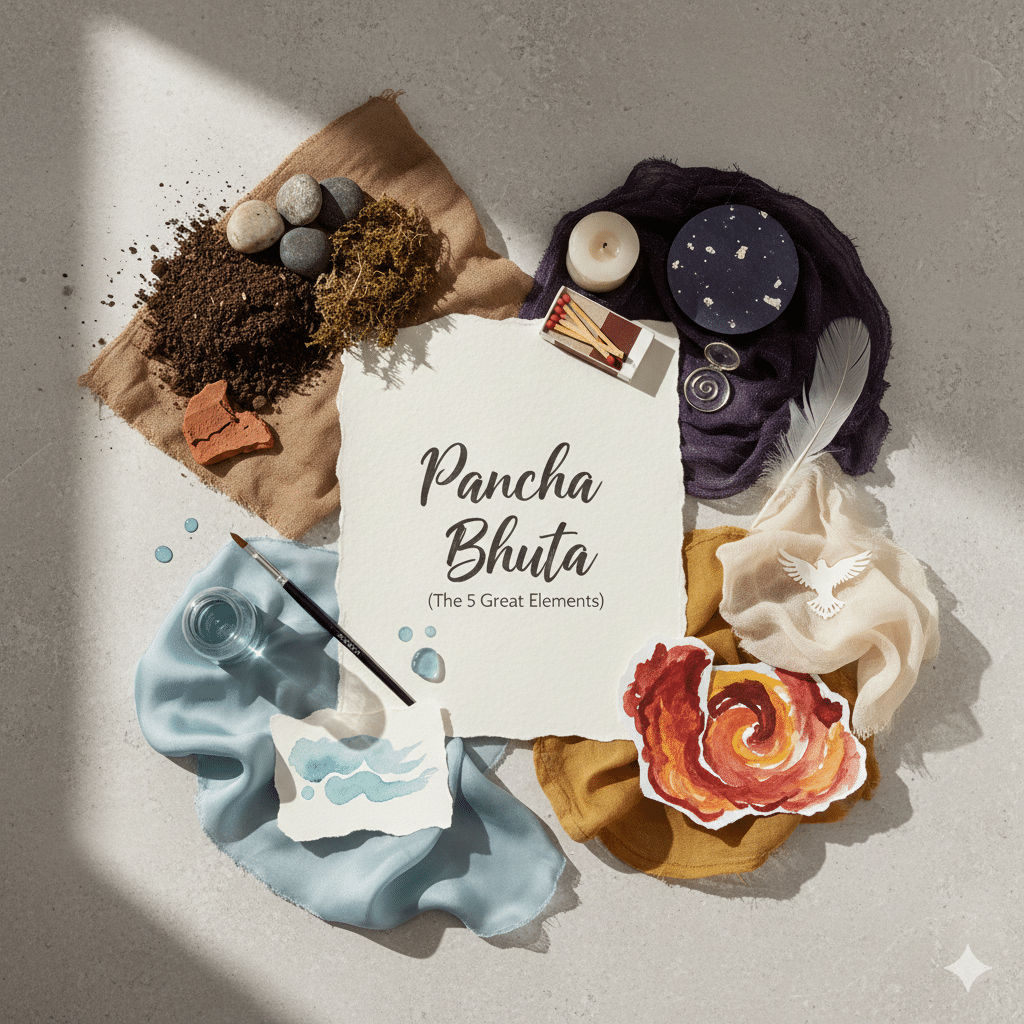
The Essence of Pancha Bhuta (5 Great Elements)
1. Earth (Prithvi)
Earth represents stability, fertility, and sustenance. It is associated with the sense of smell and the flesh, bones, and organs in the human body1.
To bring the essence of Prithvi into your artwork, consider the following:
- Colors: Use earthy tones such as browns, greens, and ochres.
- Textures: Incorporate soil textures, clay, and sand.
- Materials: Use natural materials like stones, leaves, and wood.
- Themes: Focus on themes of grounding, nourishment, and growth. Depict landscapes, mountains, or fertile soil.
2. Water (Apas)
Water symbolizes purification, fluidity, and emotion. It corresponds to the sense of taste and is linked to water (including blood).
To reflect Apas in your art:
- Colors: Use blues, greens, turquoise and translucent shades.
- Techniques: Employ watercolor techniques and Experiment with fluid shapes and flowing lines.
- Surfaces: Use reflective materials like glass and resin.
- Themes: Highlight themes of cleansing, emotional depth, movement, rivers, and oceans.
3. Fire (Agni)
Fire stands for transformation, passion, energy, and purification. It relates to the sense of sight and body heat.
Incorporate Agni into your artwork by:
- Colors: Use fiery hues such as reds, oranges, and yellows.
- Brushstrokes: Use dynamic, energetic strokes.
- Elements: Include light elements like candles or LED lights. Create fiery motifs, flames, or sun symbols.
- Themes: Explore themes of change, passion, and spiritual purification.
4. Air (Vayu)
Air signifies movement, freedom, breath, and life force. It is associated with the sense of touch and the skin.
To represent Vayu:
- Colors: Use light, airy colors like white, light blue, and pale yellow.
- Textures: Incorporate soft, wispy patterns, and use light, airy compositions.
- Materials: Use lightweight materials like silk, gauze, and feathers, and incorporate birds, wind, or swirling patterns.
- Themes: Focus on themes of freedom, respiration, and subtle energy.
5. Ether (Akasha)
Ether embodies space, ether, and the divine essence. It corresponds to the sense of hearing and the astral body.
To reflect Akasha:
- Colors: Use expansive, celestial & open colors like purples, deep blues, and blacks.
- Layers: Create ethereal, translucent layers.
- Techniques: Utilize open, expansive compositions leave areas of your artwork open or empty.
- Themes: Explore themes of infinity, spirituality, and the vastness of the cosmos.
Deities as Personifications of Natural Forces
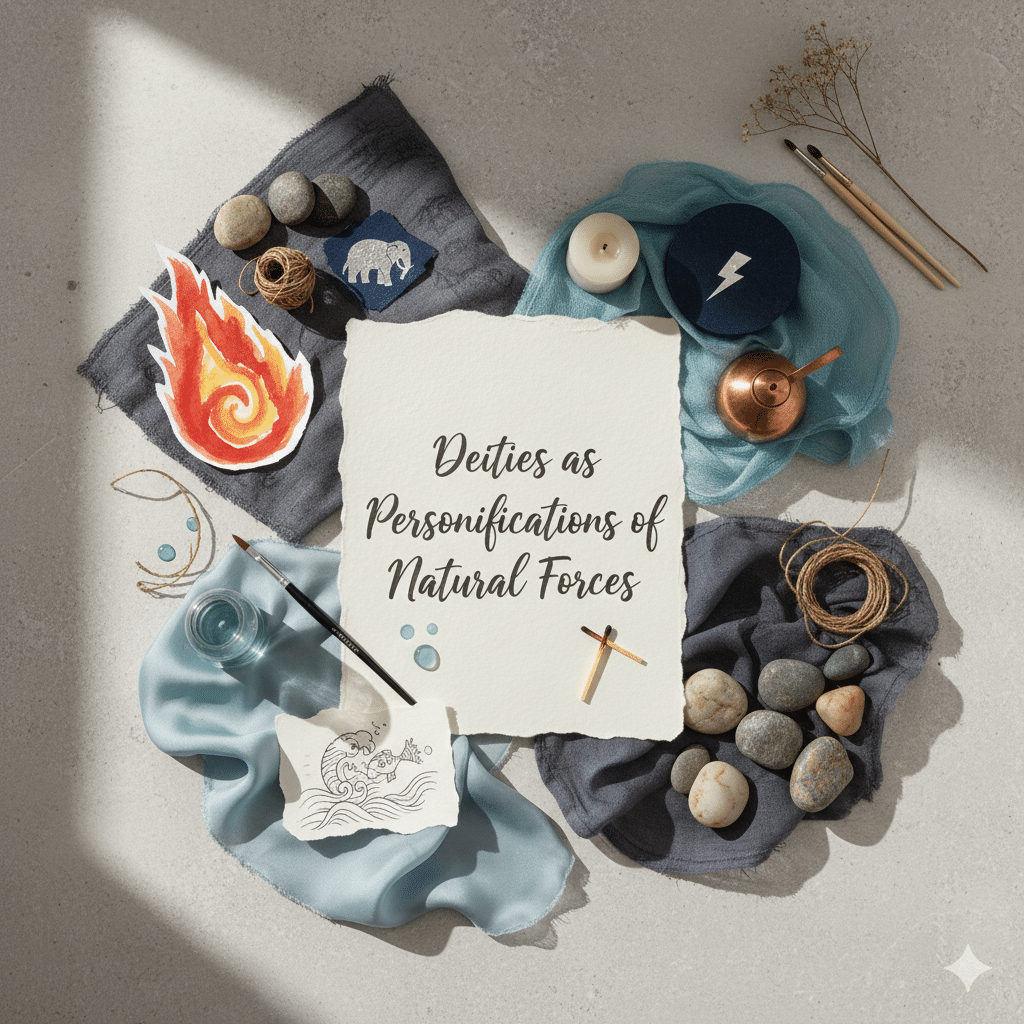
6. Indra – The Rain God
Indra, the god of rain and thunderstorms, can be symbolized using:
- Colors: Stormy colors like dark blues, greys, and whites.
- Motifs: Use motifs of elephants and lightning.
- Materials: Include elements like water droplets and stormy textures.
- Themes: Highlight themes of power, renewal, and protection.
7. Agni – The Fire God
Agni represents fire, bridging the earthly and divine. Incorporate Agni by:
- Colors: Use bright, energetic colors such as red, orange, and yellow.
- Symbols: Include symbols of fire like flames and embers.
- Materials: Use metallic paints and reflective surfaces.
- Themes: Focus on transformation, energy, and purification.
8. Varuna – The Water God
Varuna, the god of water, can be depicted with:
- Colors: Use aquatic colors like blues and greens.
- Motifs: Include sea creatures and water waves.
- Textures: Use flowing, fluid textures.
- Themes: Explore themes of cosmic order, law, and the subconscious.
Colors and Gunas in Hindu Symbolism
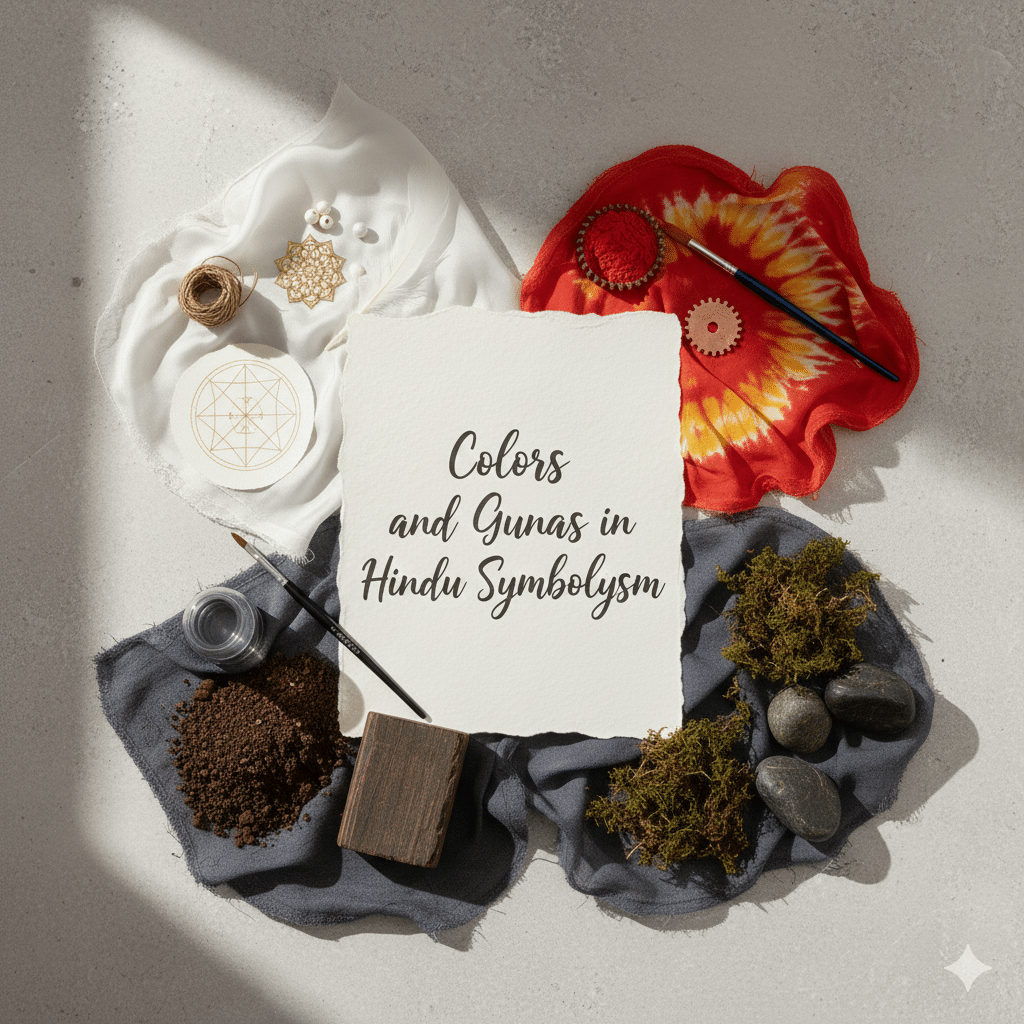
9. Sattva (Purity)
Sattva is associated with purity, wisdom, and harmony. Represent Sattva by:
- Colors: Use serene colors like white, light blue, and gold.
- Compositions: Create balanced, symmetrical compositions.
- Materials: Use light, translucent materials.
- Themes: Highlight themes of peace, clarity, and enlightenment.
10. Rajas (Activity)
Rajas relates to passion, energy, and movement. Capture Rajas in your art by:
- Colors: Use vibrant colors such as red, orange, and yellow.
- Brushstrokes: Employ dynamic, vigorous strokes.
- Materials: Use materials that convey energy and movement.
- Themes: Focus on themes of action, excitement, and change.
11. Tamas (Inertia)
Tamas signifies darkness, ignorance, and stability. Reflect Tamas by:
- Colors: Use dark, muted colors like black, brown, and deep green.
- Textures: Incorporate heavy, solid textures.
- Materials: Use dense materials like stone and metal.
- Themes: Explore themes of grounding, mystery, and stability.
Sacred Symbols
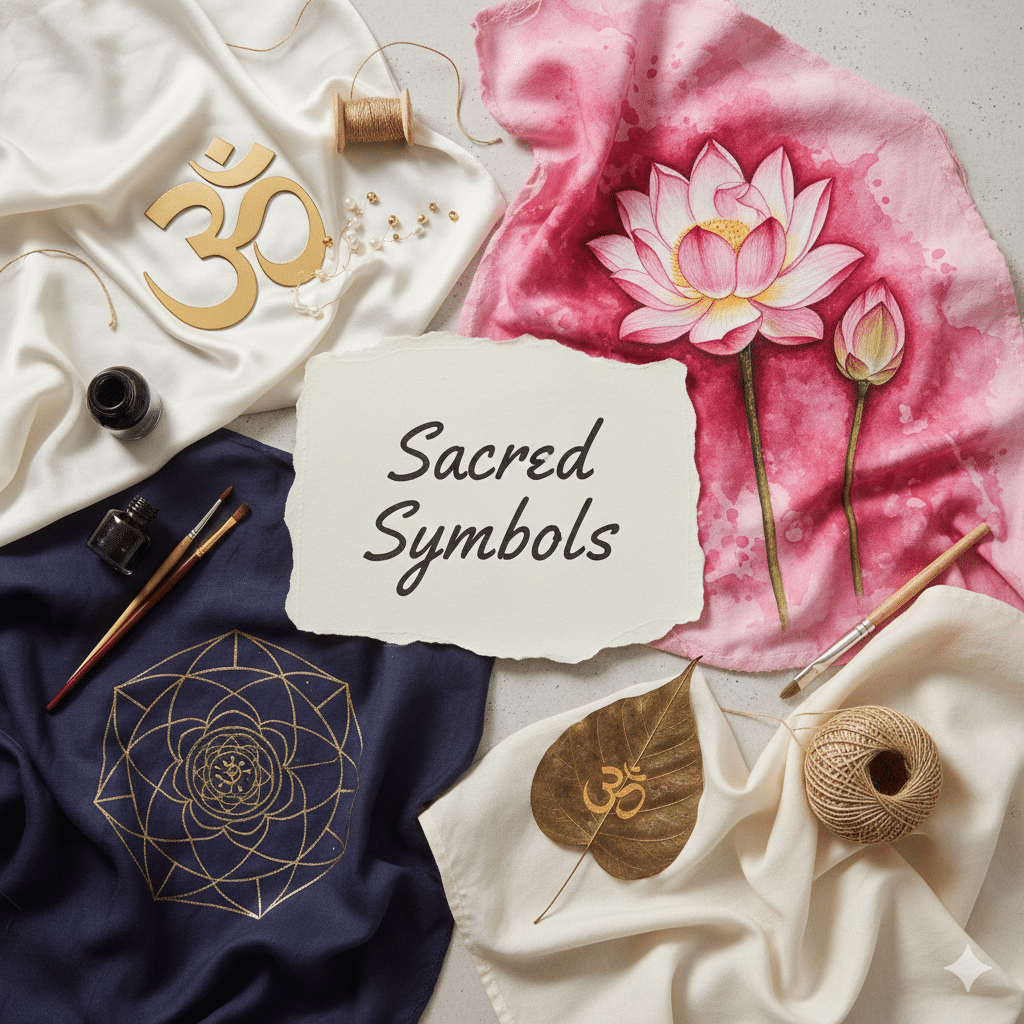
12. Om (Aum)
Om is the primordial sound and symbol of ultimate reality. Use Om in your artwork by:
- Motifs: Include the Om symbol as a central motif.
- Colors: Use calming colors like gold, white, and blue.
- Textures: Integrate smooth, flowing textures.
- Themes: Focus on themes of spirituality, unity, and the universe.
13. Lotus (Padma)
The lotus represents purity, enlightenment, and beauty. Incorporate lotus symbols by:
- Motifs: Use lotus flower patterns and designs.
- Colors: Utilize colors like pink, white, and blue.
- Textures: Include delicate, intricate textures.
- Themes: Highlight themes of spiritual growth, purity, and rebirth.
14. Swastika
The swastika, an ancient symbol of auspiciousness, can be used by:
- Motifs: Integrate the swastika symbol mindfully.
- Colors: Use auspicious colors like red, gold, and green.
- Textures: Employ traditional, geometric patterns.
- Themes: Focus on themes of well-being, good fortune, and harmony.
FLORA IN HINDU SYMBOLISM
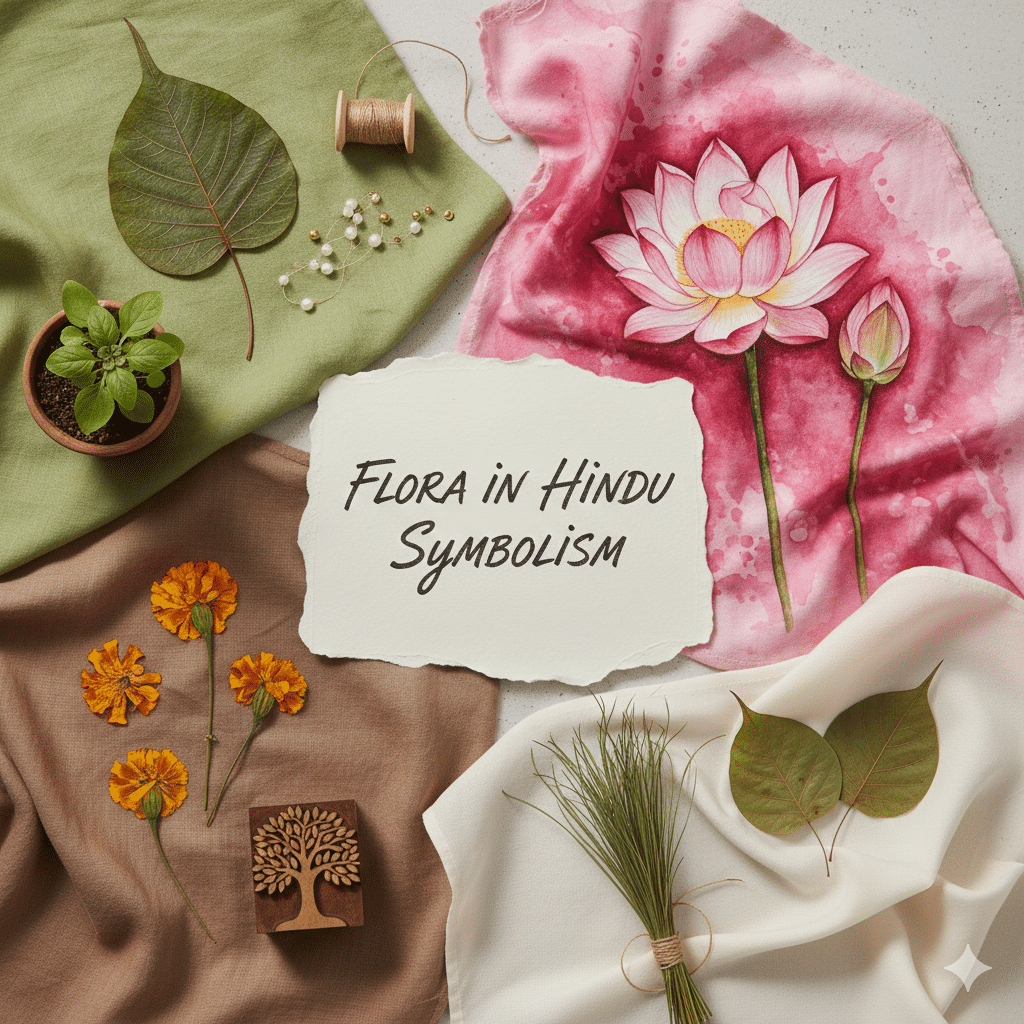
15. Peepal Tree
The Peepal tree symbolizes the cosmic tree and enlightenment. Represent the Peepal tree by:
- Colors: Use natural colors like green and brown.
- Motifs: Include tree patterns and leaves.
- Materials: Use organic materials like bark and leaves.
- Themes: Highlight themes of growth, wisdom, and connection.
Festivals and Rituals as Artistic Inspiration
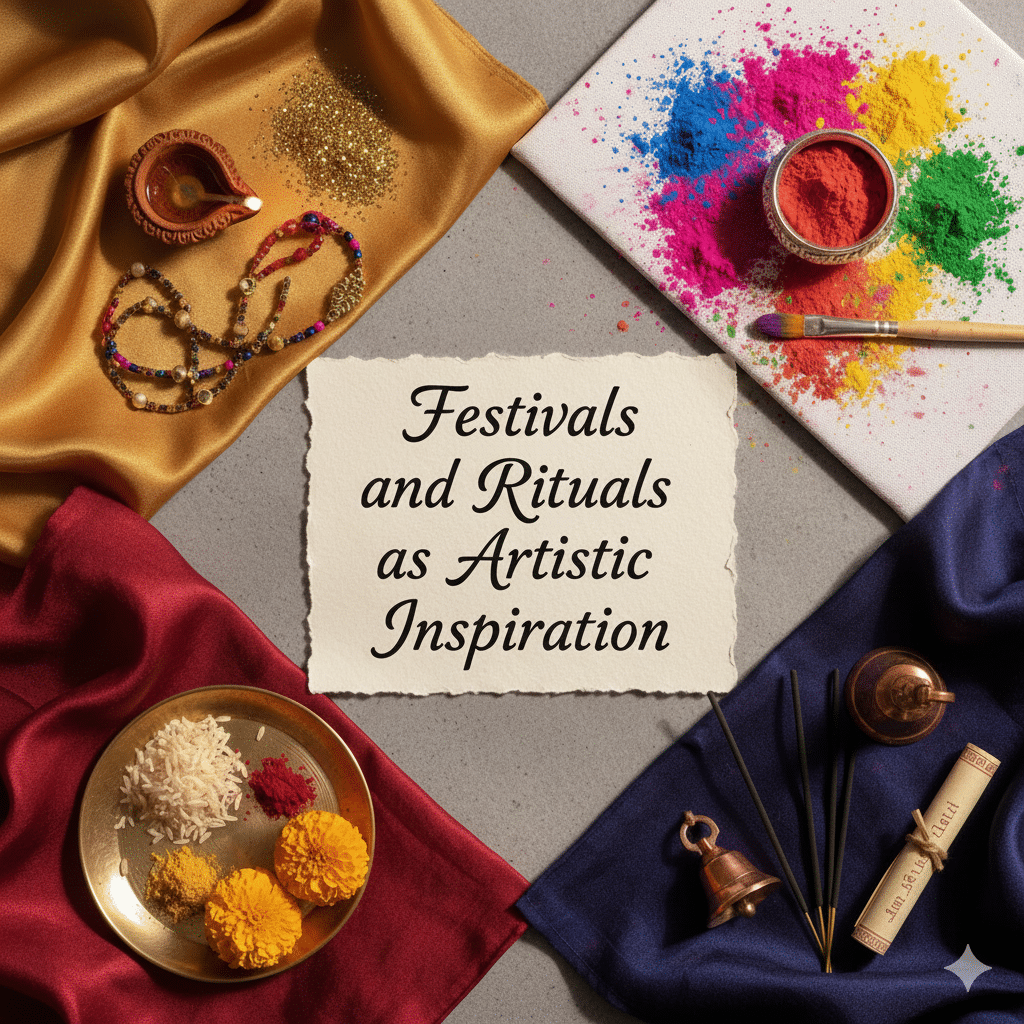
Diwali – The Festival of Lights
Diwali celebrates the triumph of light over darkness. Reflect Diwali by:
- Colors: Use bright colors like gold, yellow, and orange.
- Motifs: Include motifs of lamps, candles, and fireworks.
- Materials: Use light elements like LED lights and reflective materials.
- Themes: Highlight themes of hope, victory, and celebration.
Holi – The Festival of Colors
Holi is a celebration of joy and the arrival of spring. Capture Holi by:
- Colors: Use vibrant, playful colors like red, pink, green, and blue.
- Techniques: Employ splashes of color and dynamic compositions.
- Materials: Use bright, colorful materials like powders and paints.
- Themes: Focus on themes of joy, renewal, and playfulness.
Techniques to Incorporate Hindu Symbolism in Mixed Media Art
Layering for Depth and Complexity
- Materials: Use multiple layers of paper, fabric, and paint.
- Techniques: Create depth by layering different textures and colors.
- Themes: Mirror the multifaceted nature of Hindu symbolism through complex layering.
Playing with Textures
- Textures: Experiment with various textures to evoke natural elements.
- Materials: Use sand for earth, watercolors for water, and metallic paints for fire.
- Techniques: Combine smooth and rough textures to create a tactile experience.
Utilizing Symbolic Imagery
- Symbols: Integrate traditional symbols, deities, and motifs.
- Themes: Convey specific meanings and connect with the spiritual essence of Hinduism.
- Materials: Use traditional Indian art materials like rangoli powders, henna, and natural dyes.
Choosing the Right Color Palette
- Colors: Select colors that align with the symbolic meanings of the elements and Gunas.
- Techniques: Use color to enhance the spiritual and aesthetic impact of your art.
- Themes: Create harmony and balance through a thoughtfully chosen color palette.
Bringing It All Together
Incorporating Hindu symbolism into mixed media art is not about decoration or literal representation. It is about intention, awareness, and connection. Each element—whether earth, flame, sound, or silence—adds an energetic layer that goes beyond the visual.
As you experiment with these symbols, allow them to guide your choices intuitively.
- A color palette can carry a guna.
- A texture can suggest fire or water.
- An open space can speak as loudly as a mark.
Mixed media gives you the freedom to hold complexity, contradiction, and depth—much like the philosophy it draws from.
Ultimately, this approach invites you to slow down and create with presence. To let materials speak. To allow meaning to emerge rather than be forced. And to remember that art, like nature itself, becomes most powerful when it flows from reverence, curiosity, and lived experience.
If you choose to work with these elements, let them meet you where you are—and allow your artwork to become a quiet dialogue between tradition, material, and self.
FAQs
1. What are the Pancha Bhuta and how do they influence Hindu art?
The Pancha Bhuta are the five great elements: Earth, Water, Fire, Air, and Ether. They influence Hindu art by providing symbolic representations of different aspects of existence, allowing artists to convey deeper spiritual messages through their work.
2. How can I represent the element of water in my mixed media artwork?
You can represent water using flowing lines, watercolor techniques, reflective surfaces, and cool colors like blue and green to mimic its fluidity and clarity.
3. What does the lotus flower symbolize in Hinduism?
The lotus flower symbolizes purity, enlightenment, and divine beauty. It’s often used to represent spiritual growth and the unfolding of consciousness.
4. Why is the cow considered sacred in Hinduism?
The cow is considered sacred because it symbolizes non-violence, motherly nurturing, and sustenance. It’s revered for its gentle and giving nature.
5. How can I use the symbol of Om in my artwork?
You can use the symbol of Om to evoke spirituality and the essence of the universe. It can be incorporated as a central motif or subtle element in your designs to enhance the spiritual impact of your artwork.
Feel free to experiment and explore how these rich symbols and elements can inspire your creativity and deepen the meaning of your art. Happy creating!