Over the last few months, I’ve been noticing something about myself.
My mind has a habit.
It goes straight to the problem.
Not slowly. Not occasionally.
Automatically.
Something doesn’t work → I start thinking why it’s not working.
What’s wrong.
What’s missing.
What I don’t have.
And I’ve lived like this for a long time without even questioning it.
But something interesting has been happening alongside this.
What My Art Practice Has Been Teaching Me
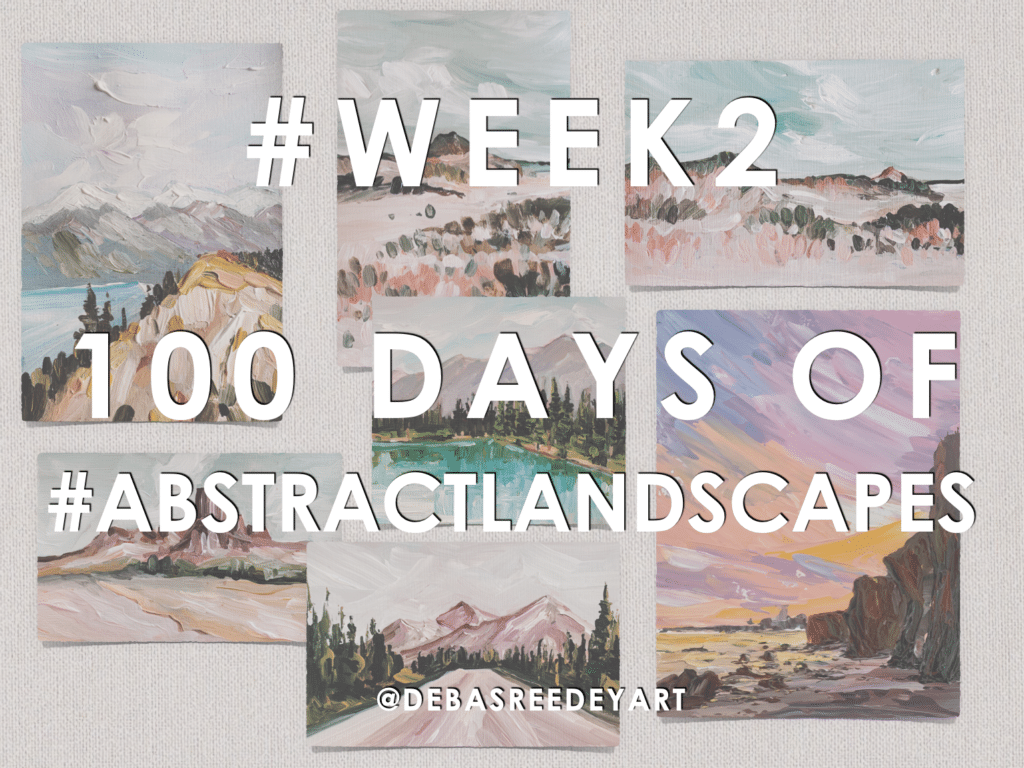
For the past nine months, I’ve been consistently creating mixed media classes.
And if I look closely at that process, it’s very different from how I operate in the rest of my life.
Because while creating these classes, I’m constantly asking:
- What are people struggling with?
- Where do they get stuck?
- How can I simplify this?
- What can I create that helps them move forward?
I’m not sitting there thinking, “This is so difficult” or “Why is this not working?”
Instead, I’m naturally moving into:
What’s the solution?
And not just thinking about it — actually building it.
Every class I’ve created is, in a way, a response to a problem.
But I don’t experience it as a “problem.”
I experience it as something to figure out.
And somewhere along the way, I started noticing…
In this one area of my life, I don’t feel stuck.
The Shift I’m Beginning to See
That made me pause.
Because outside of my art — life still feels different.
I still catch myself:
- Overthinking situations
- Repeating the same concerns in my head
- Talking about what’s not working
And that’s when it clicked for me.
It’s not that I can’t think differently.
I already do.
Just not everywhere.
Listening to People (and to Myself)
Recently, I was watching something where a simple idea stood out:
Listen to how people talk.
So I started doing that.
And I realized — most conversations are centered around:
- What’s going wrong
- Why something isn’t possible
- Why things aren’t changing
Even internally, our self-talk follows the same pattern.
It’s like the mind is trained to stay with the problem.
Not because we want to suffer,
but because that’s the pattern we’ve practiced.
The Real Difference
What I’m beginning to understand is this:
It’s not that some people don’t have problems.
It’s that they don’t stay there.
The moment something goes wrong, they shift.
Not emotionally. Not dramatically.
Just… directionally.
From:
- “Why is this happening?”
To:
- “What is the next move?”
There’s a kind of calm in that.
A steadiness.
What I’m Starting to Understand More Clearly
The difference is not in whether problems exist.
It’s in what the mind does next.
Most of us:
- Notice a problem
- Take it personally
- Repeat it in our thoughts and conversations
- Stay there
But there’s another way to respond:
- Notice the problem
- See it as a situation, not a reflection of who you are
- Translate it into something actionable
- Take the next step
It sounds simple, but it changes everything.
Because the moment you stop identifying with the problem,
you create space to move.
What Changes When You Focus on Solutions
I’ve already experienced a small version of this through my work.
When I focus on solutions:
- I feel more in control
- I move faster
- I don’t get stuck in overthinking
- Things actually get created
The energy is completely different.
It’s not about forcing positivity.
It’s about not feeding the problem more than necessary.
What I’m Beginning to Understand
Where most people reinforce stagnation by repeatedly focusing on the problem, solution-oriented thinking builds momentum through action.
This is not about forced positivity or pretending things are okay when they’re not.
It’s about training the mind to:
- process challenges without attaching to them
- step out of repetitive loops of complaint
- and gently shift toward decisions and action
At its core, the difference is in direction.
One way of thinking keeps reinforcing the problem.
The other quietly searches for a way forward.
And over time, that direction — repeated again and again — begins to shape your reality.
Where I Am Right Now
I’m not writing this as someone who has mastered this.
I’m writing this as someone who is just beginning to see it clearly.
I can see:
- Where I default to problem-thinking
- Where I naturally shift into solution-thinking
And more importantly,
I can see that this is something that can be practiced.
Because I’m already doing it — just in one part of my life.
A Small Shift I’m Trying
Instead of trying to “fix” my thinking completely,
I’m experimenting with something simpler:
When something feels like a problem, I ask:
What is one step I can take right now?
Not the whole solution.
Not the perfect plan.
Just the next step.
Maybe This Is the Work
Not becoming a different person overnight.
Not eliminating problems.
But slowly training the mind to:
- Spend less time describing the problem
- And more time moving toward a solution
If I can do this in my art,
I can learn to do this in my life too.
And maybe that’s how the shift happens.