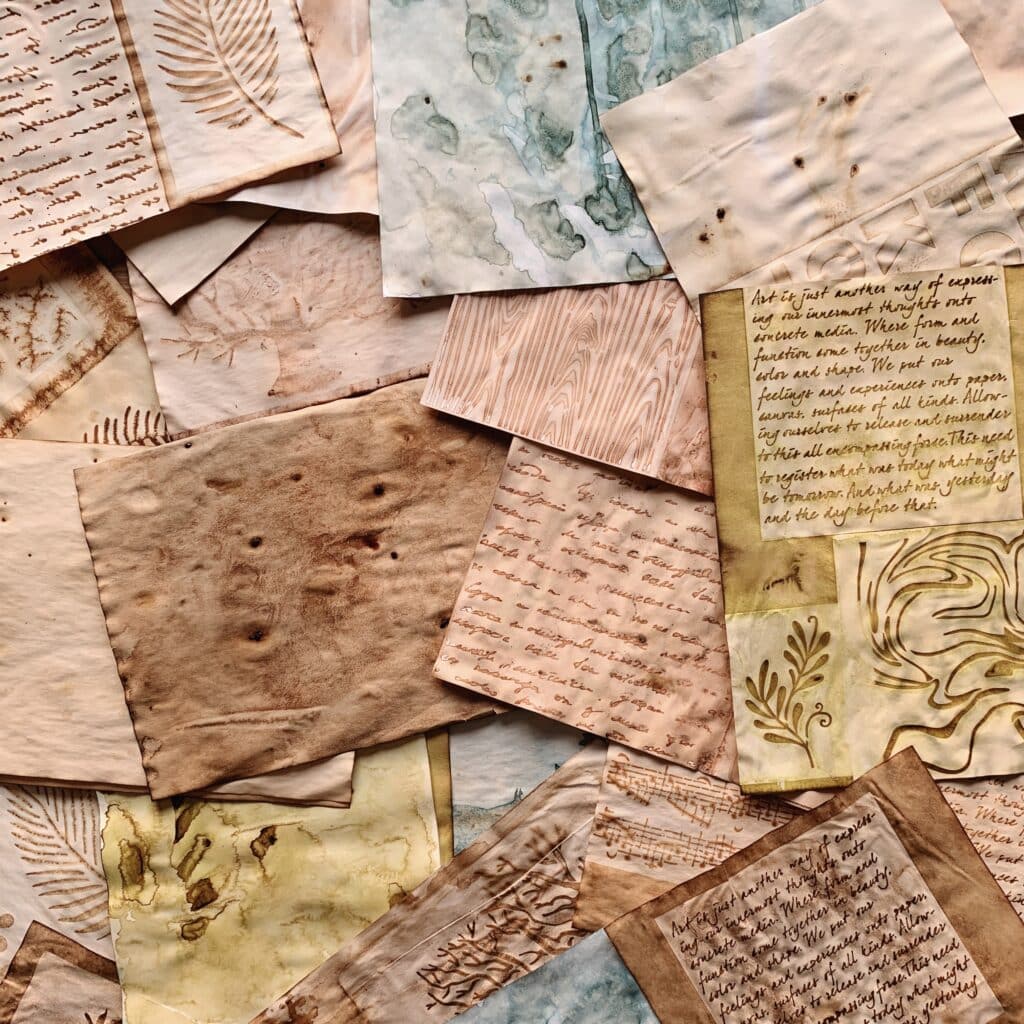
Coffee Dye Tissue Paper: Creating Vintage Marks & Aged Texture with Coffee

If you love vintage textures, aged paper, and quiet, organic marks, coffee dye tissue paper might become one of your favorite mixed media materials.

This technique didn’t come from a plan or a tutorial.
It came from a spilled cup of coffee, a tissue paper, and a moment of curiosity.

And honestly? Those are often the best discoveries.

Have you ever noticed how the simplest accidents at your art table can turn into something unexpectedly beautiful?

Why Coffee Dye Tissue Paper Is So Beautiful for Mixed Media

Coffee dye tissue paper creates effects that are:

  • Soft, aged, and timeworn

  • Uneven in the most beautiful way

  • Full of natural stains, blooms, and patina

It reminds me of:

  • Old tea bag paper

  • Coffee filters

  • Handled, loved, and weathered pages

Because tissue paper is thin and absorbent, coffee settles into it differently than thick paper—creating depth without heaviness, which is perfect for layering.

Coffee Dye Tissue Paper

How I Accidentally Discovered This Coffee Dye Tissue Paper Technique

I’m a coffee person.
One morning, I spilled some coffee on my table and instinctively wiped it with a tissue paper.

When I looked at that tissue, I paused.

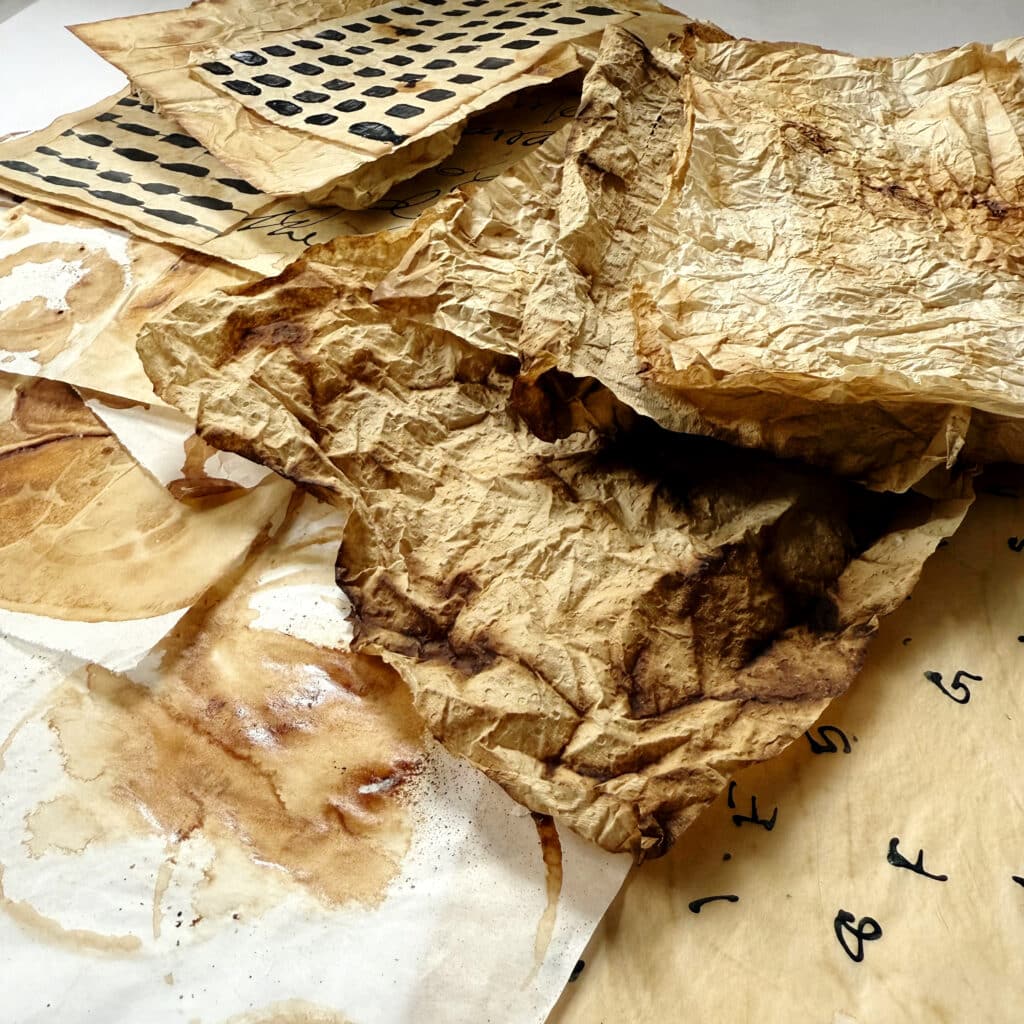
The stains, the soft edges, the uneven color—it already looked like a finished art material.

That moment reminded me of something important:
Materials don’t always need to be prepared carefully. Sometimes they need to be noticed.

Watch the Flip-Through

If you’d like to see these coffee dye tissue papers up close, I’ve shared a short flip-through video where you can look at the marks, stains, folds, and aged textures.

Coffee Dyeing Basics

If you’re new to coffee dyeing, you might want to start with my earlier blog, Coffee Dyeing Basics for Mixed Media: 3 Simple Techniques, where I cover the foundational methods before moving into more experimental color play here.

Two Natural Ways to Dry Coffee-Dyed Tissue Paper

This is where the magic really happens.

1. Flattened & Straightened Drying

  • Gently open the tissue paper

  • Hang it or lay it flat to dry

✨ Result:

  • Lighter, softer stains

  • More even washes

  • Great for backgrounds and blending layers

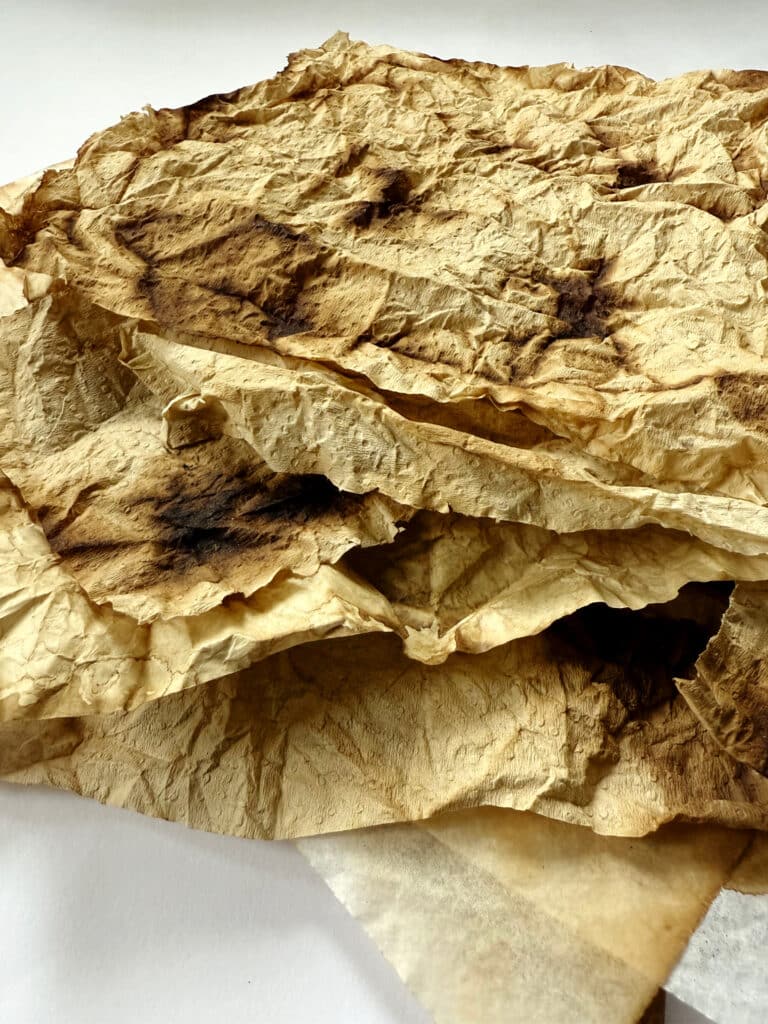
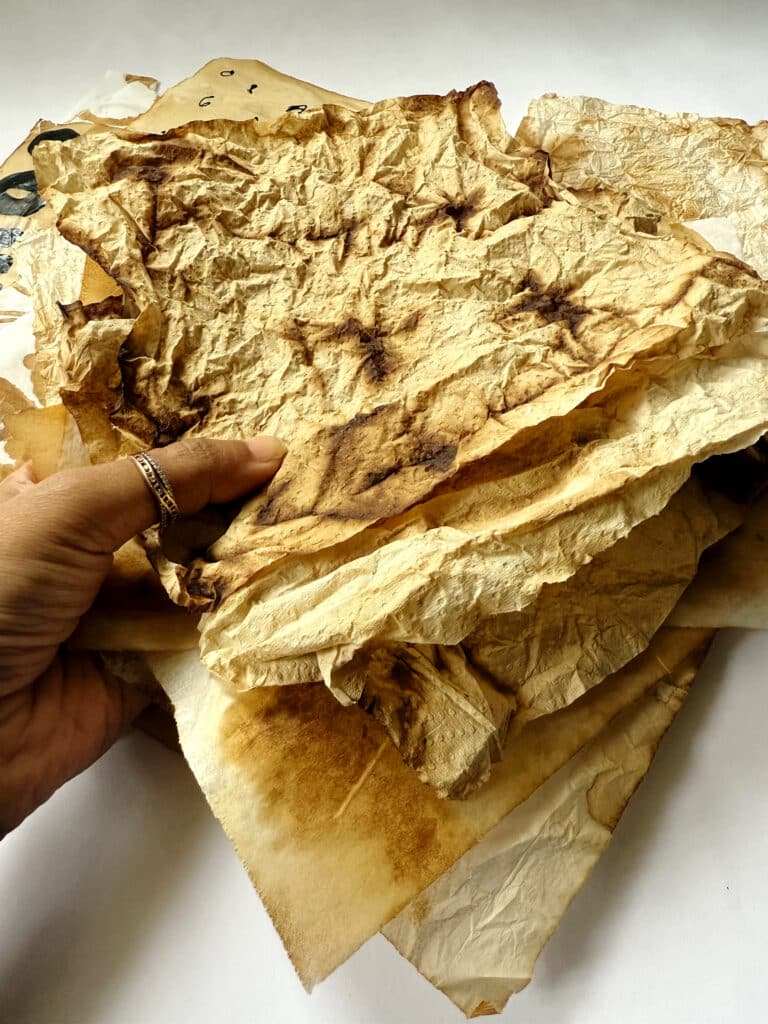
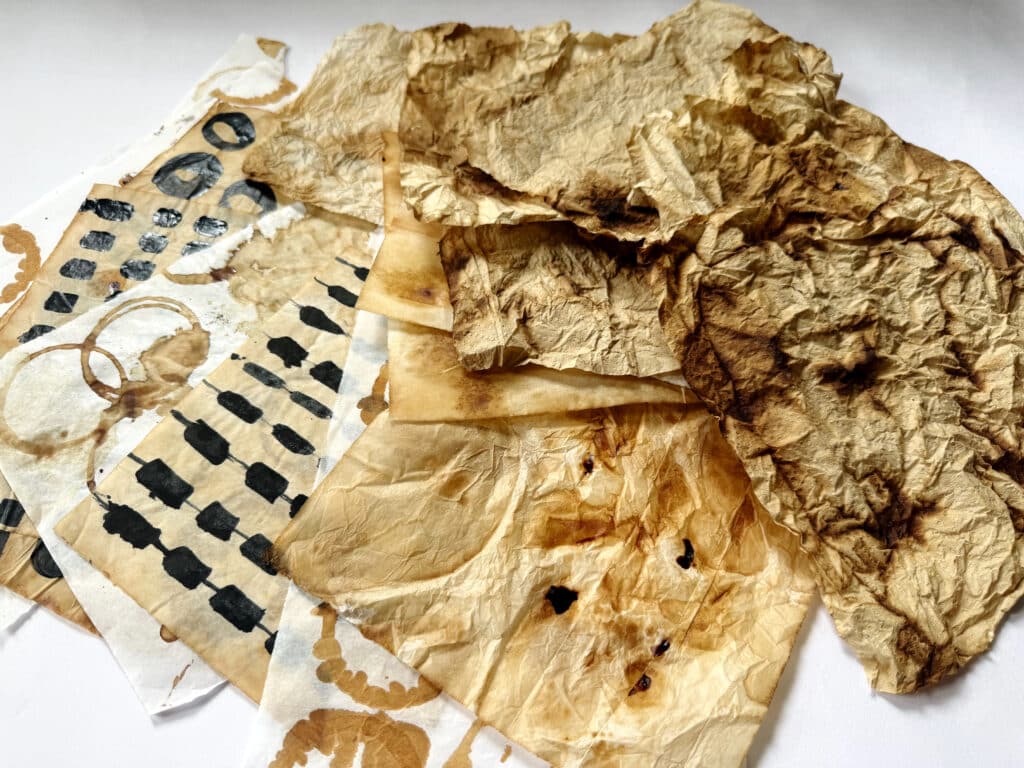
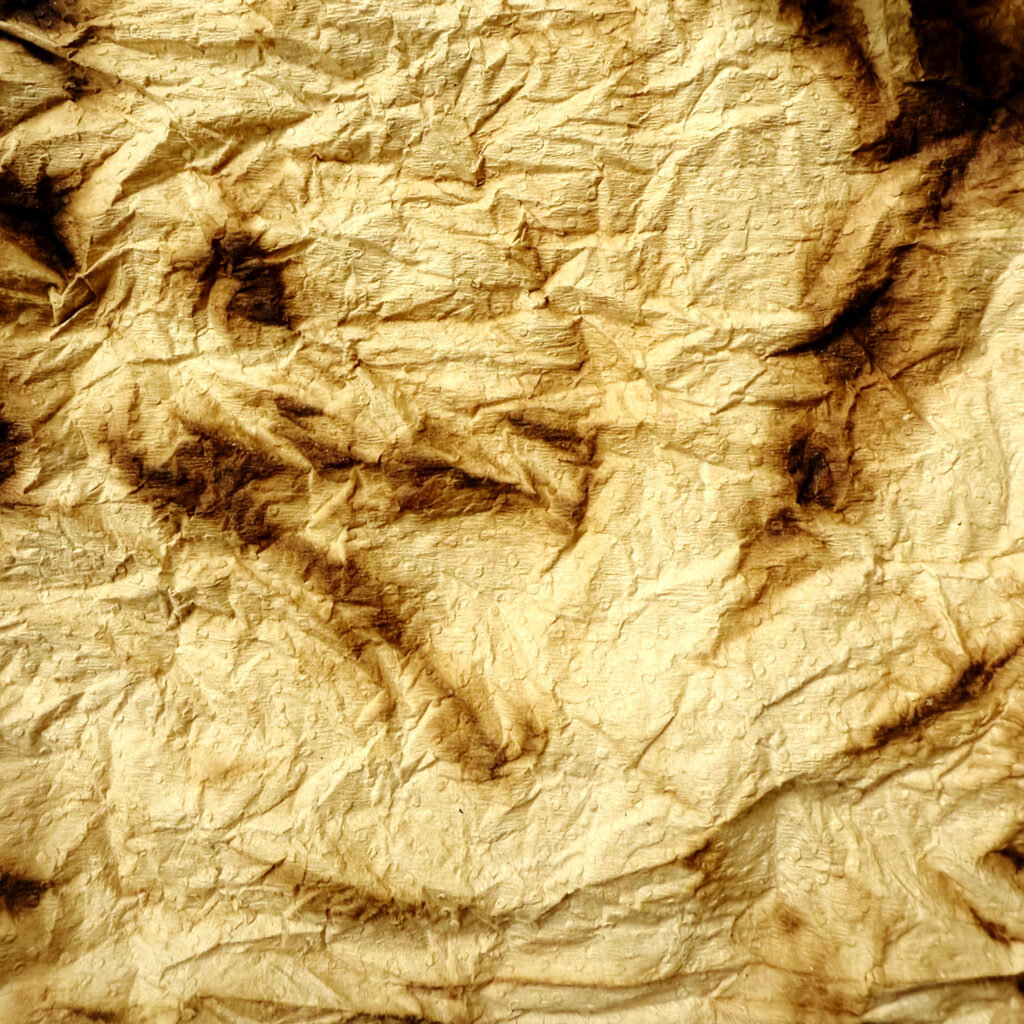
2. Crumpled, Puddle-Dried Tissue Paper

This time, I didn’t straighten it.
I left it exactly as it was—crumpled, folded, and pooled.

It dried overnight.

The next day, when I opened it, I was honestly amazed.

✨ Result:

  • Deep creases

  • Dark age marks

  • Rich, uneven patina

  • Looks like paper that has lived a long life

If you love aged surfaces, this method is gold.

Coffee Dye Tissue Paper

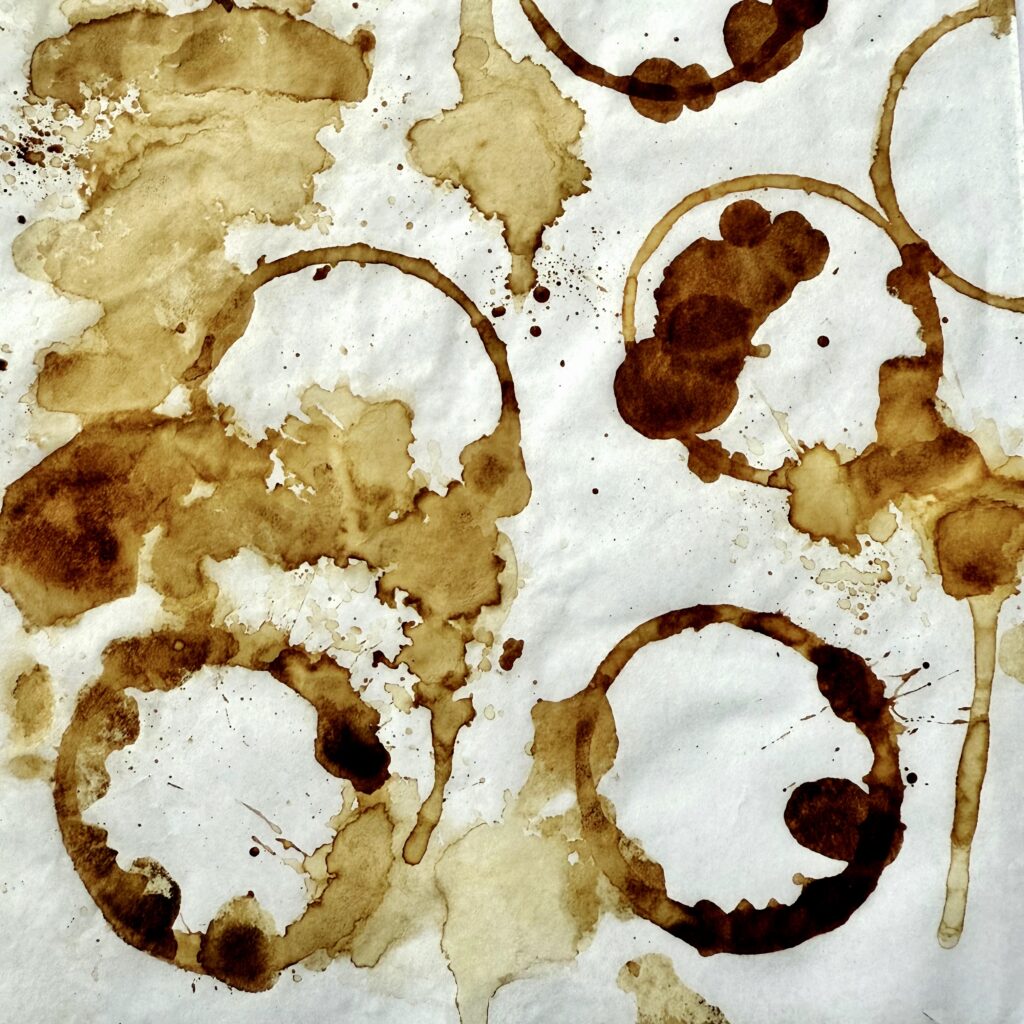
Creating Ring Marks & Intentional Coffee Stains

One of my favorite things to do is create coffee ring marks—the kind you see at the bottom of old cups.

You can:

  • Use the base of a cup

  • Use a tissue roll

  • Use any circular object

Dip it lightly in coffee and press it onto the tissue paper. These ring marks add:

  • Visual rhythm

  • Story

  • A sense of time and repetition

They feel especially beautiful when layered under collage elements.

Easy coffee dye paper

Painted Papers Class

If you’re someone who learns best by watching the process unfold, I’ve shared this exact technique inside my class Painted Papers.

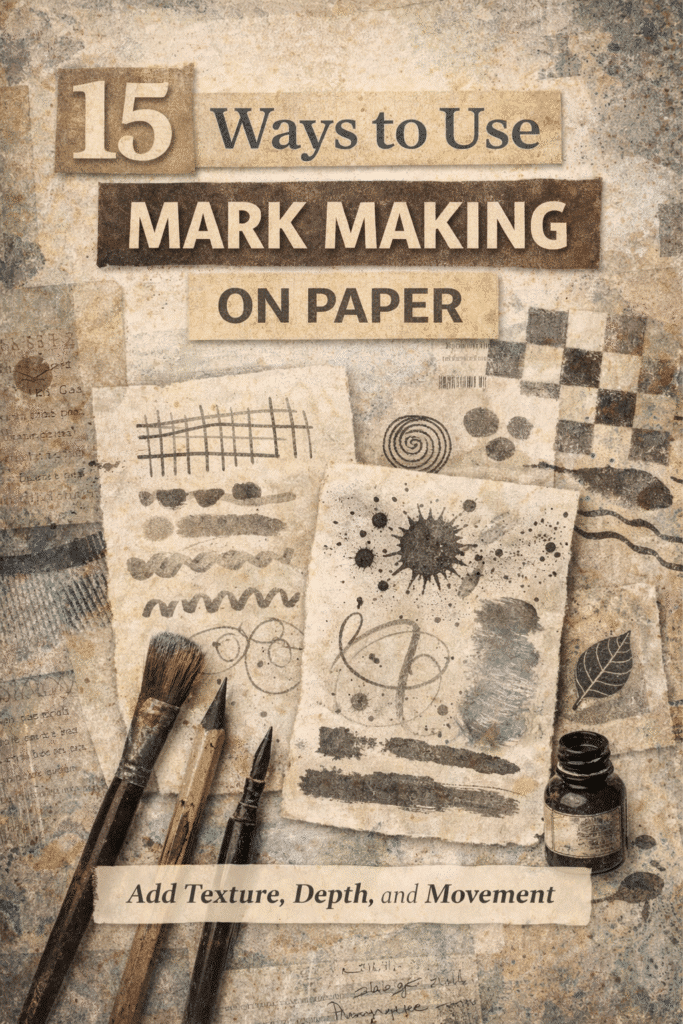
In the class, I walk you through 15 different ways of creating expressive, textured mixed media papers—and coffee dye tissue paper is one of them. You’ll see how I mix the solutions, how wet the paper should be, how I let colors bleed into each other, and how I work intuitively on the floor without overthinking the outcome.

Mark Making on Tissue Paper Before Coffee Dyeing

Another beautiful variation is to make marks first, then dye.

You can:

  • Scribble with black pencil or charcoal

  • Add loose lines

  • Make intuitive shapes

Then apply coffee over it.

✨ The coffee softens the marks, partially blurs them, and integrates everything into one surface—nothing feels separate or harsh.

Mixed Media Artist Resource Library

Free printables, collage papers, creative prompts & how-to guides

I’ve put together a free resource library designed just for you, packed with everything you need to fuel your creativity. It’s my way of giving back to the mixed media community with resources to inspire your next project. Click here to join.

More Creative Ways to Make Marks Using Coffee

Here are a few more ideas you might enjoy experimenting with:

  • Drip coffee using a brush or spoon

  • Splash diluted coffee for bloom effects

  • Press textured objects (lace, leaves, fabric) onto wet tissue

  • Brush coffee unevenly and let it pool

  • Layer multiple coffee applications, drying in between

  • Combine coffee with salt for subtle texture

Think of coffee as both color and collaborator.

How to Use Coffee Dye Tissue Paper in Mixed Media Projects

These papers are incredibly versatile. You can use them to:

  • Create soft base layers

  • Blend harsh collage edges

  • Add age to art journals

  • Build depth without bulk

  • Wrap around focal elements

  • Tear and layer intuitively

If you love vintage collage, neutral palettes, or quiet storytelling surfaces, this material fits beautifully.

🌿 Bonus Tips for Richer Patina & Texture
  • Use leftover coffee—the darker and older, the better

  • Avoid over-handling wet tissue paper

  • Let gravity work instead of controlling stains

  • Dry naturally—no heat tools needed

  • Store finished sheets loosely, not pressed flat

Sometimes the most beautiful marks happen when you step back.

✍️ Frequently Asked Questions (FAQ)

1. Can I use instant coffee?

Yes. That’s exactly what I use. Instant coffee works beautifully.

2. Does the tissue paper become fragile?

It stays delicate, but once layered and sealed, it becomes surprisingly durable.

3. Will the coffee smell remain?

No. Once fully dry, the smell fades.

4. Can I seal coffee-dyed tissue paper?

Yes. Gel medium or matte medium works well.

5. Is this suitable for beginners?

Absolutely. This is intuitive, forgiving, and pressure-free.

🌱 Closing Thoughts

Coffee dye tissue paper is a reminder that art materials don’t need to be perfect.
They just need to be noticed, used, and allowed to be what they are.

Next time you spill coffee, maybe pause before wiping it away.

You might be holding your next favorite layer.

💬 Have you ever discovered an art technique by accident? Or do you enjoy working with stained, aged, vintage papers?
Tell me in the comments—I’d love to hear how you use these textures in your own work.

Leave a Comment

Your email address will not be published. Required fields are marked *

Scroll to Top