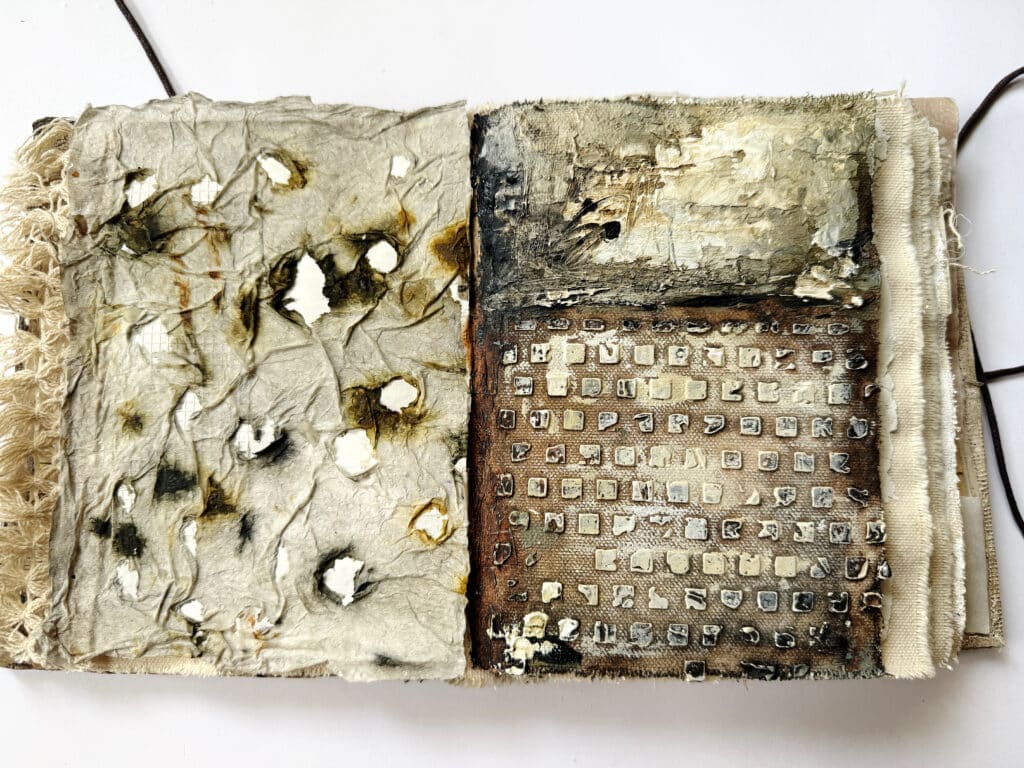
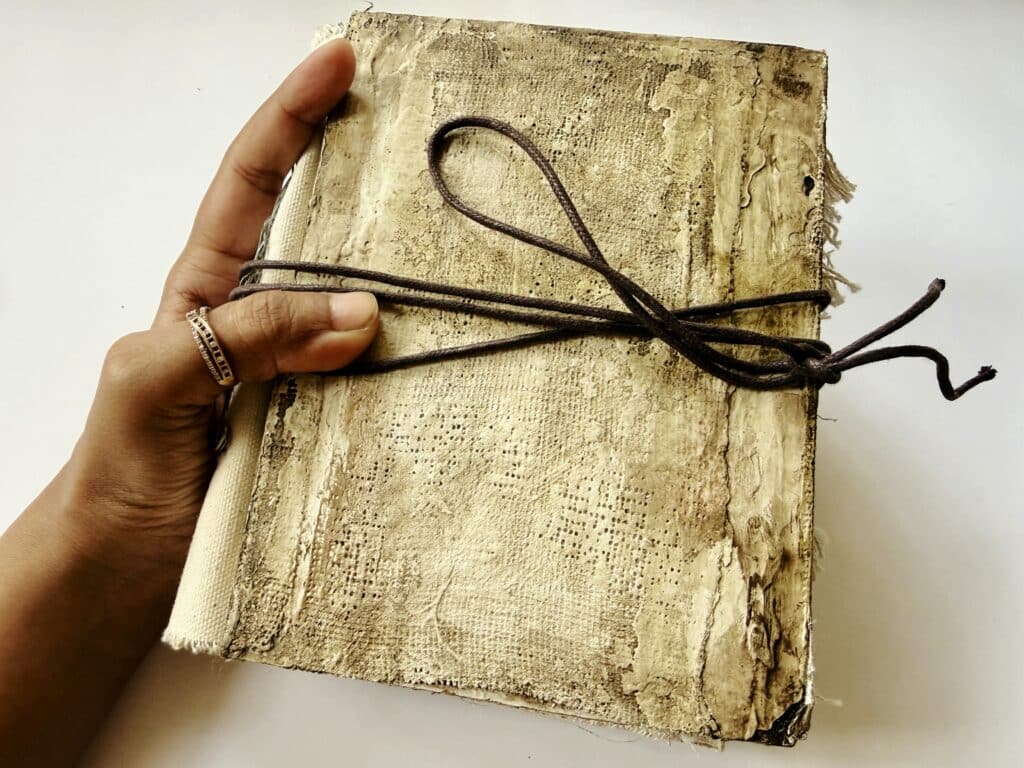
There’s something magical about holding a fabric plaster art journalin your hands — the weight, the raw edges, the imperfect cracks, and the soft chalky texture that almost feels alive. I recently created one after watching theFabric Plaster Art Journalfree class on Jeanne Oliver’s website, and today I want to take you behind the scenes, share my experience, and give you a little flip-through of this beautifully grungy creation.
Her approach to working with plaster, fabric, gauze, and textured pastes immediately spoke to me. As someone who is endlessly attracted to texture, raw edges, and messy layers, I knew Ihadto try creating aplaster art journalof my own.
This class is simple, generous, and perfect for anyone who loves grungy surfaces and tactile mixed media.
Why I Felt Called to Create a Plaster Art Journal
Textures have always been my language. Messy abstracts, layered papers, stitched fabrics, scraped paint, cracked surfaces — that’s where I feel most at home creatively.
So the idea of building an entireplaster art journalfrom scratch… that felt irresistible.
Working withplaster of Paris,gesso,putty, and handmade pastes gave me the exact kind of messy, organic surfaces I adore. Each page dried differently — some cracked, some wrinkled, some turned velvety smooth, and some formed unexpected ridges. That beautiful unpredictability is what I love.
I’ve put together a free resource library designed just for you, packed with everything you need to fuel your creativity. It’s my way of giving back to the mixed media community with resources to inspire your next project. Click here to join.
Supplies I Used
Most of the pages in this book were created using:
Plaster of Paris
Gesso
Texture paste (Gesso + POP)
Wall putty
Gauze and fabric scraps
Kraft paper and bits of card
Water, brushes, old palette knives
This combination created unbelievably rich surfaces — thick, grainy, chalky, and full of story.
Textures, Layers & My Love For Grunge
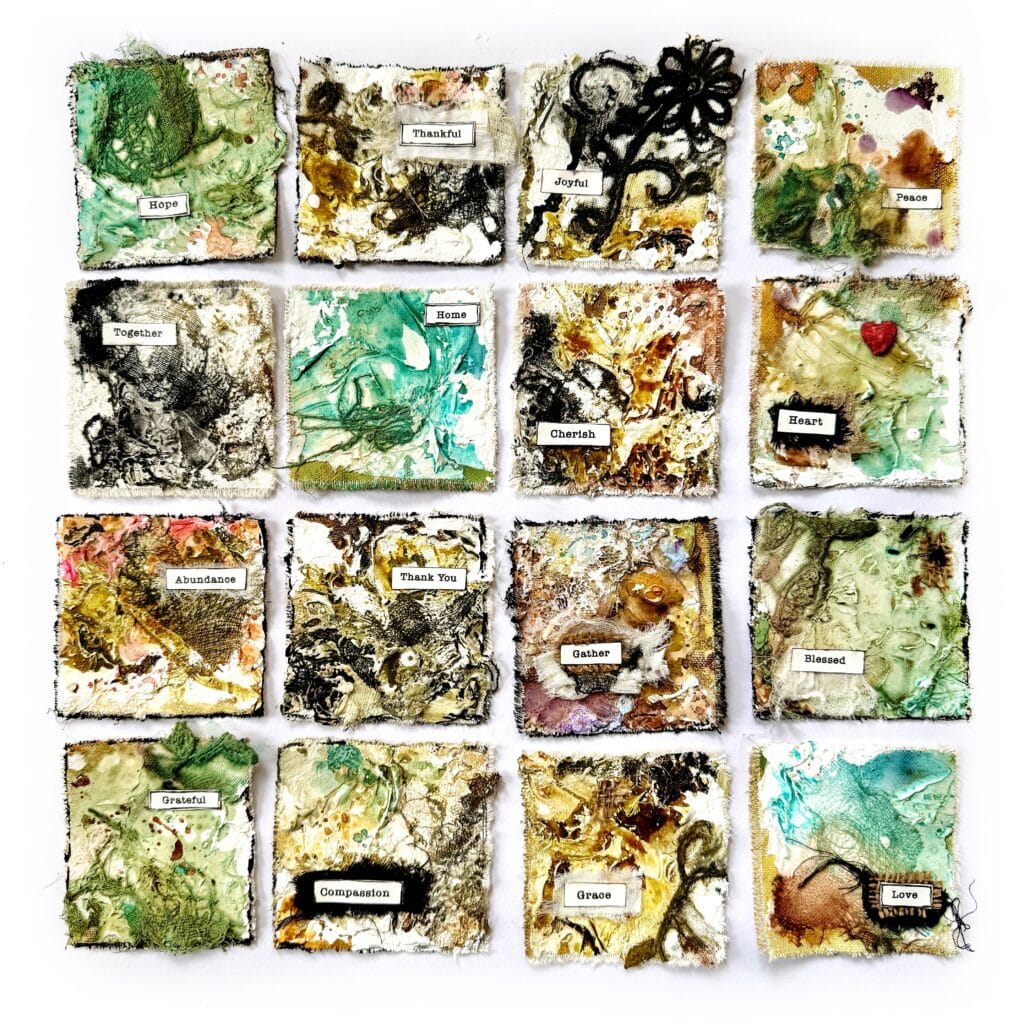
If you’ve taken myGratitude Cardsclass, you already know how much I love building textured surfaces. I use similar techniques there — scraping paste, pressing fabric, imprinting patterns, letting materials behave naturally.
Thisplaster art journalfeels like an extension of that love. Thick, imperfect textures. Edges that crumble just a little. Layers that feel like old walls and forgotten stories.
These kinds of tactile surfaces make me excited to create. They invite mark-making, scribbles, botanicals, stains, inks — anything that wants to emerge.
Sharing the First Flip-Through
I filmed a flip-through of myplaster art journalright after finishing the base pages— before adding art, journaling, or mixed media. There’s something so special about seeing the book in its raw form.
You can watch the full flip-through here:
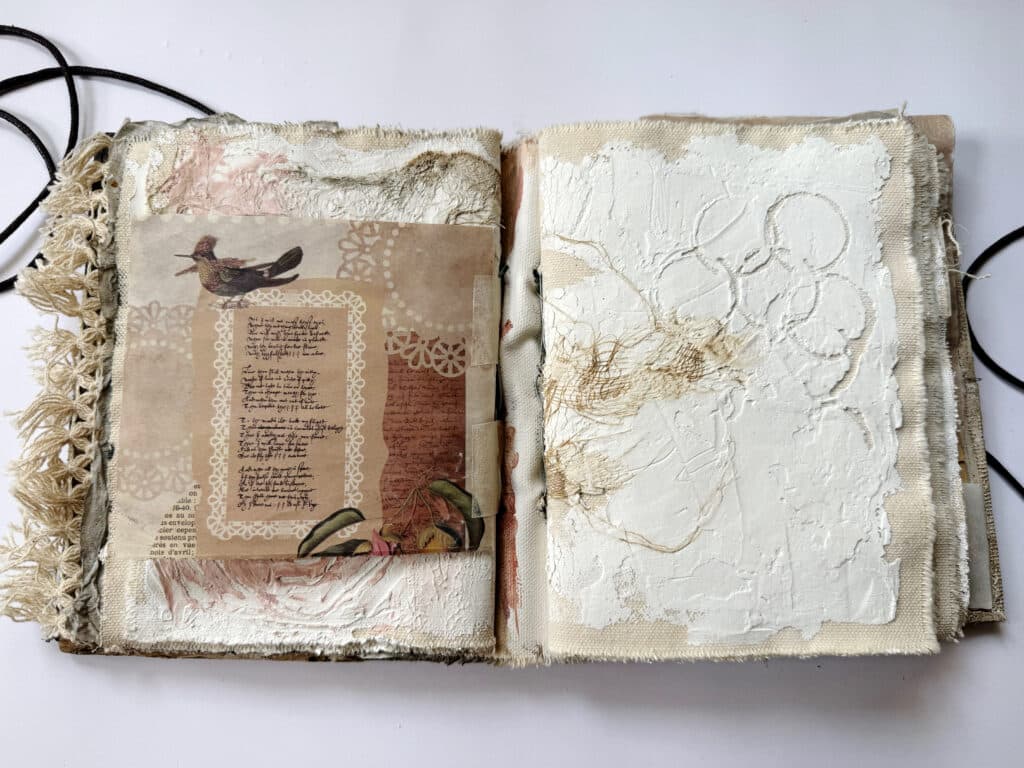
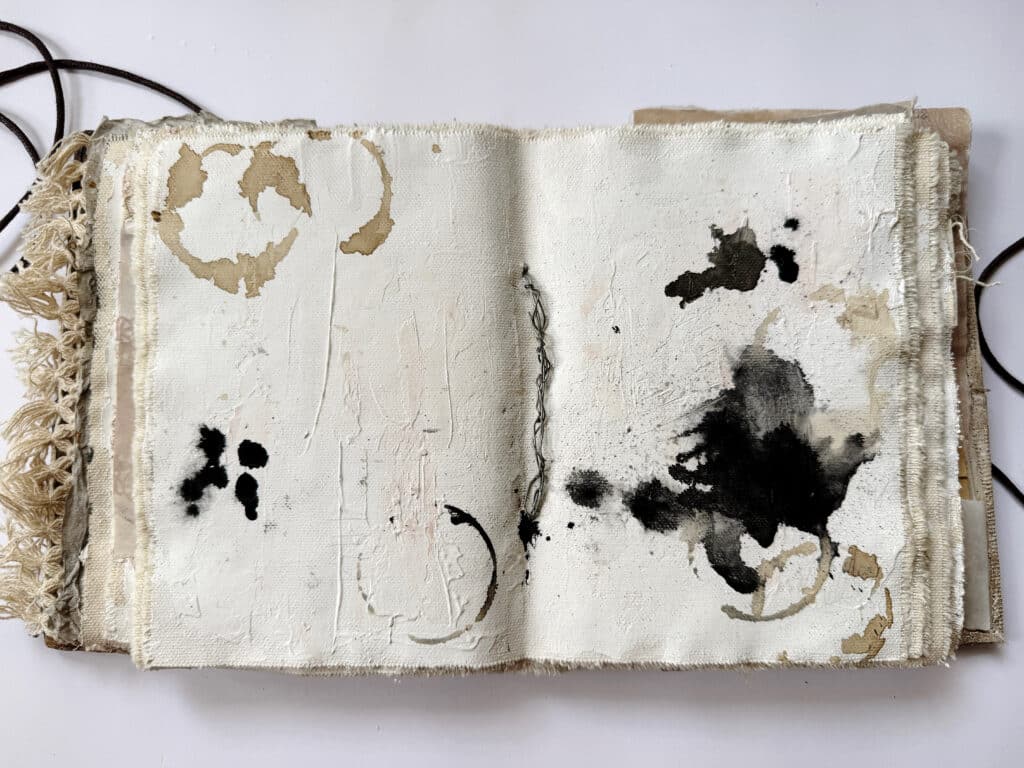
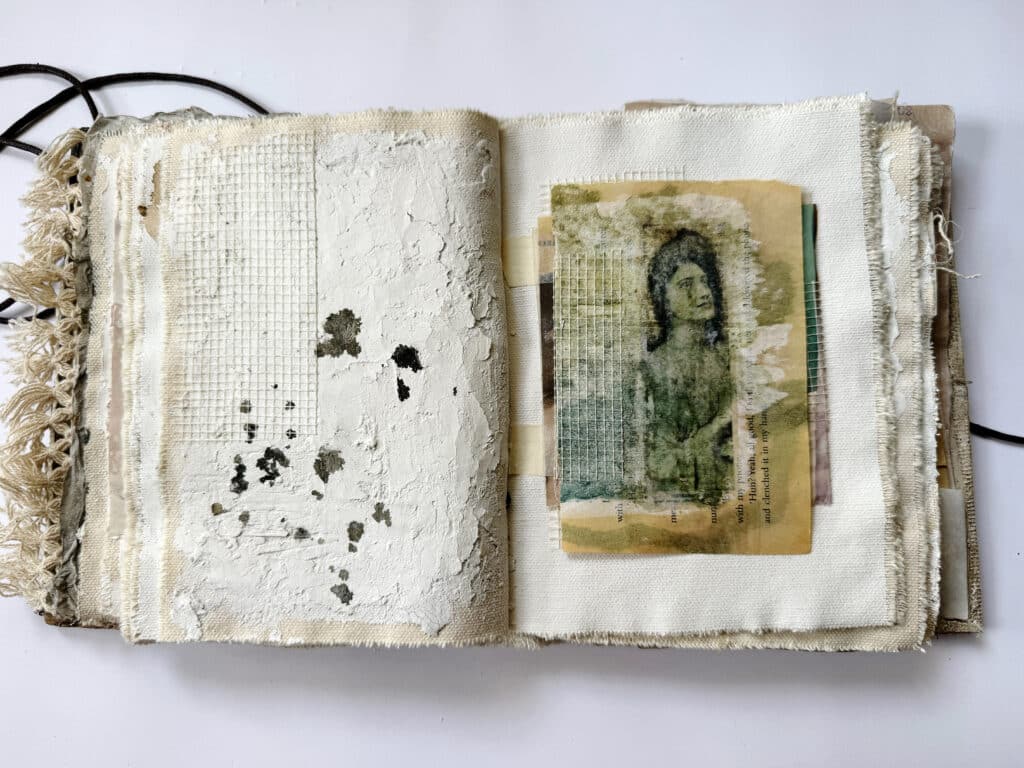
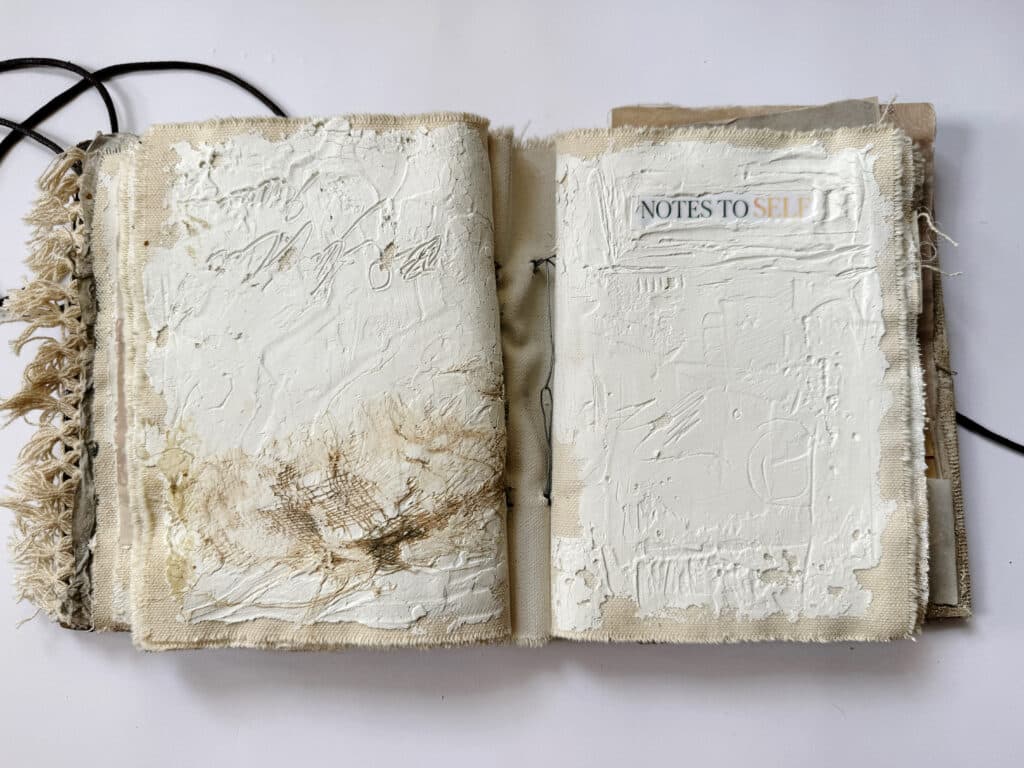
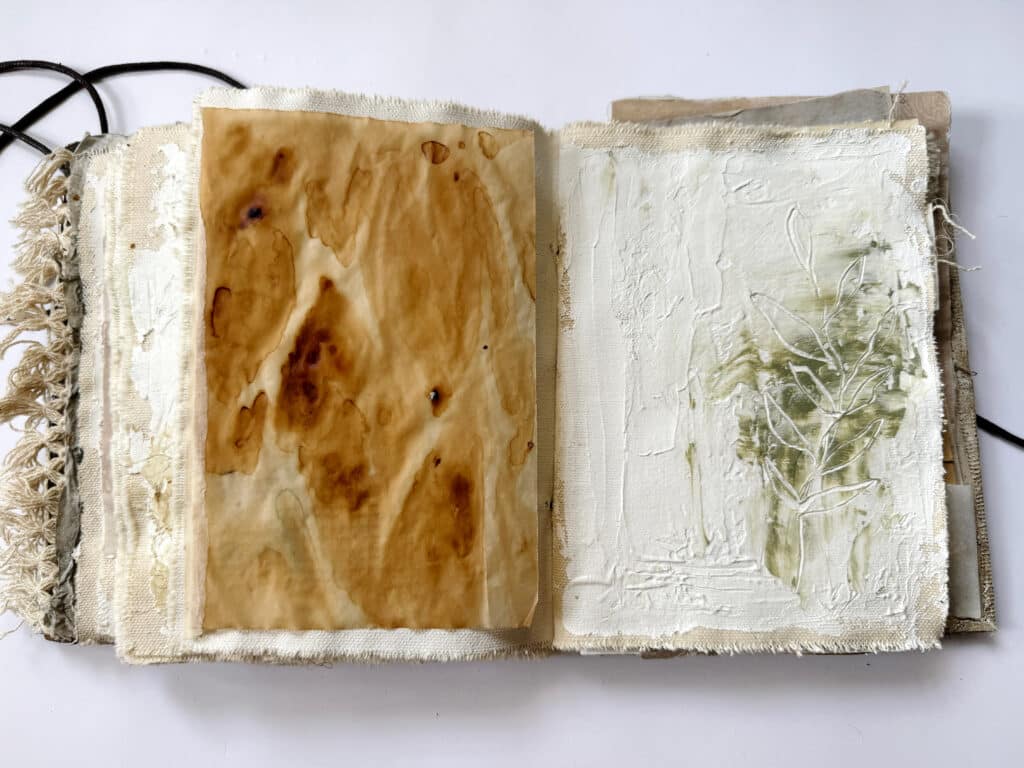
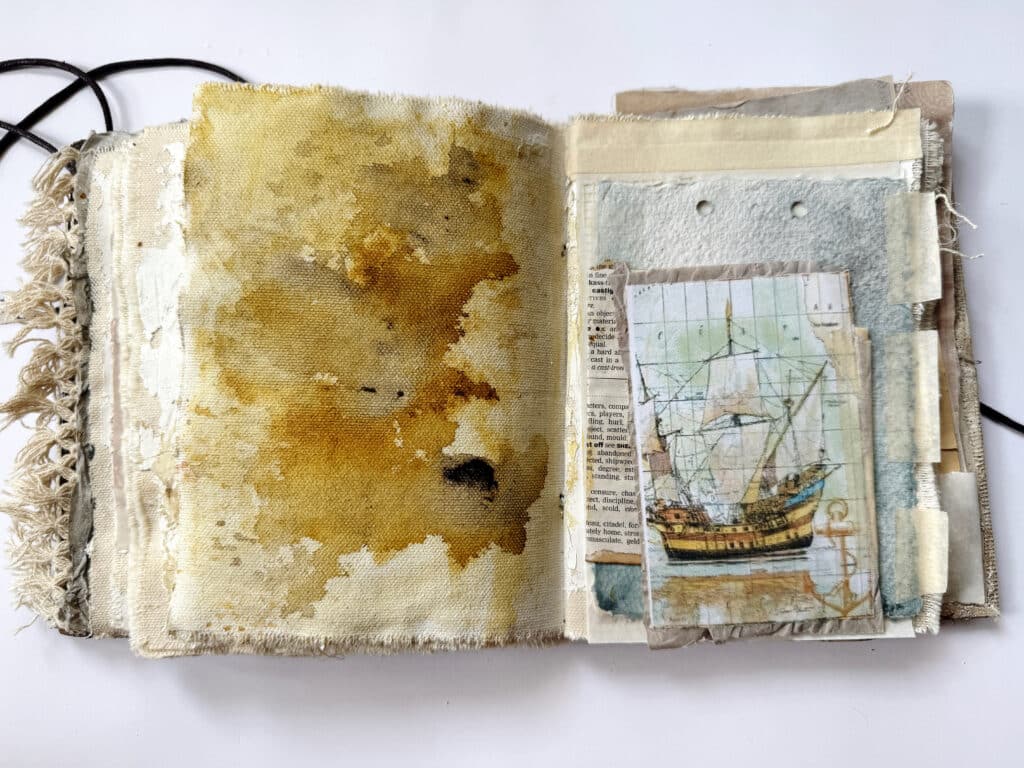
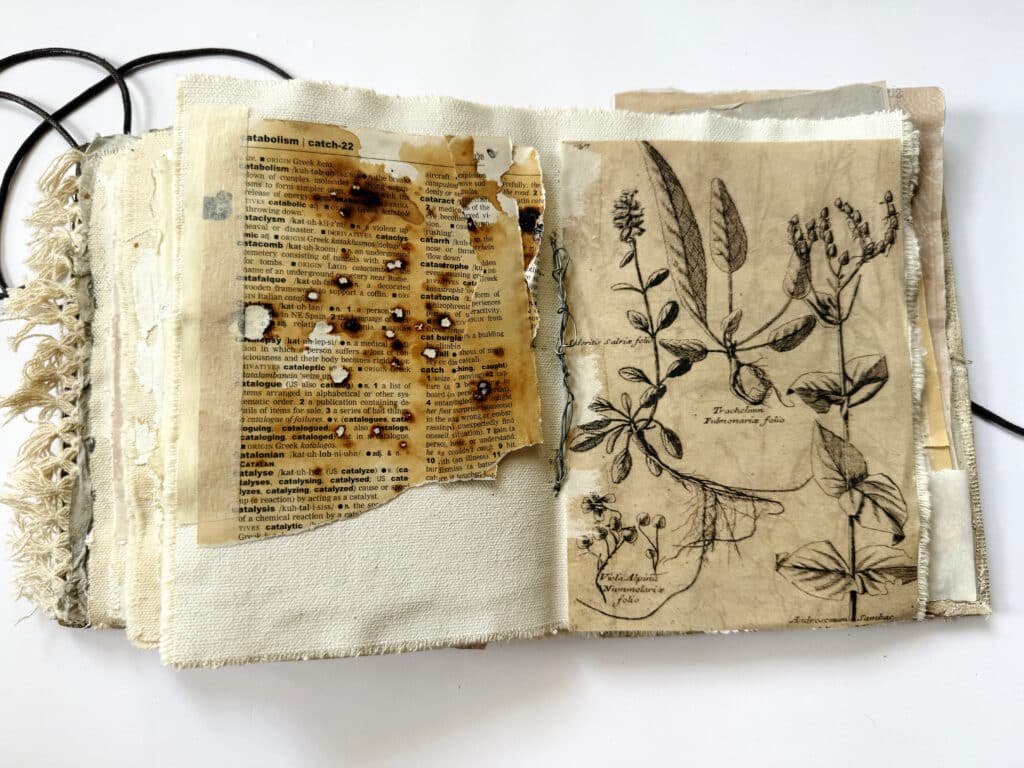
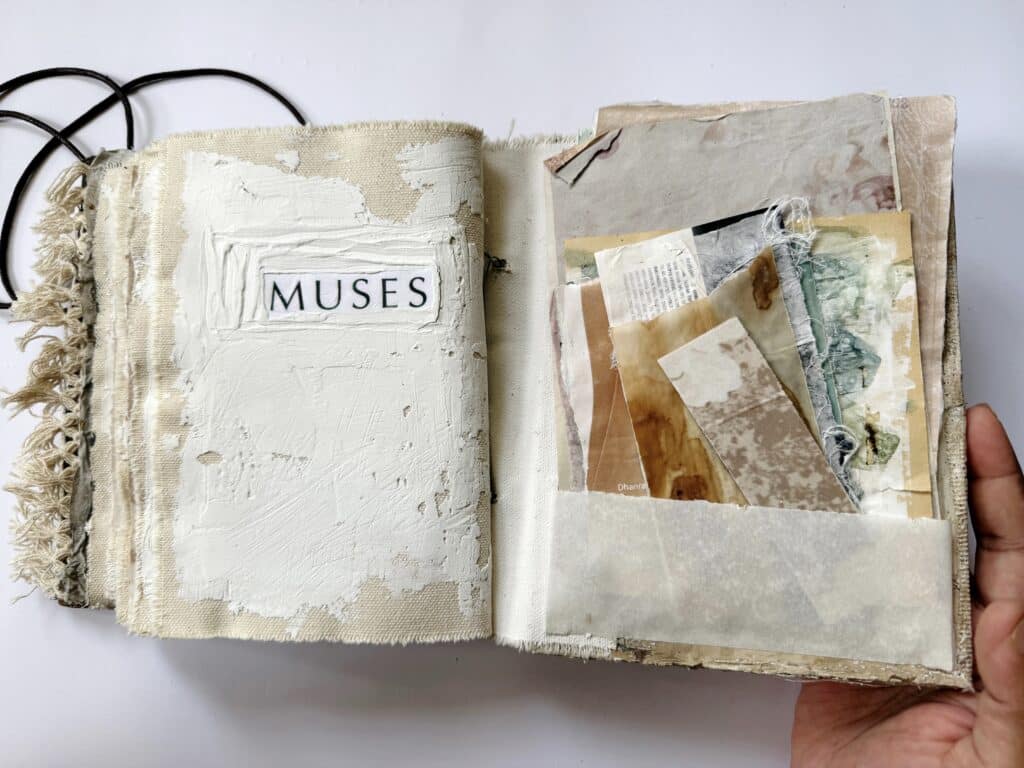
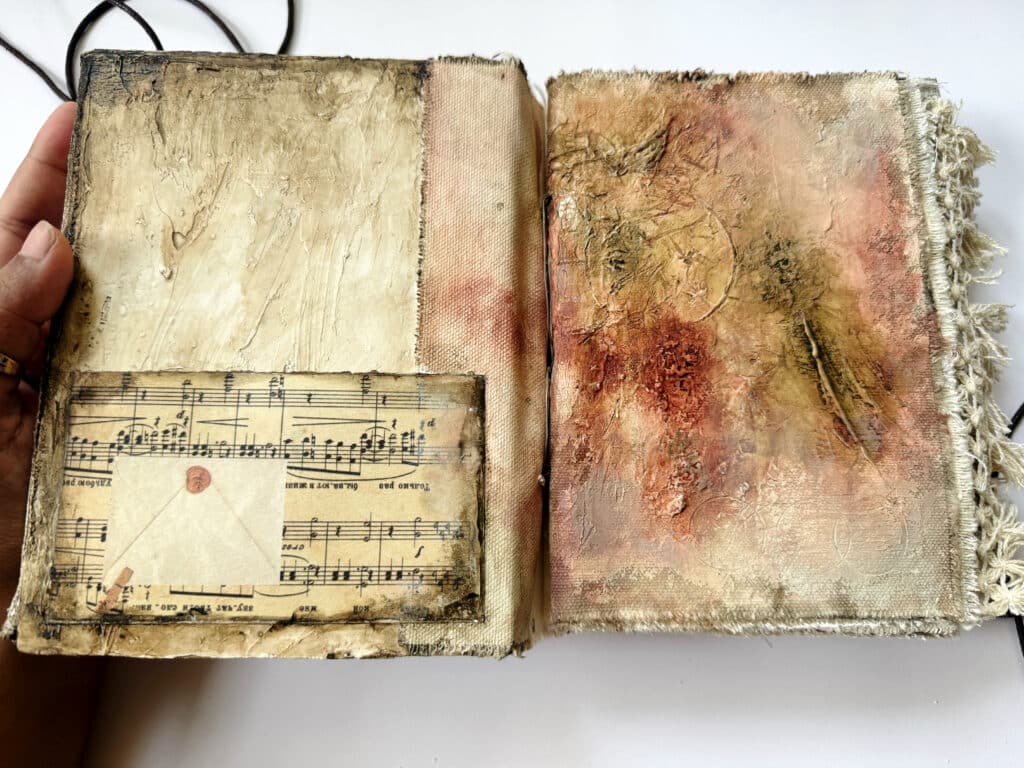
I’m also sharing some photos of the pages below. Each spread has its own personality — from crackled plaster to smooth putty sections to fabric impressions and scraped layers.
Sharing Some of the Page Textures
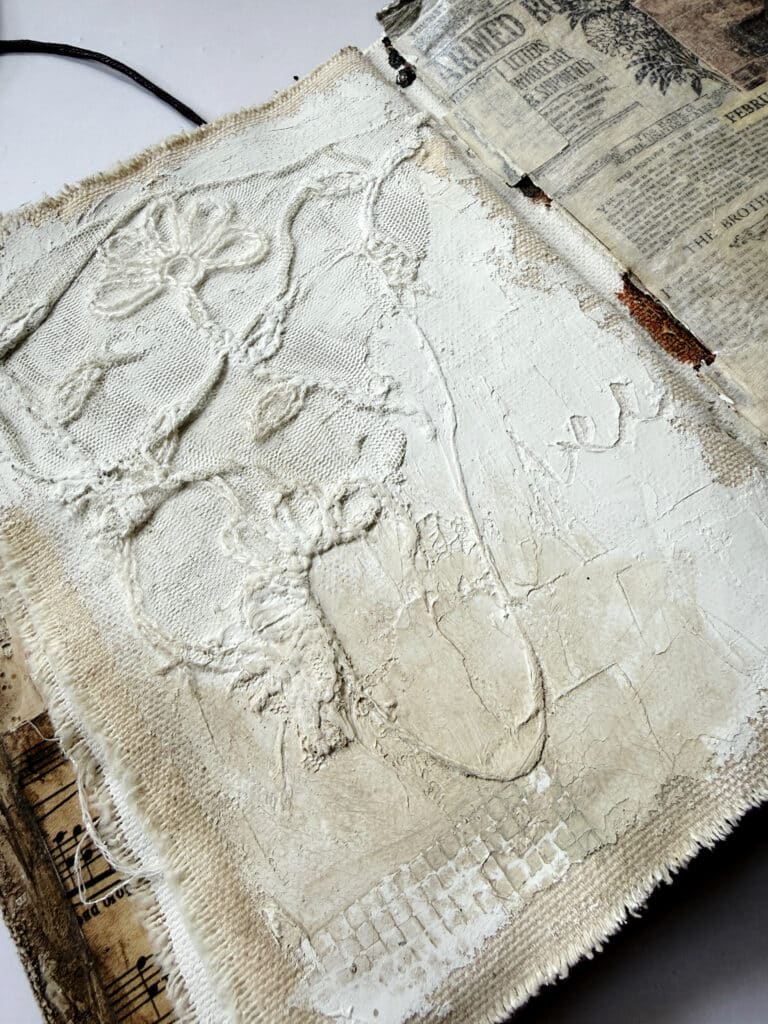
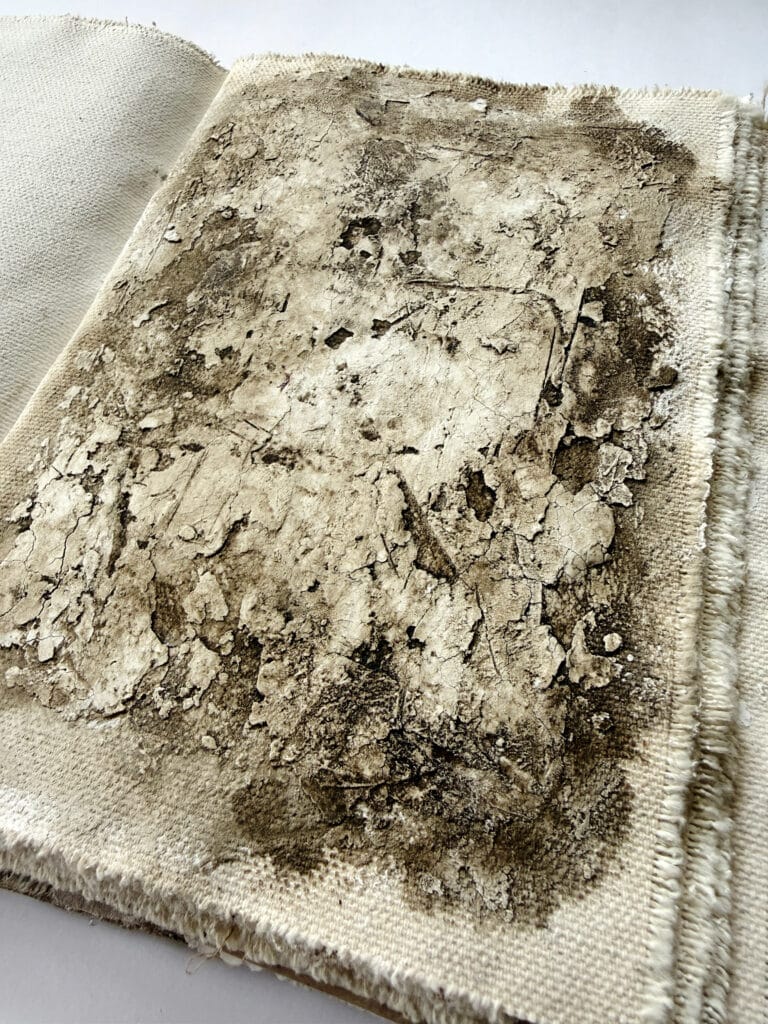
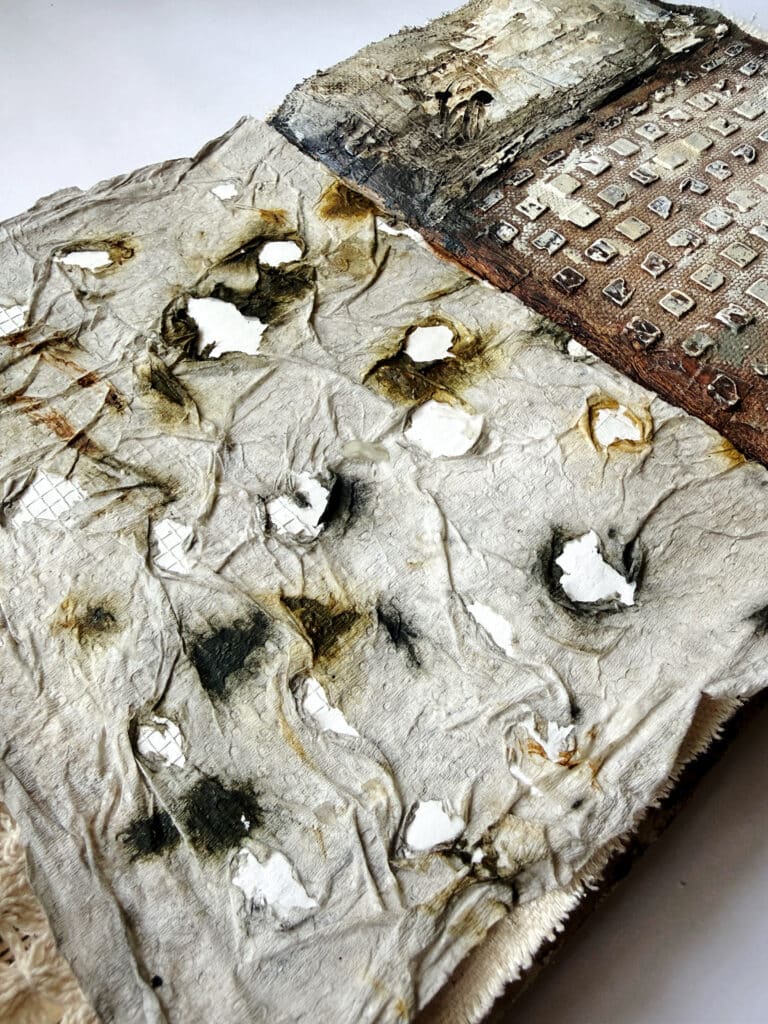
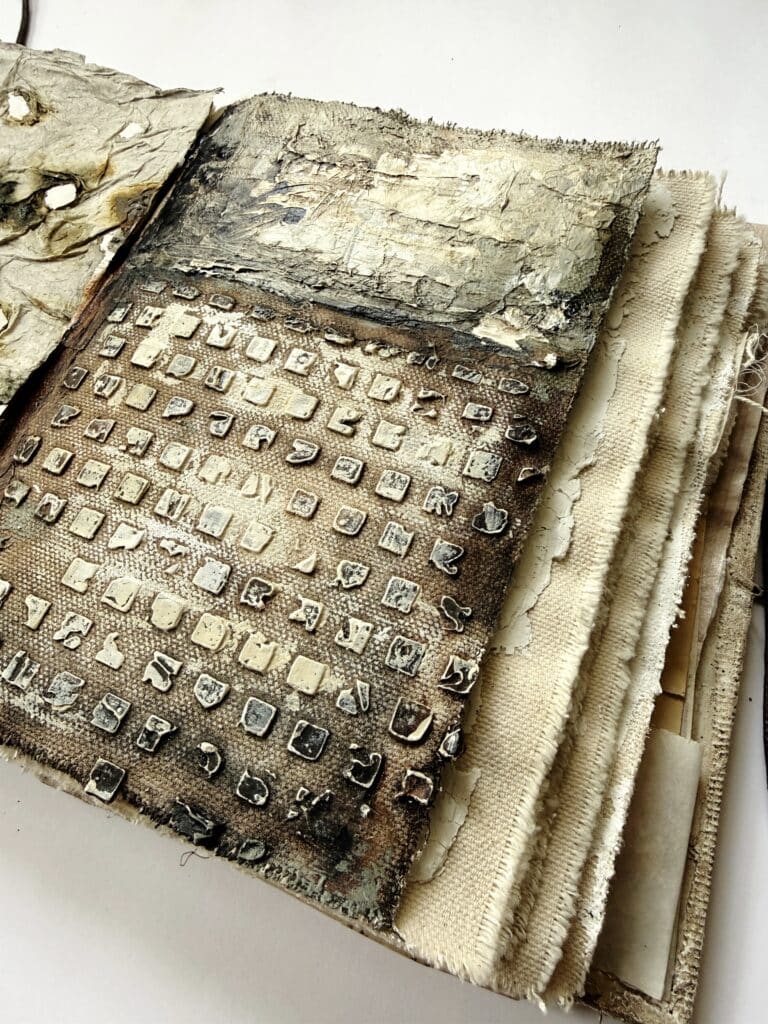
I also captured a few still shots of the pages to show the textures more closely. There’s something about seeing plaster surfaces in photographs — you can notice the cracks, the soft grain, the layered fabric impressions, and the gentle chalkiness that video sometimes can’t capture.
Here are a few of my favourite moments from thisplaster art journal:
Cracked plaster edges that look like aged walls
Smooth gessoed areas perfect for mark-making
Embedded fabric and gauze textures peeking through
Rough, grainy plaster that holds paint beautifully
Thick putty strokes creating natural ridges and shadows
Each spread feels different, and that’s what makes this book so exciting to work in. I love how every page carries its own history — as if the plaster decided what it wanted to become.
I’m sharing these images here so you can get a closer look at the surfaces before I begin adding more layers, marks, and storytelling.
A Few Finished Pages — And What Comes Next
I’ve already started working on a few pages inside the journal, and honestly… I love how the mediums sit on plaster. The textures catch the paint in unexpected ways. The marks become deeper. Everything looks older, richer, more soulful.
I’m nowhere near done — and that’s the best part.
Thisplaster art journalfeels like a long-term companion. A place to experiment. A place to play. A place to pour slow, intentional creativity.
I can’t wait to keep adding more layers, more marks, more stories.
If You Love Texture, Try This
If you’re a texture lover like me, you will adore making your ownplaster art journal. It’s grounding, meditative, messy, and full of beautiful imperfections.
And if you want more ideas for creating textured papers and surfaces, you can also explore myGratitude Cardsclass — where I share similar techniques using pastes and intuitive mark-making.
Final Thoughts
This plaster book has already taught me so much — patience, playfulness, and the joy of letting materials lead the way. I hope the flip-through inspires you to explore plaster, create your own textured book, and enjoy the magic of building something completely by hand.
If you create your own plaster art journal, I’d love to see it! Share in our Facebook group.