
How to Make a Fabric Book with Slow Stitching and Textile Collage

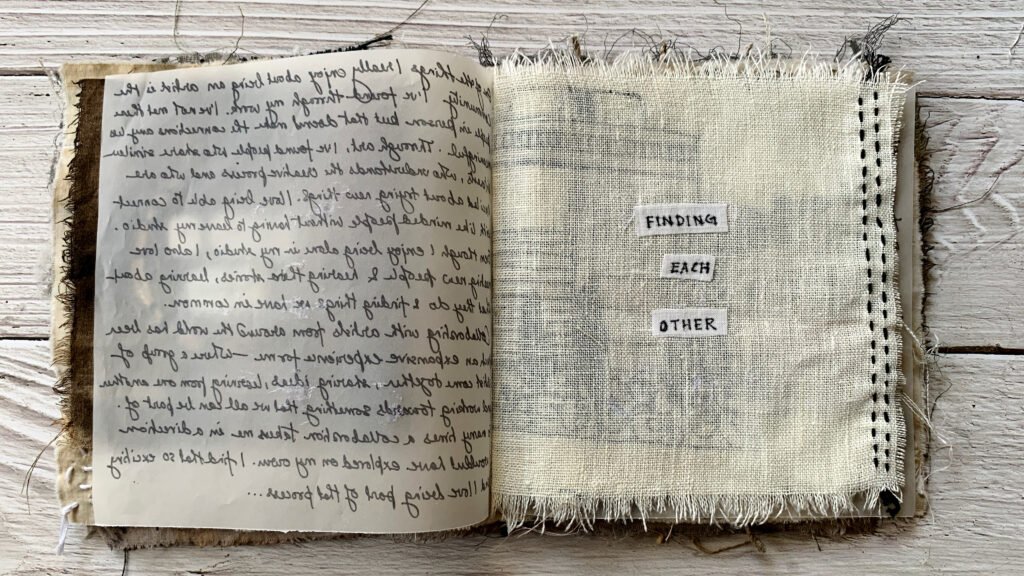
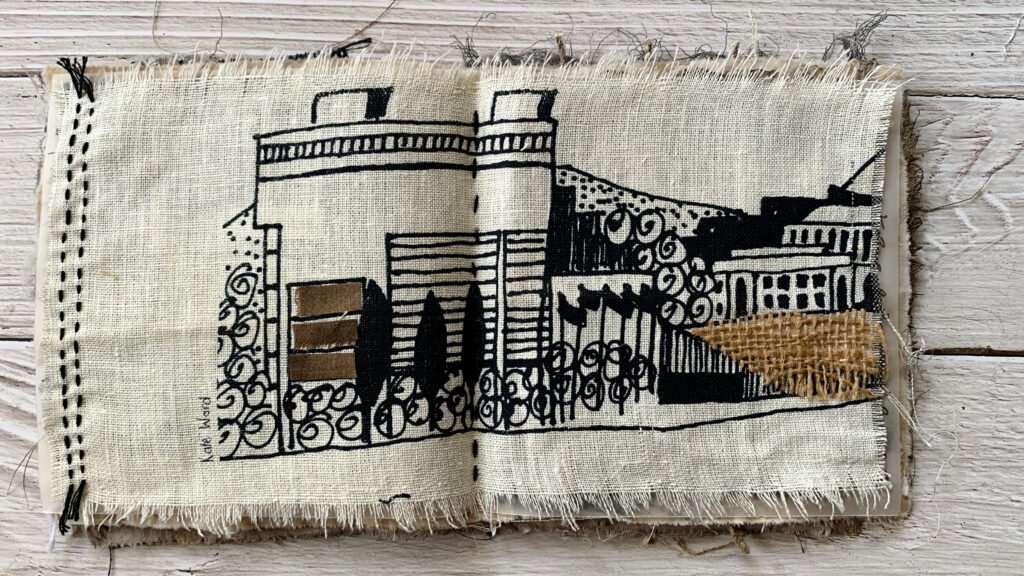
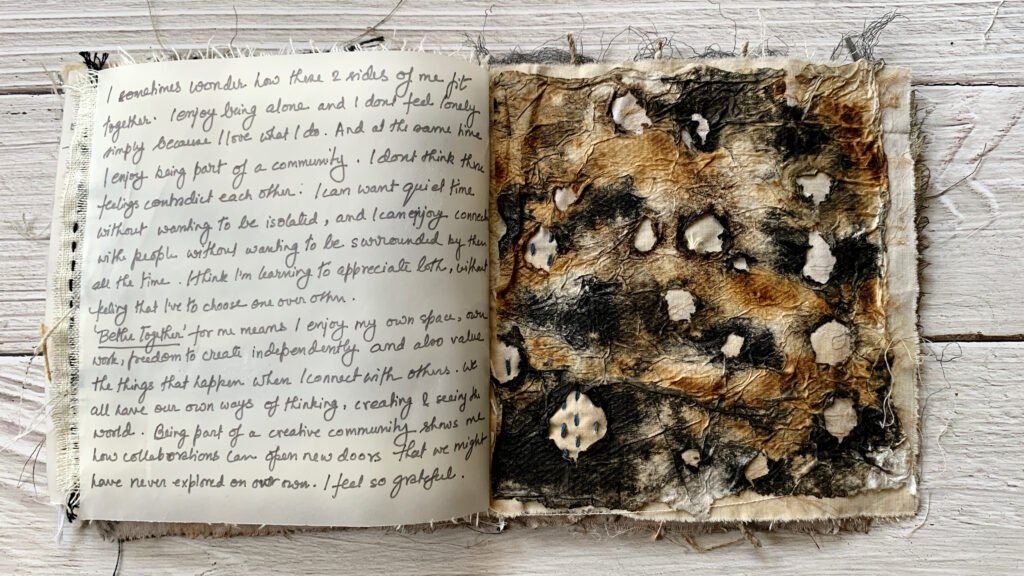
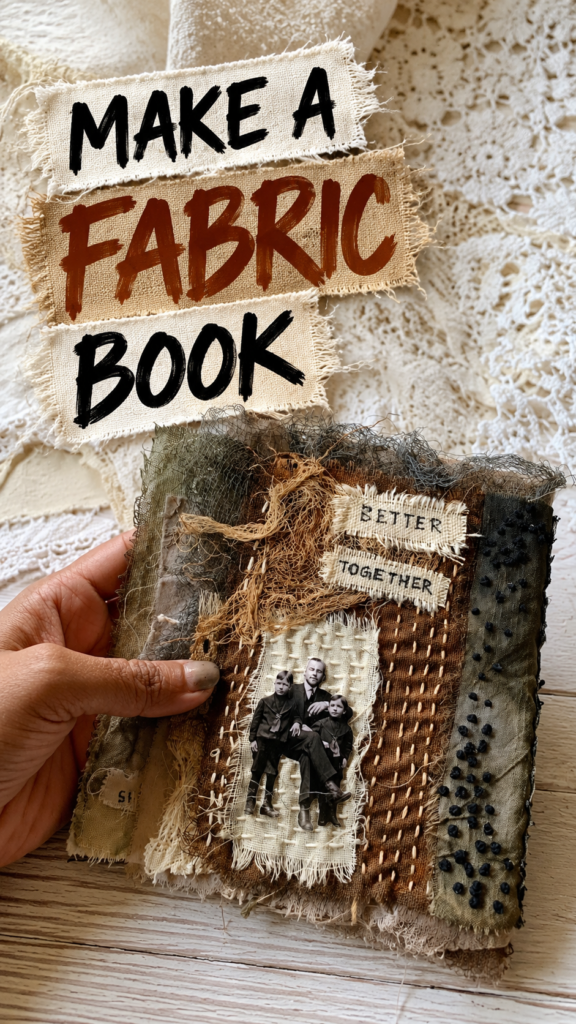
A fabric book is a lovely way to bring together fabric scraps, lace, interesting textures, hand stitching and small found images. For this project, I created a textile book inspired by “Better Together,” the theme of Michelle Cox’s annual Stitch and Gather challenge on
Instagram.

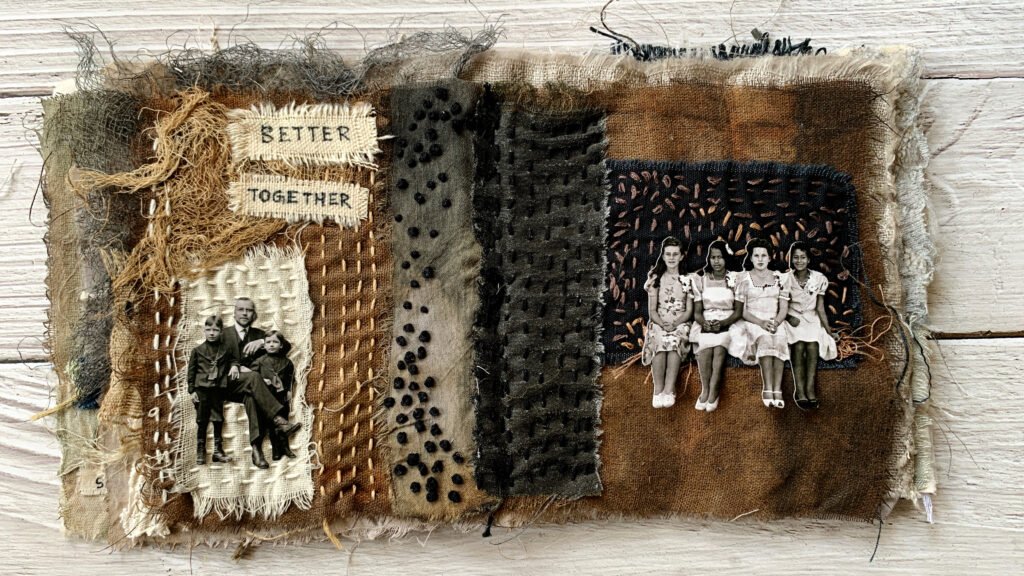
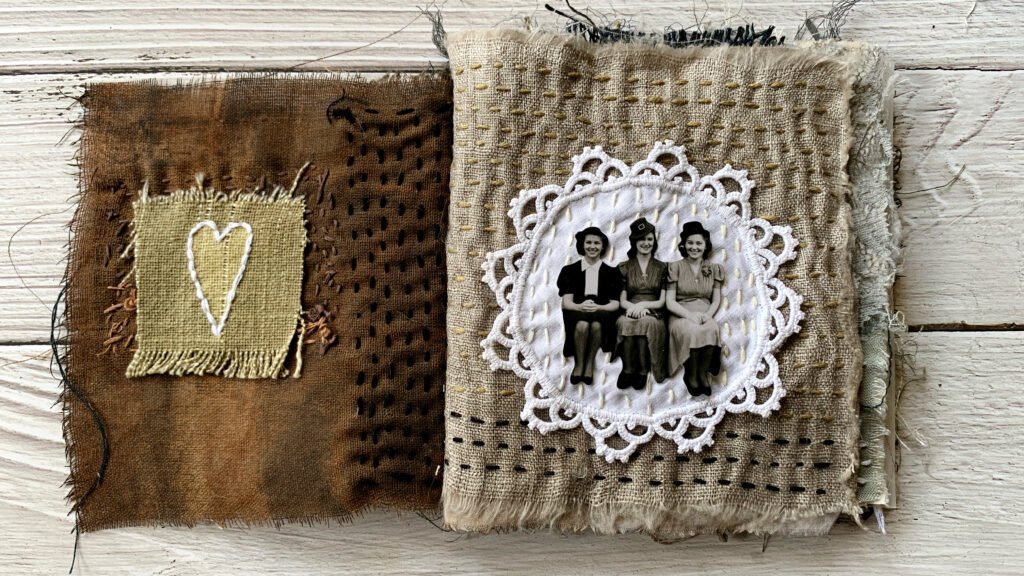
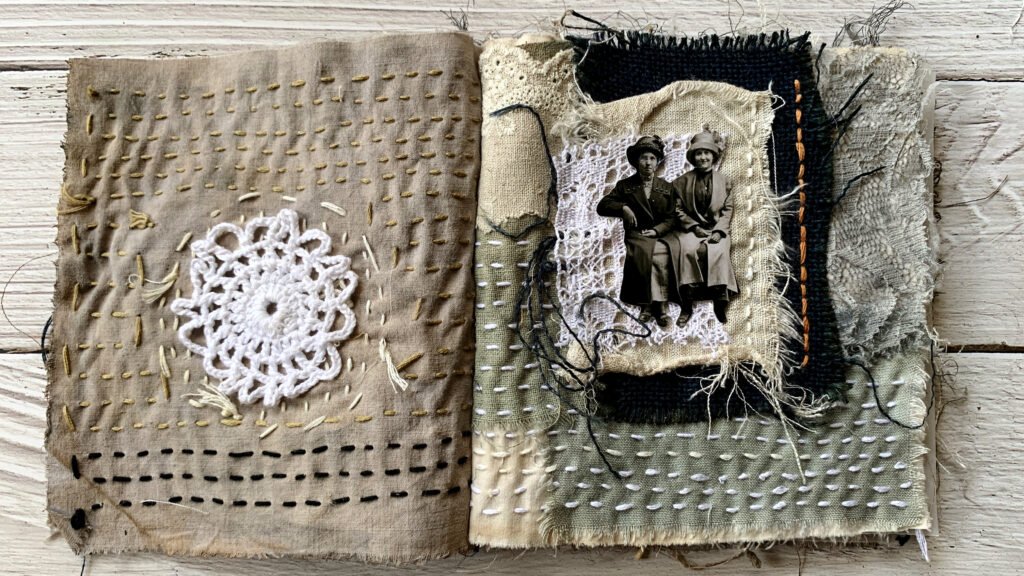
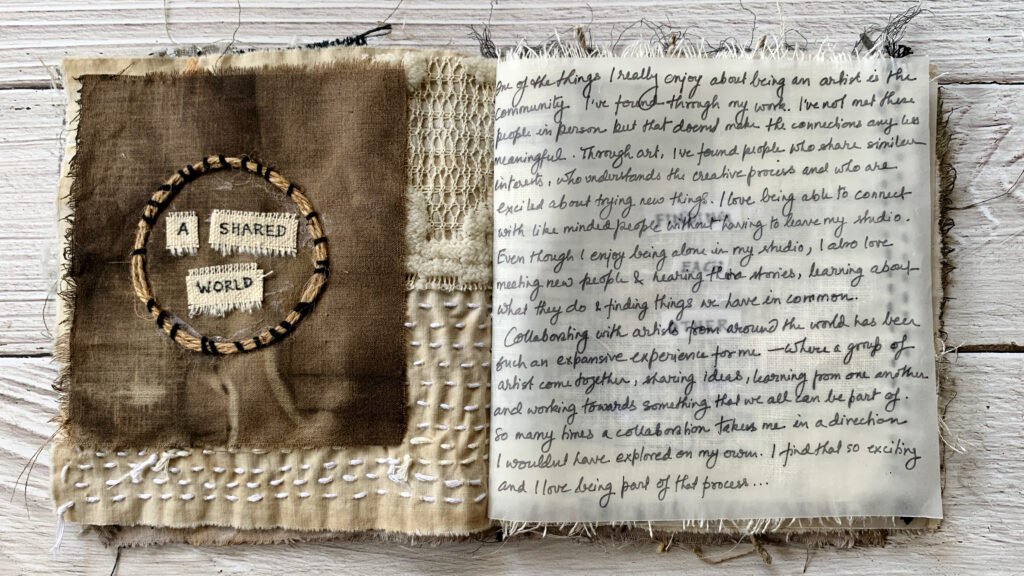
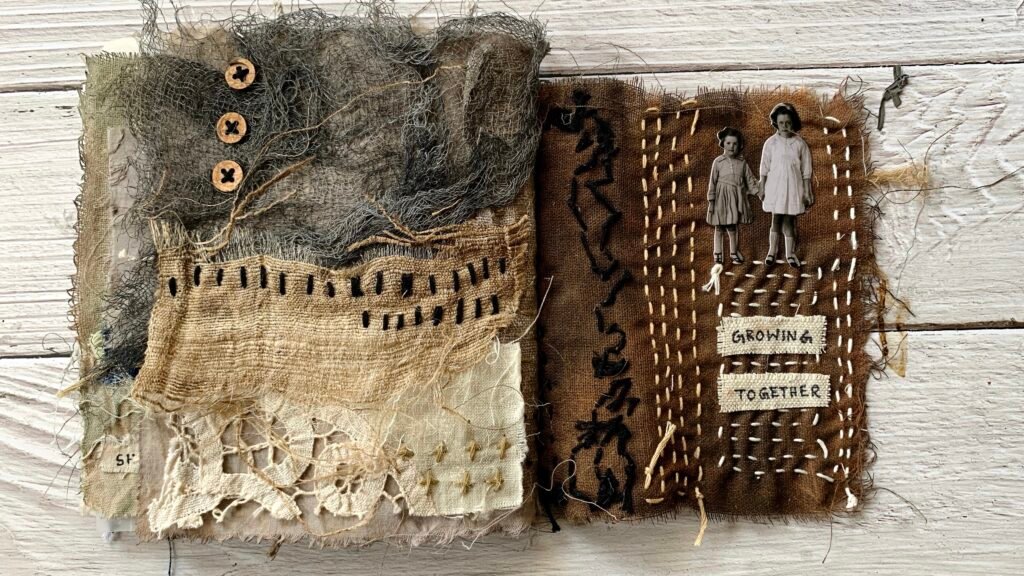
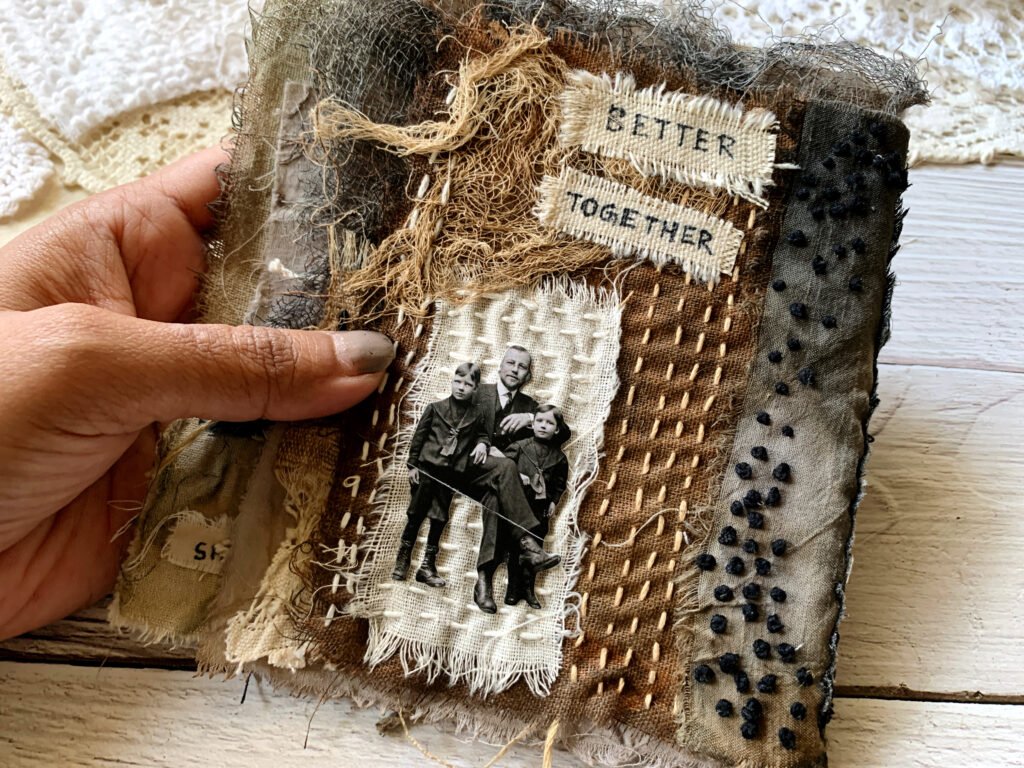
I started by arranging fabric pieces into three pages, then added slow stitching and focal points before assembling the pages into a book. The finished piece combines earthy fabrics, frayed edges, vintage photographs, lace, and visible stitches.

🎥 Watch the Video

The Idea Behind This Fabric Book

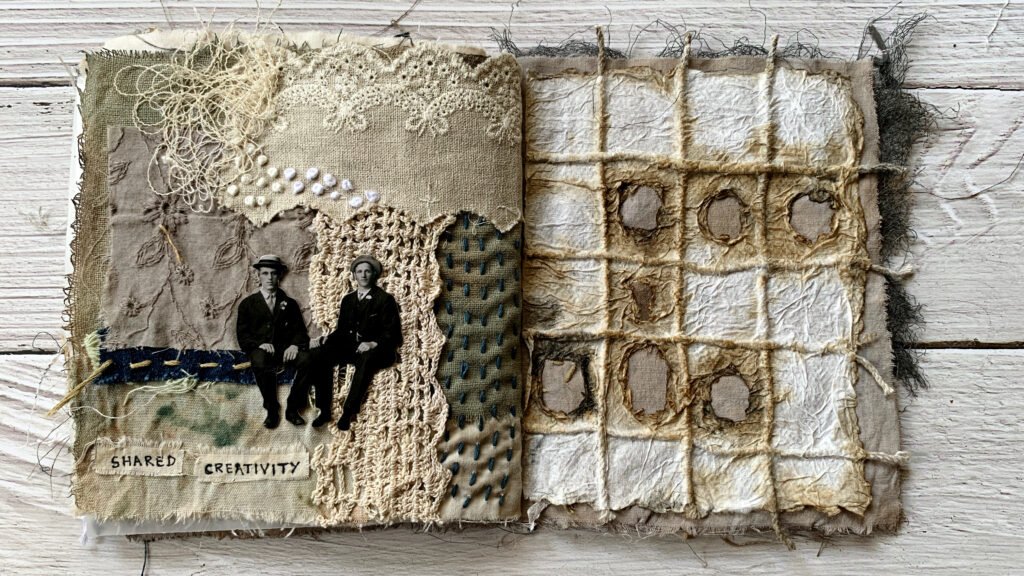
The theme “Better Together” made me think about how different pieces can work together without losing what makes each one special. I brought together fabrics in different colours, weights and textures, along with lace, loose threads and vintage photographs.

Some of the fabrics used in this project came from Michelle Cox’s Etsy shop. Rather than planning every detail in advance, I began by laying out the pieces and seeing how they worked together.

1. Arranging the Fabric Scraps

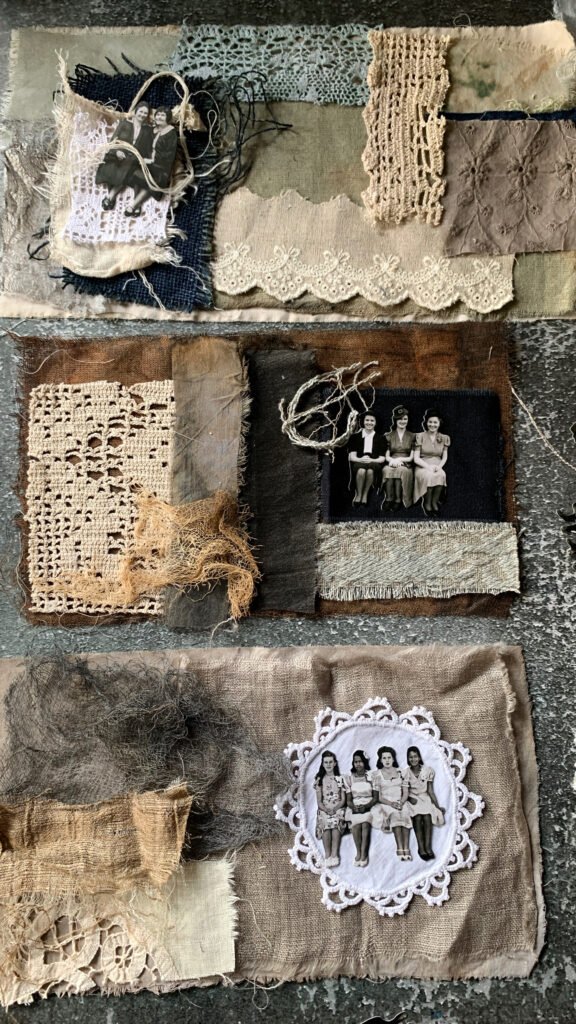
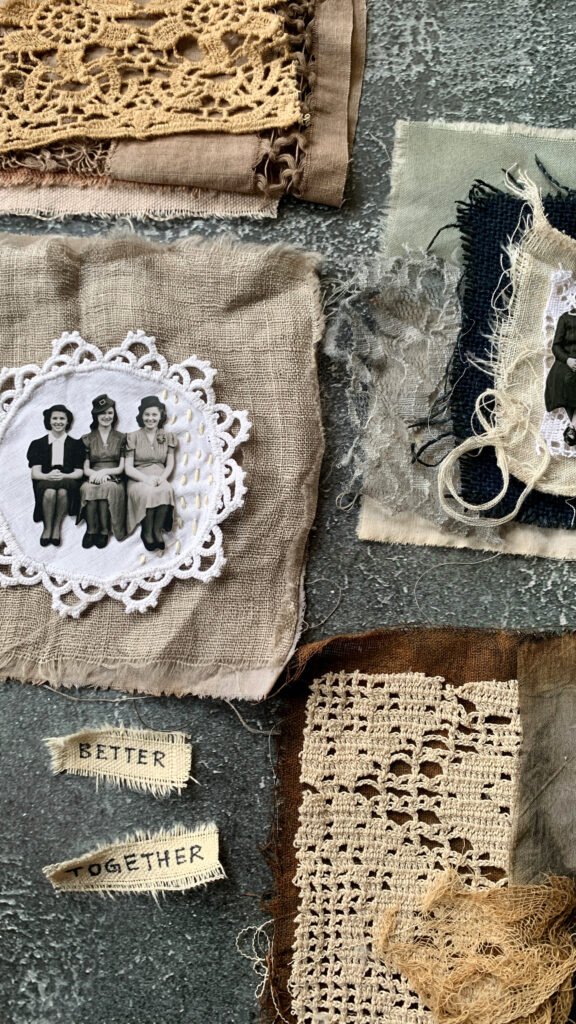
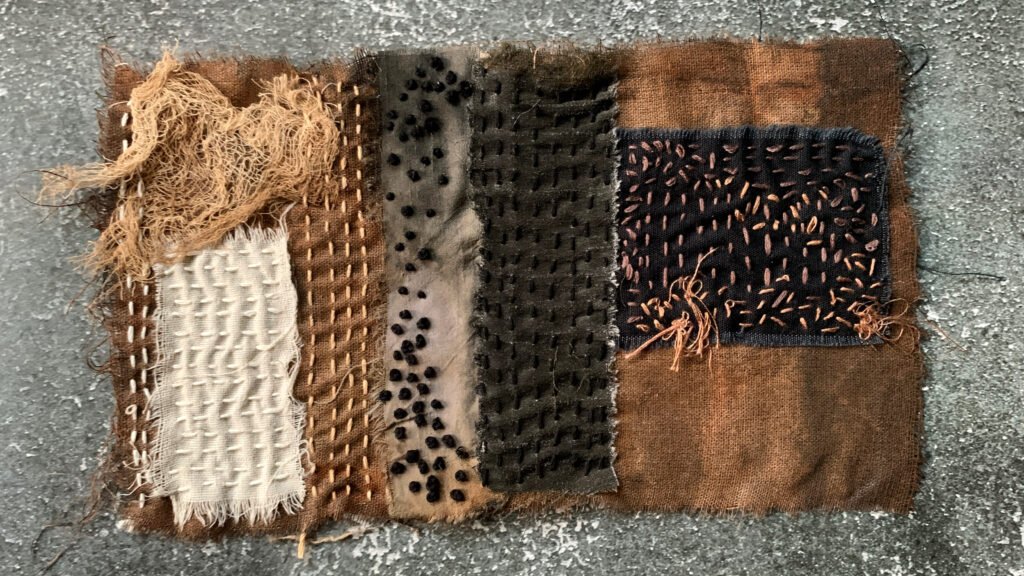
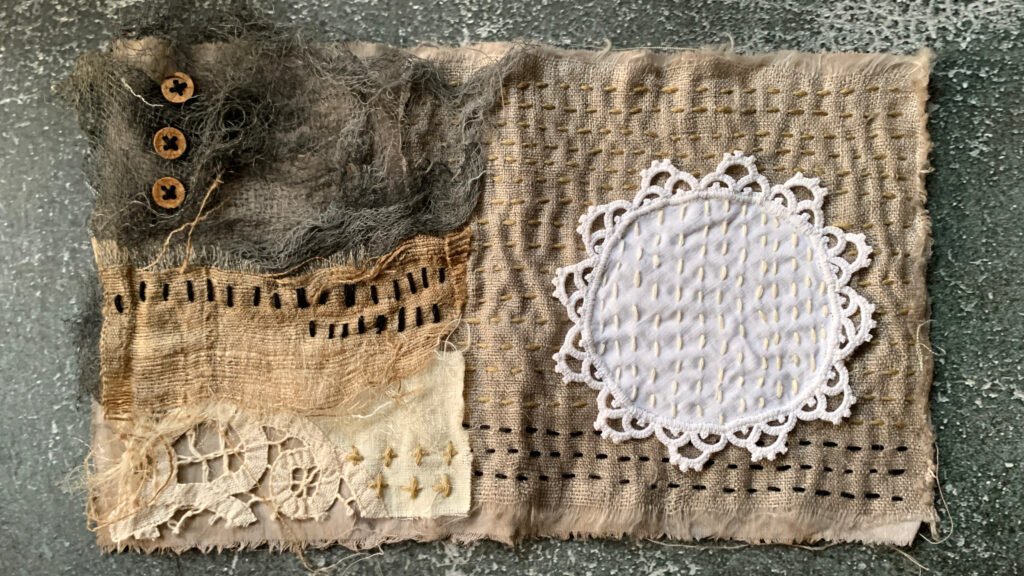
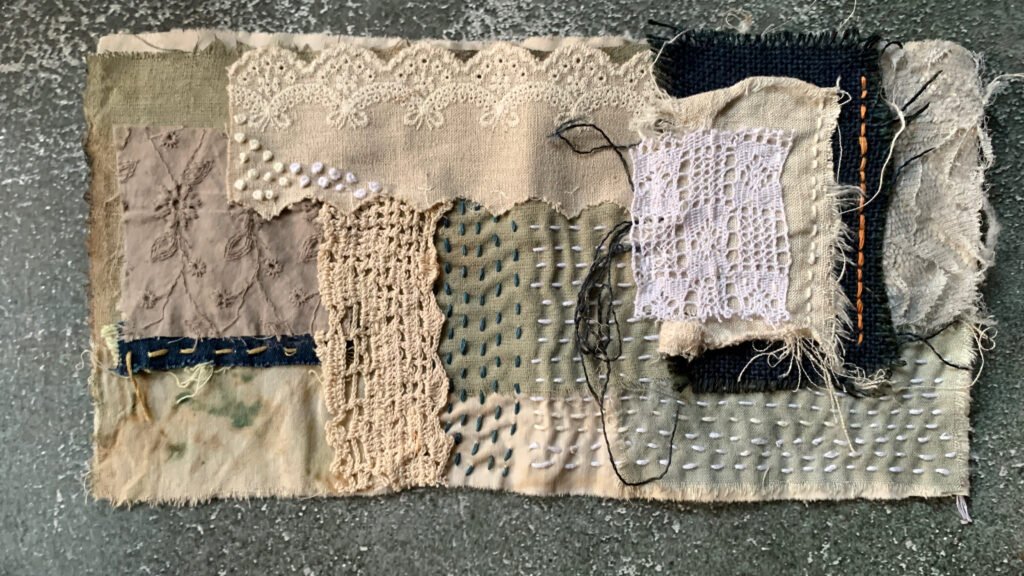
Before stitching anything, I arranged the fabric scraps across three separate pages. I looked at the colour, texture, scale and placement of each piece, moving things around until the composition felt balanced.

At this stage, I focused on the layout rather than making everything neat. The frayed edges and irregular shapes were part of the look I wanted.

2. Building Texture with Slow Stitching

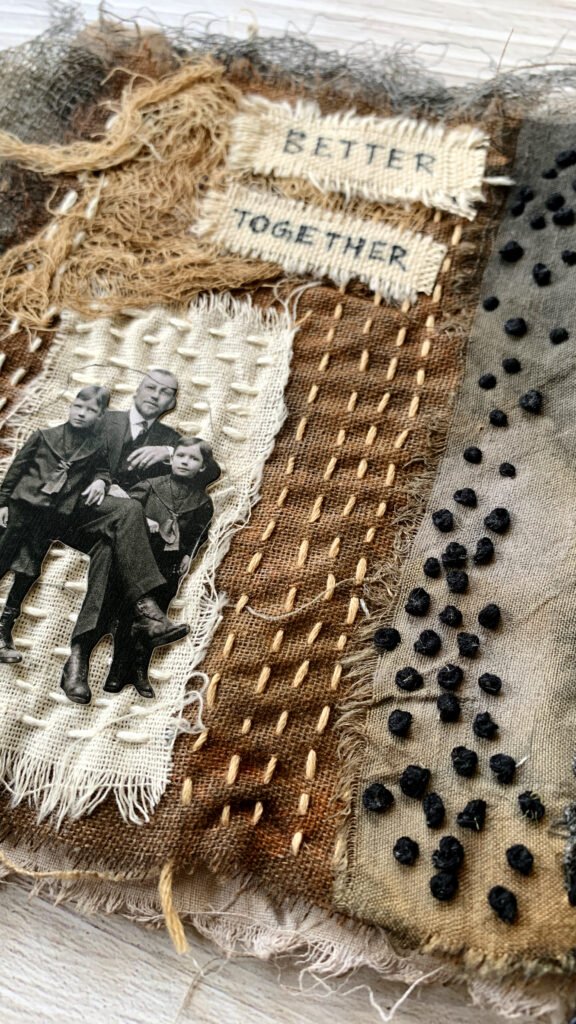
Once I was happy with the arrangement, I stitched the fabric layers together. Slow stitching allowed me to add another layer of texture while helping the different materials feel connected.

I used a mix of visible stitches and repeated marks, varying the spacing and direction to suit each fabric.

Learn the Art of Fabric Dyeing

Learn to dye your own fabrics in any color you love with my secret coffee-and-acrylic recipe! ☕🎨

3. Adding the Focal Points

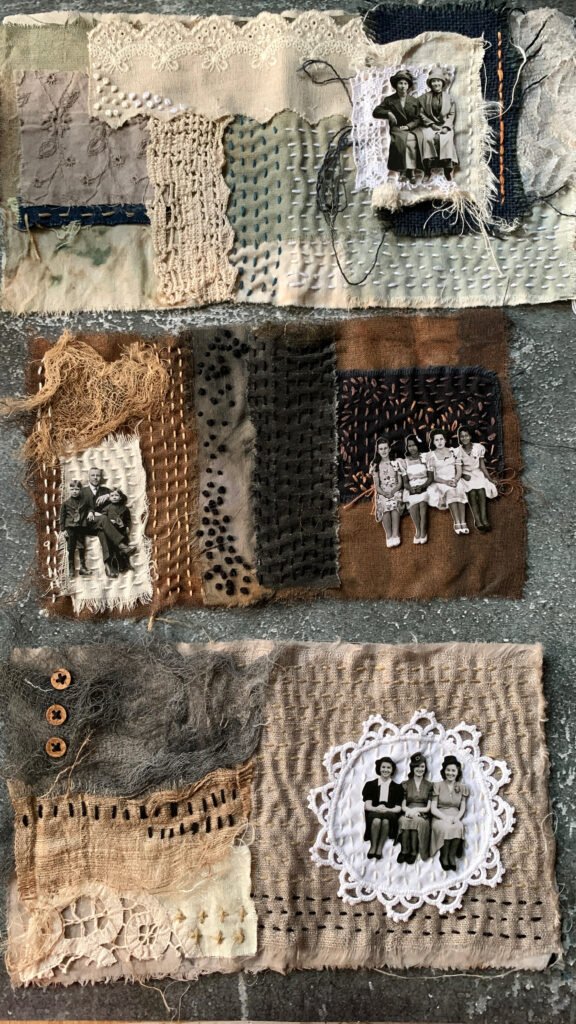
After stitching the fabric layers, I added focal points to bring the pages together visually. Vintage black-and-white photographs became an important part of the composition. They introduce a sense of history and connection, while the fabric around them frames each image.

4. Turning the Pages into a Fabric Book

With the pages prepared, I stitched them together to form the book. Seeing the individual fabric compositions side by side helped me think about how they related to one another as a whole.

Want to Make Your Own Fabrics?

If this project has you thinking about creating your own textile materials, you can join my free Creative Playbook. It includes my lesson on dyeing fabric with coffee and acrylics, a way to create distinctive fabrics for textile collage, fabric books and mixed-media projects.

Final Thoughts

Making this fabric book was an opportunity to bring together different materials, textures and images in one piece. Starting with the fabric layout gave me room to experiment, and the stitching helped connect the layers before I assembled the pages into a book.

You don’t need matching fabrics or a perfectly planned composition to begin. Gather a few pieces that interest you, arrange them in a way that feels right, and build from there.

If you make a fabric book of your own, you can interpret the idea in your own way—with fabric scraps, lace, paper, photographs, hand stitching or any combination of materials that interests you.

Pin for later!

fabric book

Leave a Comment

Your email address will not be published. Required fields are marked *

Scroll to Top