Turn your Mark Making Ideas into a Dictionary
Have you ever filled pages with dots, lines, circles, and patterns, only to wonder what to do with all those papers afterwards?
I love exploring mark making without worrying about creating a finished piece of art. Sometimes I repeat tiny dots, draw rows of lines, experiment with circles, or let my hand move freely across the paper. Each sheet becomes a little experiment in rhythm, repetition, and texture.
But rather than leaving these papers in a pile or tucked away in a drawer, I wanted to bring them together into something I could use again and again.
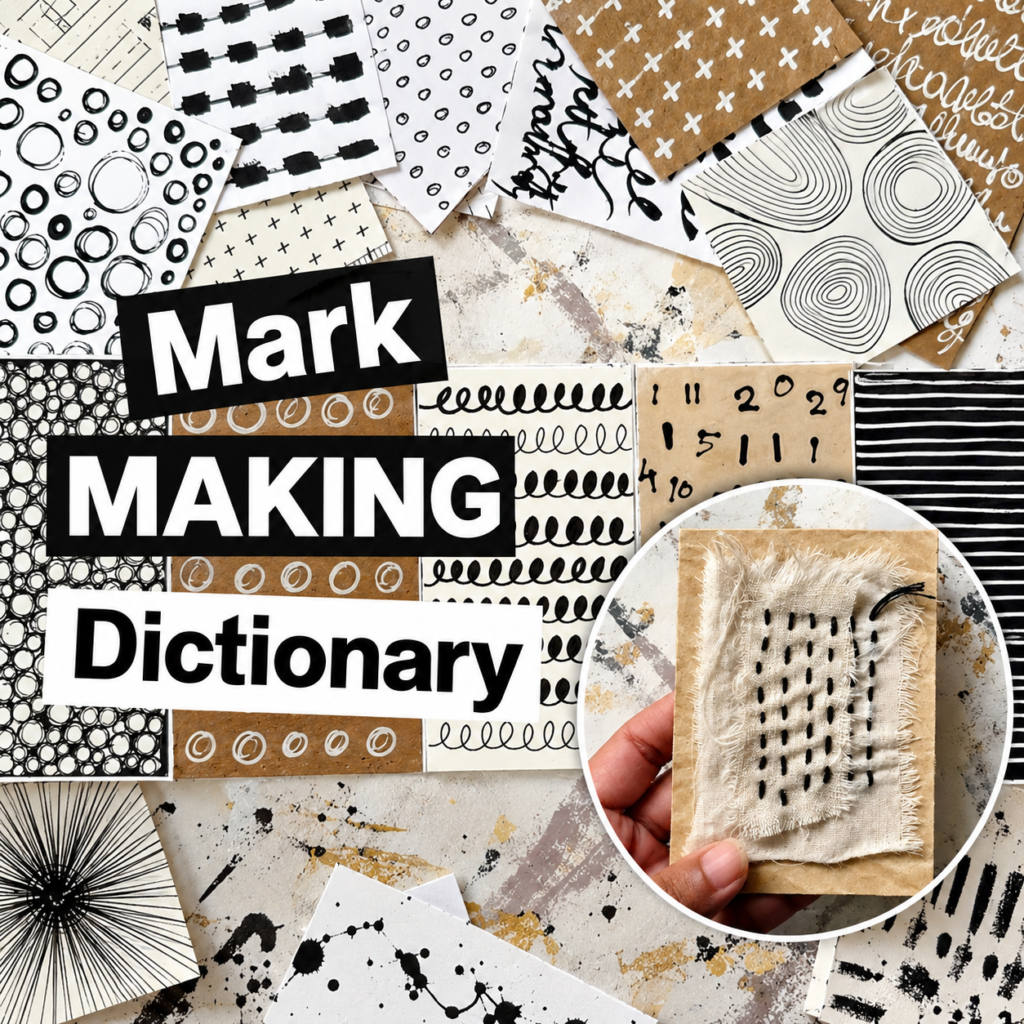
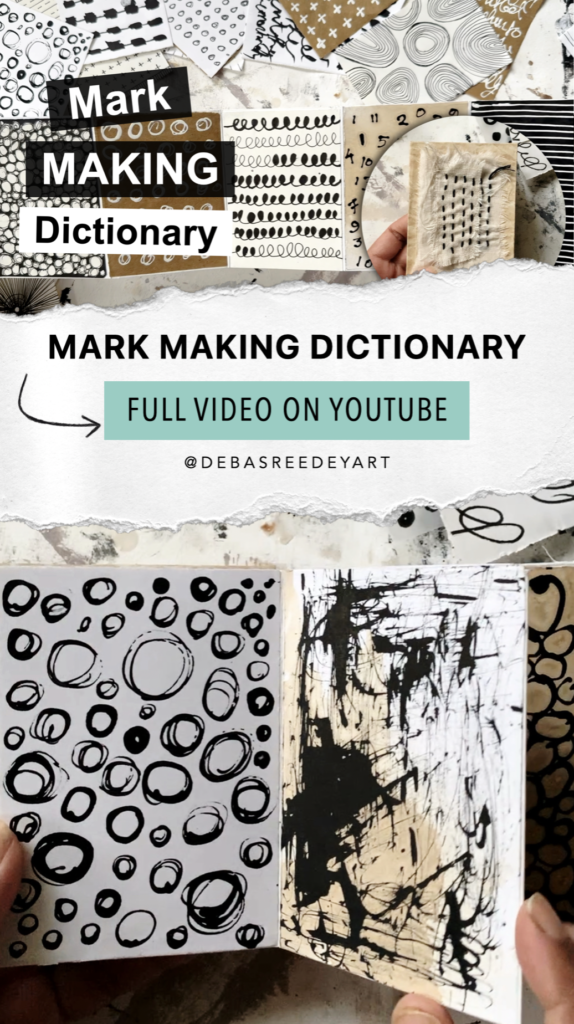
That’s how I came up with the idea of a mark making dictionary — a little handmade book filled with marks, patterns, and textures that I can return to whenever I need inspiration for my art journals and mixed media projects.
In this tutorial, I’ll show you how to turn your mark-making papers into a dictionary using a simple one-sheet book method.
🎥 Watch the Video
What Is a Mark Making Dictionary?
A mark making dictionary is a personal collection of marks, patterns, lines, and textures that you can use as a visual reference for your artwork.
It might include dots, dashes, circles, scribbles, grids, loops, geometric shapes, or expressive black-and-white patterns. You can organise the marks by technique or simply arrange them in a way that feels right to you.
Think of it as your own little library of mark making ideas.
Whenever you need inspiration for an art journal page, collage, or mixed media project, you can flip through your dictionary, choose a mark you like, and use it as a starting point for something new.
Why Create a Mark Making Dictionary?
Build a personal collection of ideas
Sometimes, the hardest part of making art is deciding what to do next. Having a collection of your own marks gives you a starting point whenever you feel creatively stuck.
Explore patterns through repetition
Simple marks can become surprisingly interesting when repeated. Dots become textures, lines develop rhythm, and circles create patterns. Small changes in spacing, size, and direction can lead to entirely different results.
Develop your own visual vocabulary
Over time, you’ll begin to notice the marks you naturally gravitate towards. Your dictionary becomes a record of your creative explorations and the patterns that feel most like you.
How to Create Your Mark Making Papers?
Before making the dictionary, you’ll need a collection of mark-making papers.
You don’t need complicated materials. Drawing paper, found papers, black pens, markers, pencils, paintbrushes, and a few everyday objects are enough to get started.
Try making rows of dots, repeating short lines, drawing circles, creating grids, or experimenting with loose scribbles. Change the size of your marks, vary the spacing, and see what happens when you combine different patterns.
Don’t worry about making every sheet perfect. The goal is to experiment, notice what interests you, and collect marks you might want to use again.
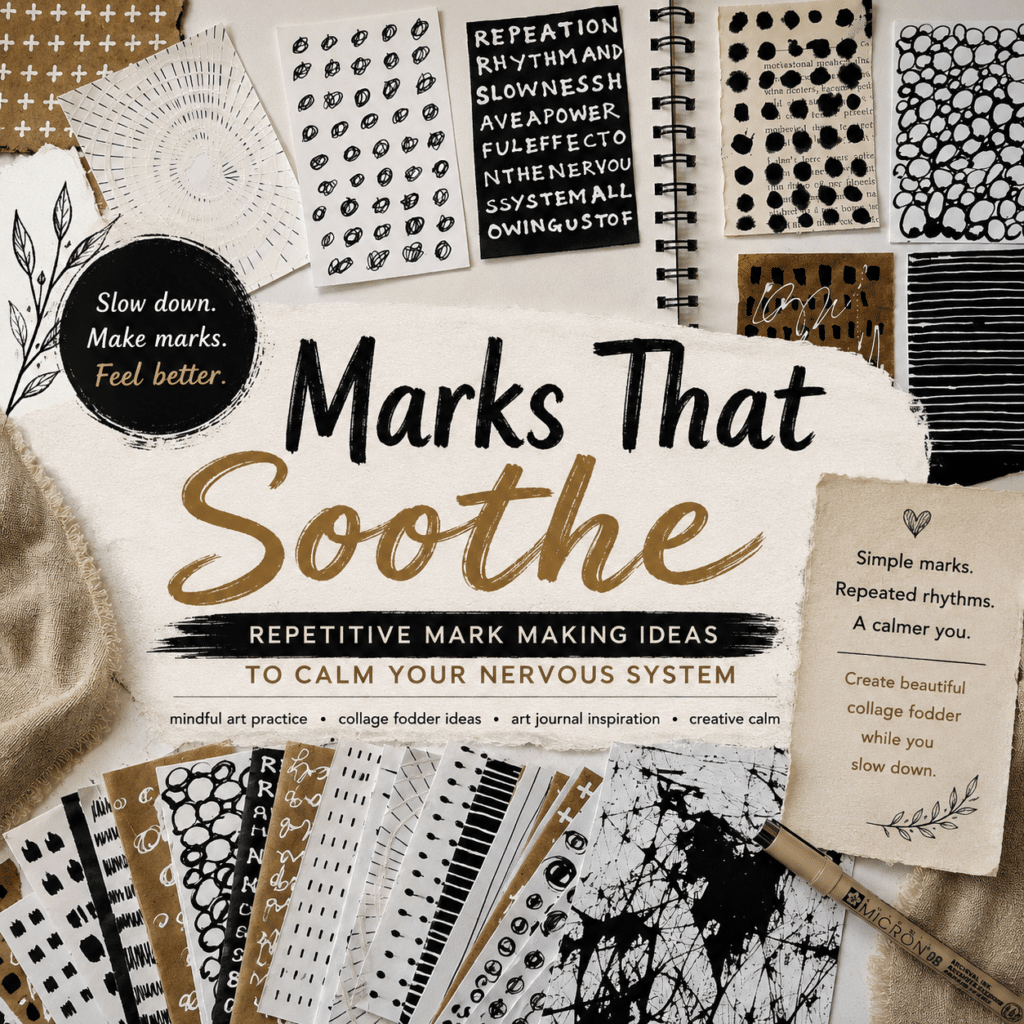
I’ve created a free video workshop called Marks That Soothe, where I’ll guide you through exploring repetitive mark making using simple tools and everyday materials.
Get Your Free Workshop
A free, hands-on lesson to help you experiment with simple marks, build patterns, and create papers to use in your mixed media art.
How to Turn Your Mark Making Papers Into a Dictionary
Once you have a collection of mark-making papers, it’s time to bring them together into a handmade book.
For this project, I’m using a single sheet of A2 drawing paper and the one-sheet book method to create an 8-by-4 layout. This gives me a connected series of pages where I can display my different marks and patterns.
Step 1: Choose your favourite mark making papers
Lay out your mark-making papers and look through the different patterns and textures you’ve created.
Choose the pieces you want to include in your dictionary. You might select contrasting patterns, group similar marks together, or simply choose the papers you find most interesting.
Step 2: Prepare your one-sheet book
Start with a single sheet of A2 drawing paper. Following the folding and cutting sequence for your chosen layout, transform the sheet into a connected book.
The one-sheet book method is a lovely way to create a small book without binding a stack of individual pages.
Step 3: Use the Grid Guide
If you’re new to this bookmaking method, I’ve created a free Grid Guide to help you explore different one-sheet book layouts.
You can use it to plan the arrangement of your pages and understand how different grid proportions create different book formats.
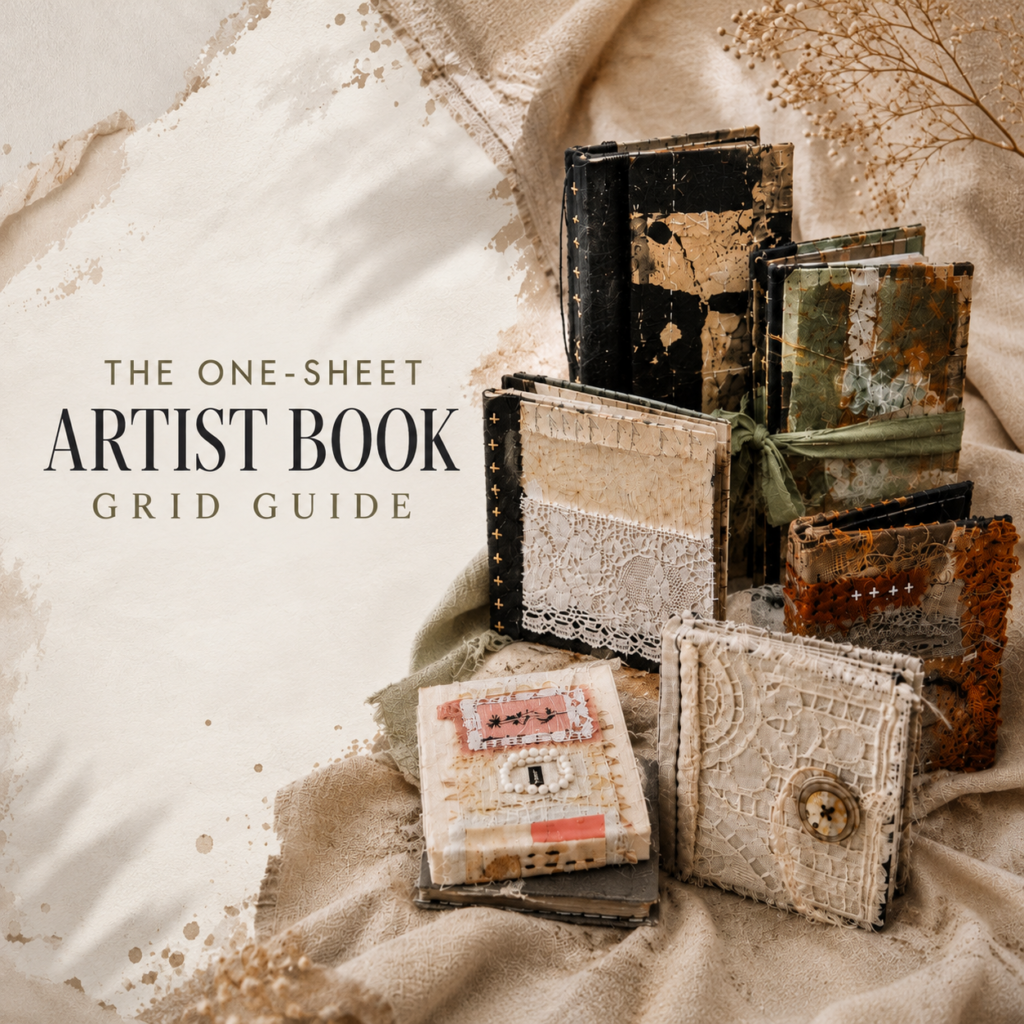
Grid Guide
A visual guide that shows you how to fold a single sheet of paper into a handmade books using different grid structures.
Step 4: Add your mark-making papers
Cut or tear your selected papers into pieces that fit your book’s pages.
You can use one pattern per page or combine several marks together. Leave a little space around each design so you can see the details clearly.
Think of every page as a small sample in your personal mark-making library.
Step 5: Create a textured cover
I wrapped two cardboard cutouts in paper to create the covers, then embellished the front with a small piece of fabric with stitching.
I love how stitching can become another form of mark making. The repeated lines of thread add rhythm, texture, and a tactile quality to the cover.
You could also use painted paper, collage, or fabric scraps to create a cover that reflects your own style.
Step 6: Finish your dictionary
Bring the pages and covers together, then flip through your finished book.
You’ll have a little collection of your own marks, patterns, and textures that you can revisit whenever you need inspiration for your art journaling and mixed media projects.
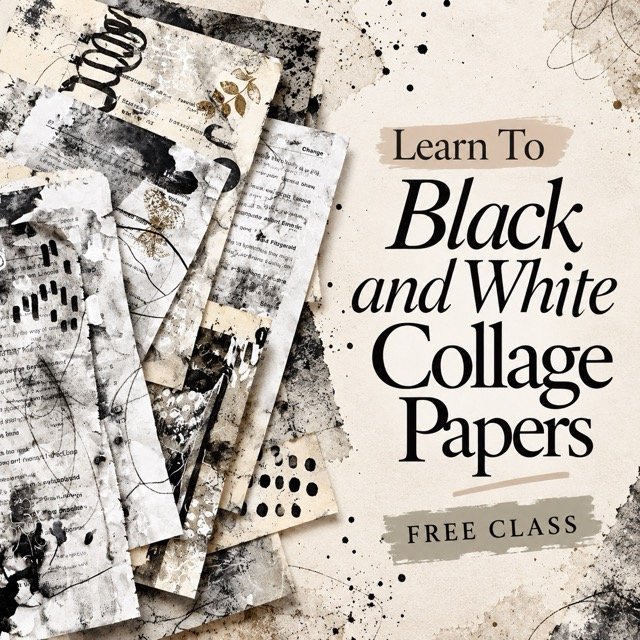
Create Unique Black & White Collage Papers
3 inspiring video lessons to create a stash of unique, artful materials for your mixed-media projects.
More Mark Making Ideas to Explore
Once your dictionary is complete, use it as a starting point for further experimentation.
Choose a mark and repeat it on a larger sheet. Combine two patterns, change the scale, or try the same mark with a different tool.
You could even create separate collections of organic marks, geometric patterns, or black-and-white textures.
Your dictionary doesn’t have to be finished in one sitting. Add new pages or create another little book whenever you discover a mark you love.
Frequently Asked Questions
What are some easy mark making ideas for beginners?
Start with dots, dashes, circles, straight lines, wavy lines, loops, and repeated shapes. These simple marks can be combined in countless ways to create patterns and textures.
What materials can I use for mark making?
Try pens, pencils, markers, brushes, acrylic paint, sticks, cotton buds, and found objects. Different tools produce different marks, so experiment with whatever you have available.
How can I use mark making in art journaling?
Use marks to create backgrounds, add texture to collage, fill empty spaces, or create contrast on a page. Your mark making dictionary can help you find ideas whenever you need a starting point.
How do I make a book from one sheet of paper?
A one-sheet book is created by folding and cutting a single sheet into connected pages. The exact sequence depends on the layout. My free Grid Guide can help you explore different options.
Create Your Own Little Library of Marks
I love the idea of collecting small creative experiments and giving them a place to live.
Your mark making dictionary doesn’t need to be perfect. It can be a collection of patterns, unexpected discoveries, and little experiments that remind you how much is possible when you allow yourself to play.
The next time you sit down to create an art journal page and aren’t sure where to begin, open your dictionary and choose a mark. Repeat it, change it, or combine it with something else.
You never know where one small mark might take you.
And if you’d like to explore repetitive mark making, join my free Marks That Soothe workshop to learn how to create your own mark-making papers. You can also download the free Grid Guide to help you plan your one-sheet book.
Happy making!
Pin for later!
Browse Blogs By Category