
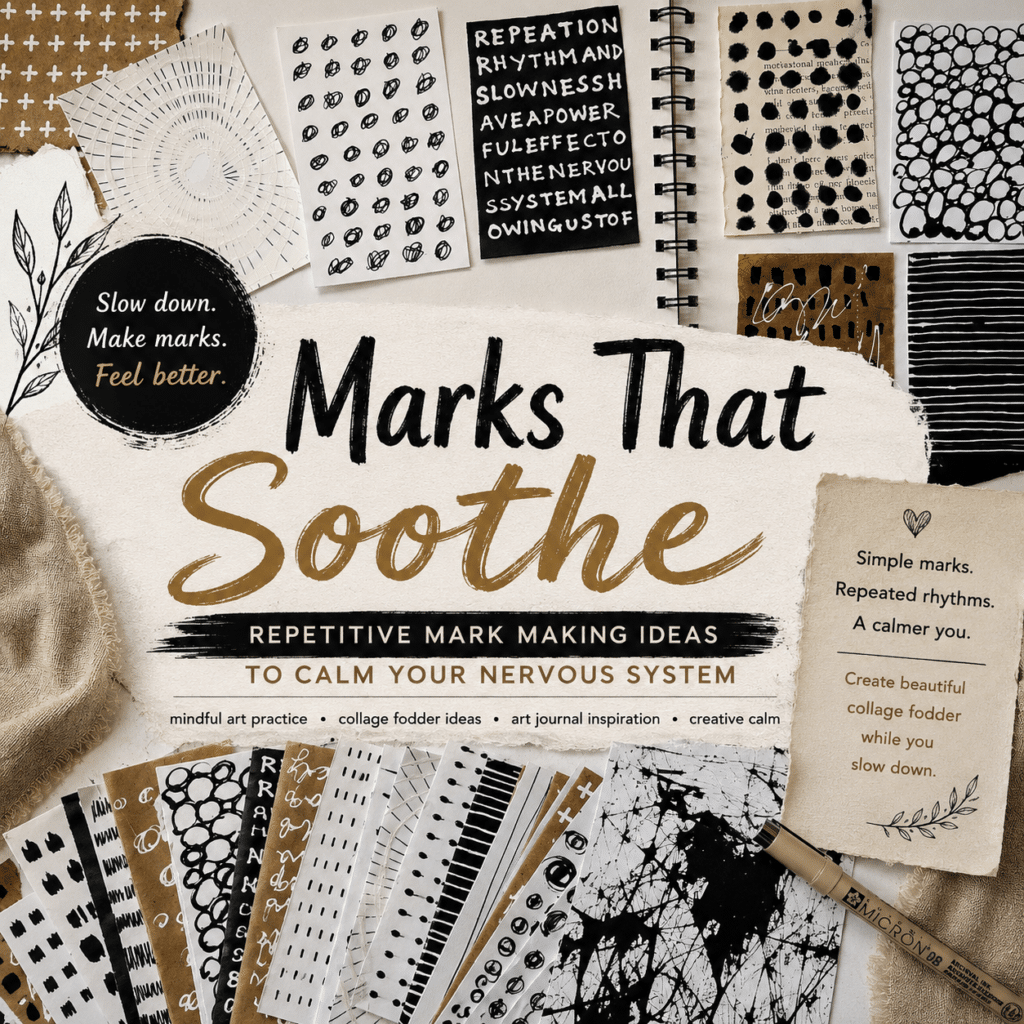
Discover how repetitive mark making ideas can help calm your nervous system while creating beautiful mixed media papers, art journal backgrounds, and collage papers using simple everyday supplies.
Sometimes We Don’t Need to Make Art. We Just Need to Make Marks.
There are days when my mind feels busy, my thoughts are scattered, and even the idea of creating something beautiful feels overwhelming. On days like these, I don’t reach for a complicated project.
Instead, I make simple, repetitive marks.
- Tiny dots.
- Slow lines.
- Circles.
- Rows of little brushstrokes.
- Numbers.
- Words.
Without realizing it, my breathing slows down, my shoulders soften, and my attention gently returns to the present moment. That is exactly what Marks That Soothe is all about.
Rather than focusing on creating a finished masterpiece, this practice invites you to slow down, repeat simple movements, and enjoy the calming rhythm of mark making.
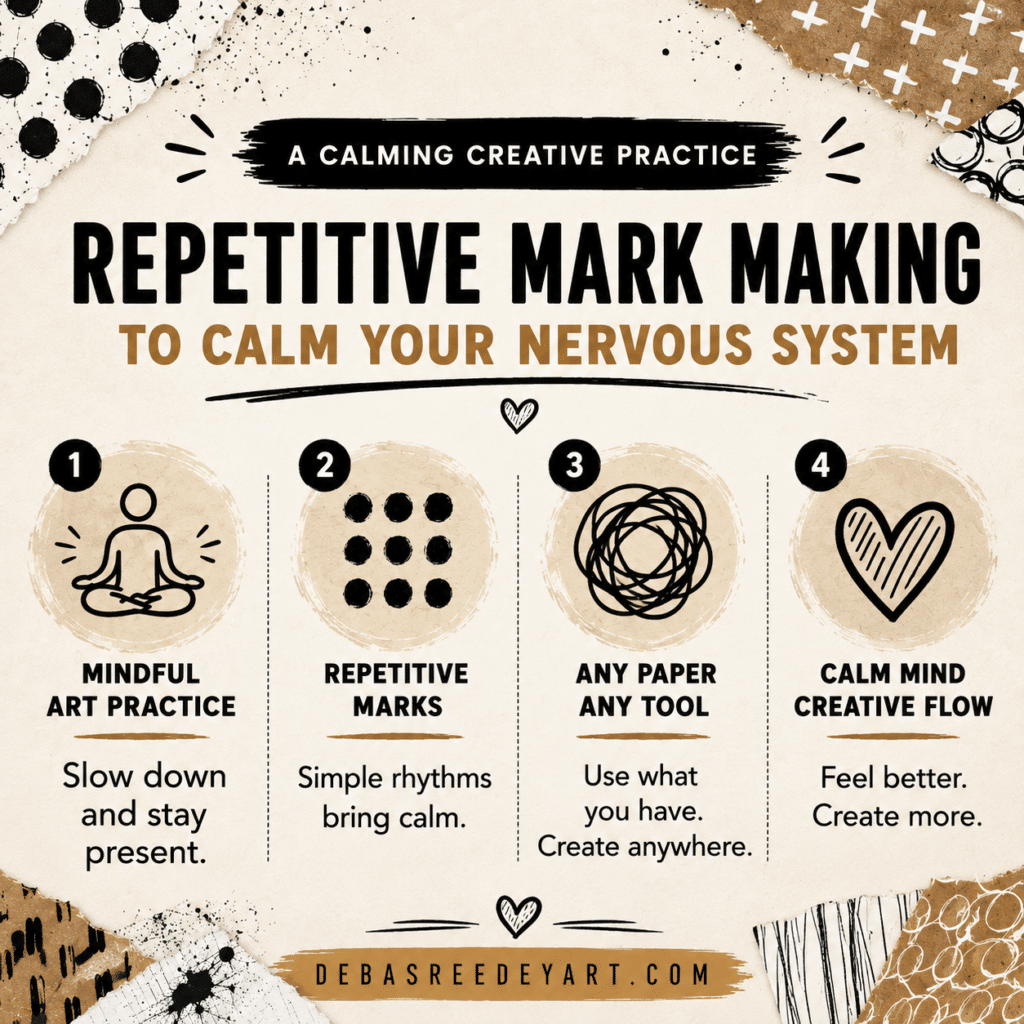
When we repeat simple movements with our hands, our breathing often becomes slower, our thoughts become quieter, and our nervous system has a chance to settle. That’s why this isn’t just a mark making exercise—it’s a gentle creative practice for slowing down and reconnecting with yourself.
🎥 Watch the Free Lesson
I’ve created a free video lesson where I’ll guide you through this calming process step by step. In the lesson you’ll discover:
- dozens of examples from my sketchbooks
- repetitive mark making ideas anyone can try
- simple exercises to help settle a busy mind
I’m inviting you into a slower, more mindful creative practice where the process matters far more than the final page. The beautiful papers are simply a lovely bonus.
What Is Mark Making?
At its simplest, mark making is exactly what it sounds like. It’s the act of making marks on paper. Those marks might be:
- dots
- lines
- circles
- scribbles
- writing
- numbers
- brushstrokes
- repeated patterns
- abstract shapes
Every artist develops their own visual language through mark-making.
Some marks are energetic and expressive.
Others are slow, repetitive, and calming.
Both are beautiful.
Both are useful.
In today’s lesson, we’re exploring repetitive mark-making ideas. The marks themselves are simple, but the repetition is where the magic happens. As your hand begins repeating the same movement again and again, your attention gently shifts away from overthinking and back into your body.
Why Repetitive Mark Making Feels So Calming?
Our brains are constantly processing information, making decisions, and reacting to the world around us.
Repetitive mark-making offers a different experience. Instead of asking your brain to solve problems, it invites your body to settle into a gentle rhythm.
Each repeated dot, line, or circle becomes an anchor for your attention. Without forcing yourself to meditate or clear your mind, you simply focus on the next mark. Over time, many people notice their breathing becomes steadier, their shoulders relax, and the constant mental chatter begins to quiet down.
This is why I return to this practice again and again—not because I’m trying to make perfect papers, but because of how it makes me feel while I’m creating them.
My Favourite Repetitive Mark Making Ideas
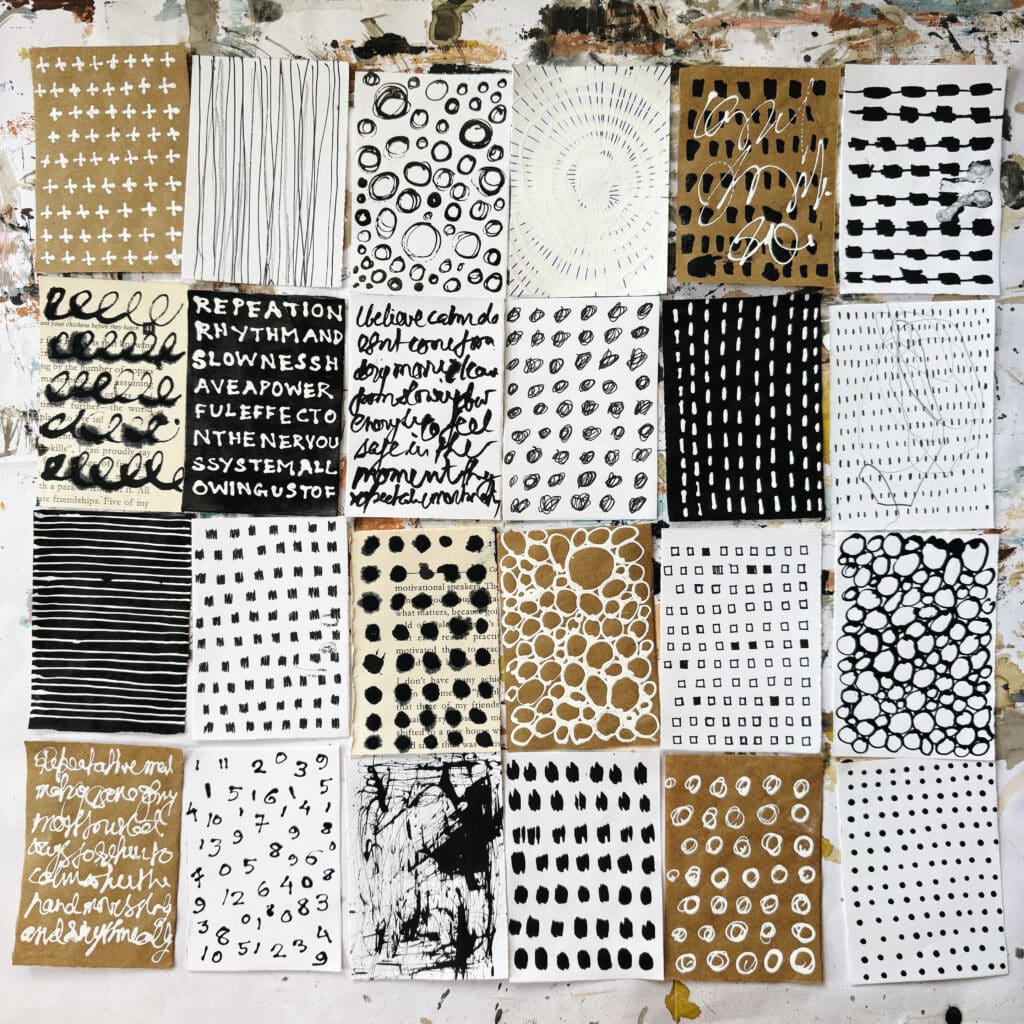
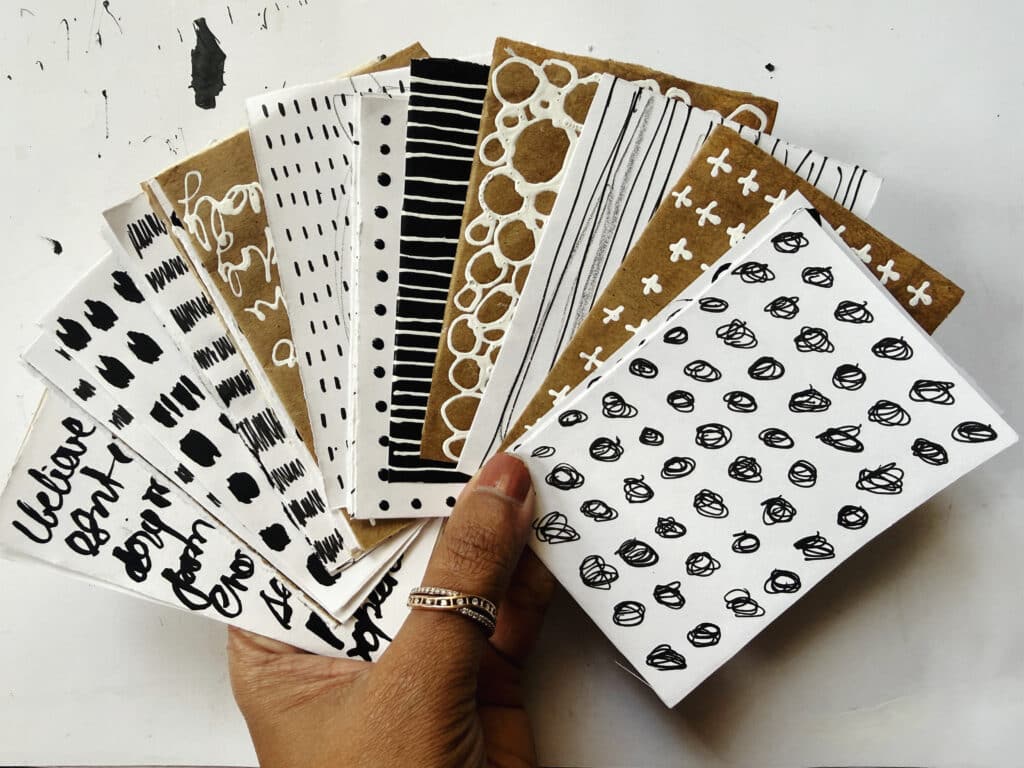
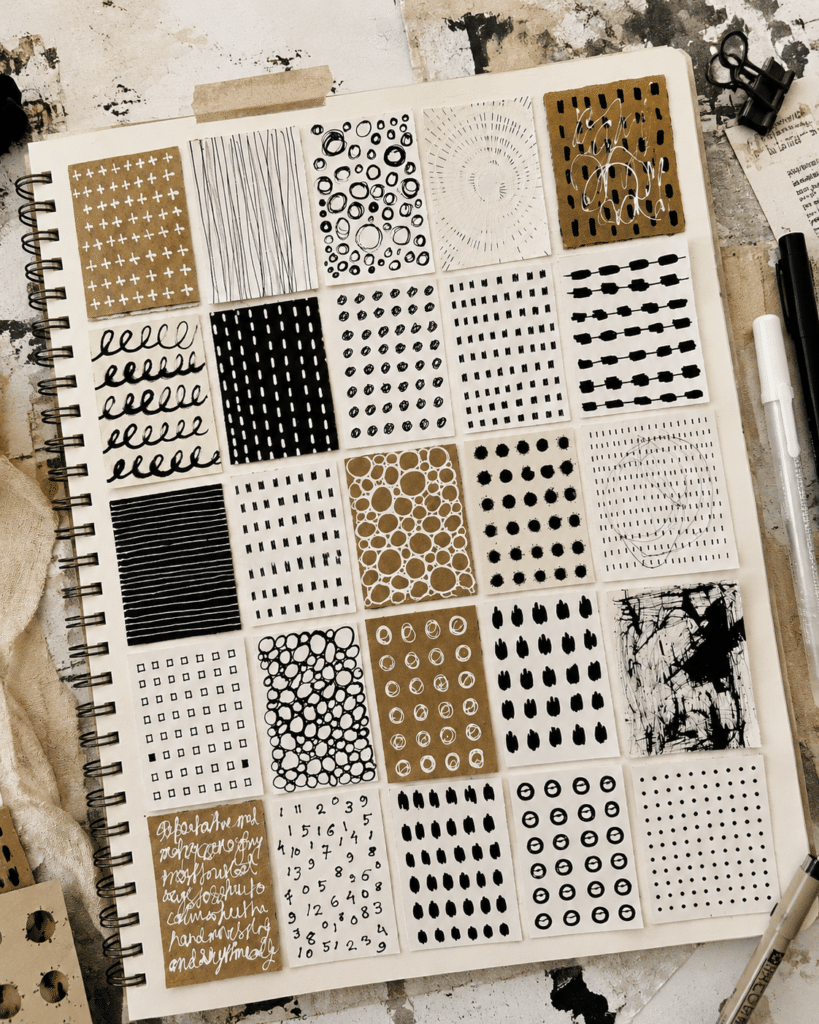
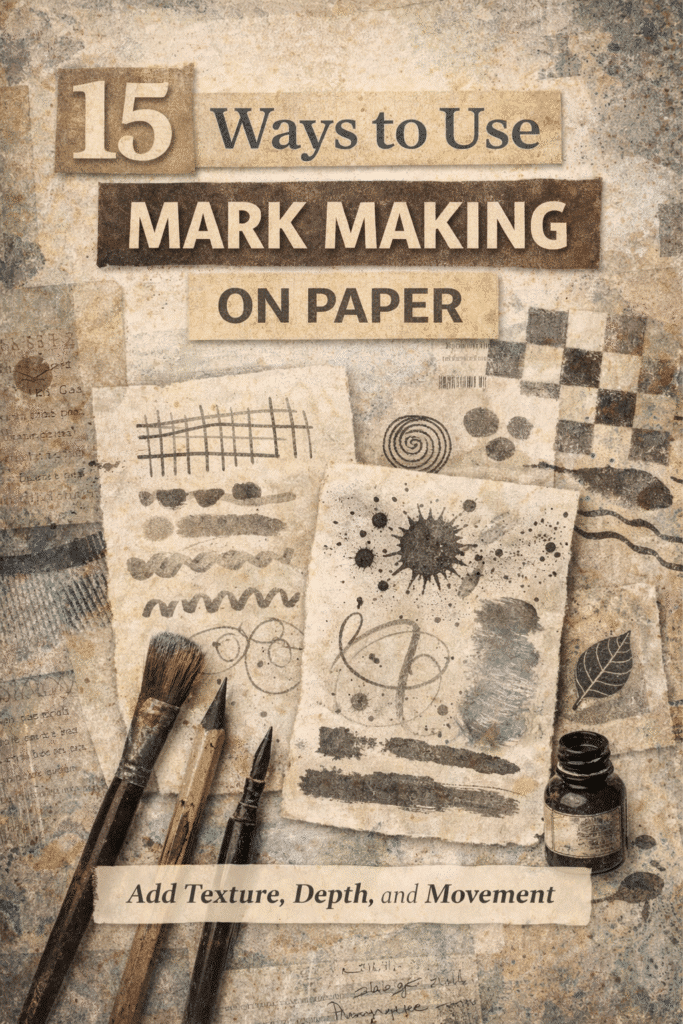
Throughout the lesson, you’ll see many different examples from my sketchbooks. Some of my favourites include:
- tiny repeated dots
- short dash marks
- loose circles
- scribbled loops
- grids
- repeated numbers
- handwritten words
- layered writing
- brush marks
- white marks over black paint
- black marks over kraft paper
- organic abstract patterns
These simple exercises become a wonderful source of inspiration for future mixed media projects, collage papers, and art journal pages.
The pattern itself doesn’t matter nearly as much as the steady rhythm you create while making it. Find a mark that feels comforting to repeat, and let it carry you through the page.
Expressive Marks vs. Repetitive Marks
Over the years, I’ve noticed that I naturally return to two different ways of making marks.
The first is expressive mark making.
These pages are energetic, loose, intuitive, and full of movement. I often use acrylic paint, large brushes, palette knives, or pencils to release emotion onto the page.
The second is repetitive mark-making.
This is the practice we’re exploring in today’s lesson.
Instead of expressing energy outward, repetitive marks invite us to slow down through rhythm and repetition. Tiny dots, short lines, repeated circles, writing, and simple patterns become a quiet conversation between the hand and the page.
Both practices are valuable.
They simply serve different purposes.
Expressive mark making helps me release energy. Repetitive mark making helps me regulate it. Depending on how I’m feeling, I choose the practice that my mind and body need most that day.
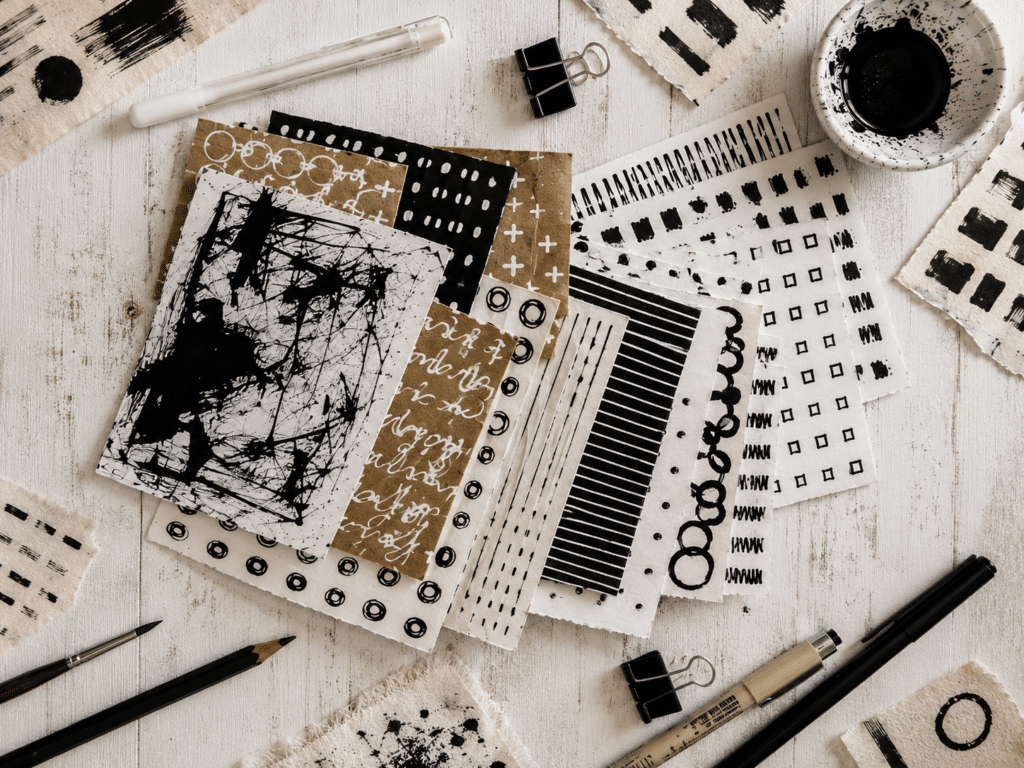
You Don't Need Fancy Art Supplies
One of the things I love most about mark making is how accessible it is. Most of the papers you’ll see were created using materials I already had around the studio. I’ve worked on:
- copy paper
- brown paper bags
- old book pages
- packaging paper
- cheap sketchbook pages
And the tools are just as simple: Pens, Pencils, Paintbrushes, China markers, Cola pens or even our fingers.
Beautiful mark making papers don’t require expensive supplies—just curiosity and a willingness to experiment.

Download your digital guide
Grow your stash of black papers with this visual guide to add bold contrast & depth in your mixed media and art journaling projects!
🌿 The Process Is the Point
If you’ve spent years believing that every creative session needs to end with a finished artwork, I’d love to gently challenge that idea.
Some creative sessions exist simply to help us slow down.
To breathe.
To notice the movement of our hand.
To give our nervous system a few quiet moments away from the constant noise of everyday life.
If, at the end of that process, you’ve also created beautiful handmade papers for future mixed media projects, that’s simply a wonderful bonus.
Final Thoughts
One Simple Mark Can Change the Way You Feel
The beautiful thing about repetitive mark making is that it asks nothing from you.
There is no perfect page. No pressure. No expectations.
Just one small mark. Then another. And another.
By the end of the session, you may have created beautiful collage fodders—but more importantly, you’ve spent a little time slowing down, noticing your breath, and giving yourself permission to simply create.
If you’d like to begin, watch the free lesson above, gather a few sheets of paper, and start with the simplest mark you can make.
Sometimes that’s all it takes.
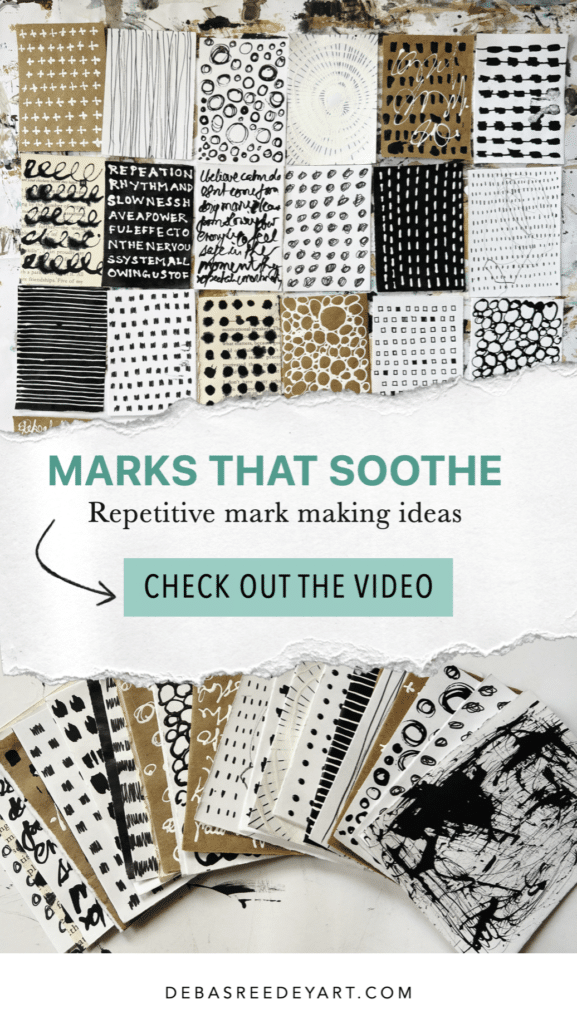
Pin for later!
Browse Blogs By Category



I love the mark making lesson. After it started I remembered I did do this with you before. Still I enjoyed it again. It is relaxing to make marks. I believe I still have the making collage papers to finish. I love all your art talent and lessons.