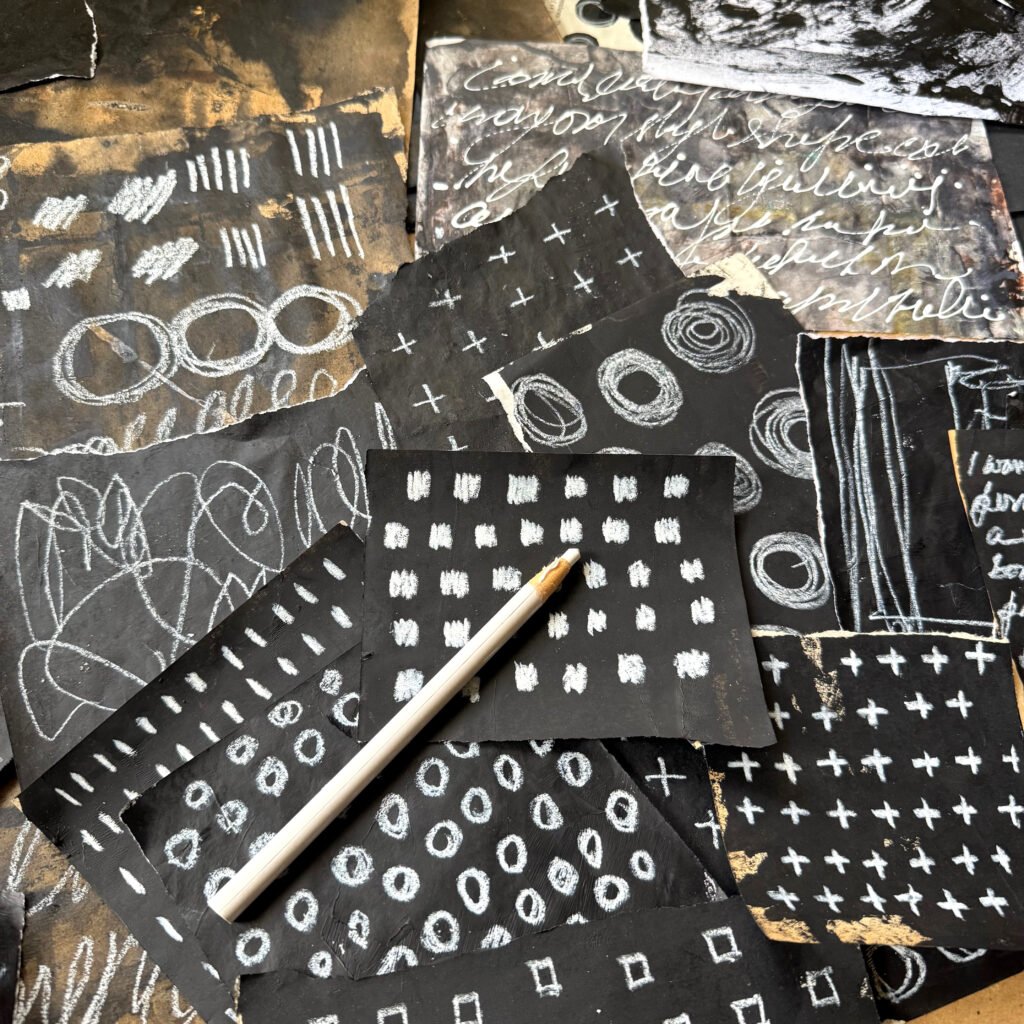
There is something incredibly satisfying about making white marks on a black surface. Every line stands out, every little pattern becomes more noticeable, and even the simplest marks can create something visually interesting.
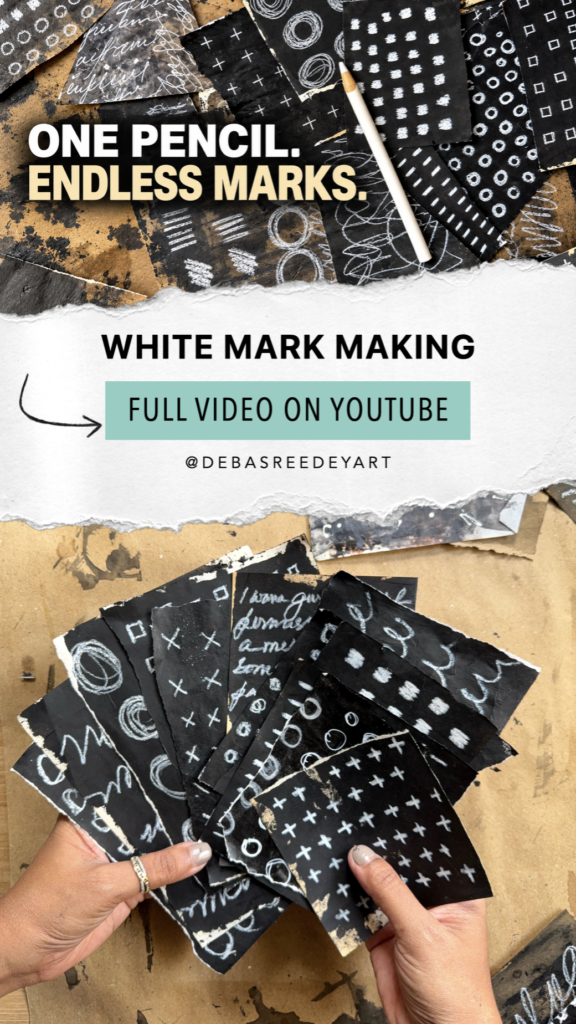
Recently, I’ve been exploring white pencil on black paper as a way to experiment with lines, shapes, patterns and textures. Instead of drawing a particular subject or following a planned composition, I’m allowing myself to make marks intuitively and see where the process takes me.
In this post, I’m sharing my approach to intuitive mark making on black paper, the tools I’m using, and a few ideas you can try in your own art practice.
🎥 Watch the Video
Why I Love White Pencil on Black Paper?
Most of us are accustomed to making dark marks on white paper. Working with white pencil on black paper reverses that familiar experience. Suddenly, the marks become the light elements against a dark background.
I love the contrast this creates. A simple white line can feel bold and expressive, while a collection of small dots, circles or scribbles can develop into an intricate pattern.
What I particularly enjoy is that I don’t need to know what I’m going to create before I begin. I can start with a few lines, add some dots, repeat a shape or follow an unexpected movement of my hand. One mark leads to another, and gradually, the paper develops its own character.
For me, this is less about creating a finished drawing and more about enjoying the process of making marks.
Creating My Own Black Collage Papers
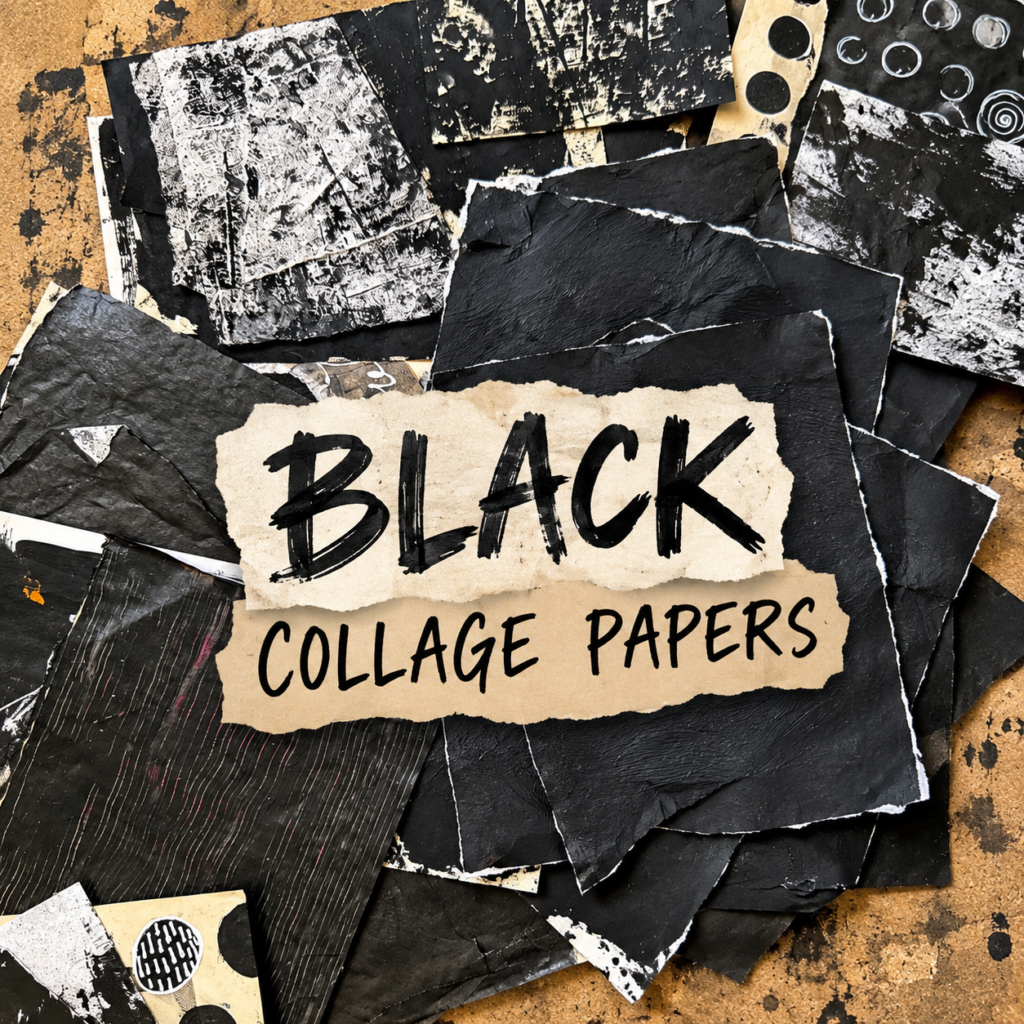
For this project, I’m working on black collage papers that I created myself using black gesso and acrylic paint.
I love making my own papers because I can experiment with different surfaces, textures and layers instead of relying on commercially produced paper alone. The subtle variations in each sheet give me an interesting starting point for further exploration.
If you’d like to see how I create these papers and the difference between black gesso and black acrylic paint, you can watch my previous video here.
Once the papers are ready, I can use them for collage, art journaling, mixed-media projects or, as I’m doing here, white mark making.
If you enjoy experimenting with black and white in your artwork, you might also like my guide to essential black and white collage papers for mixed media art journaling.
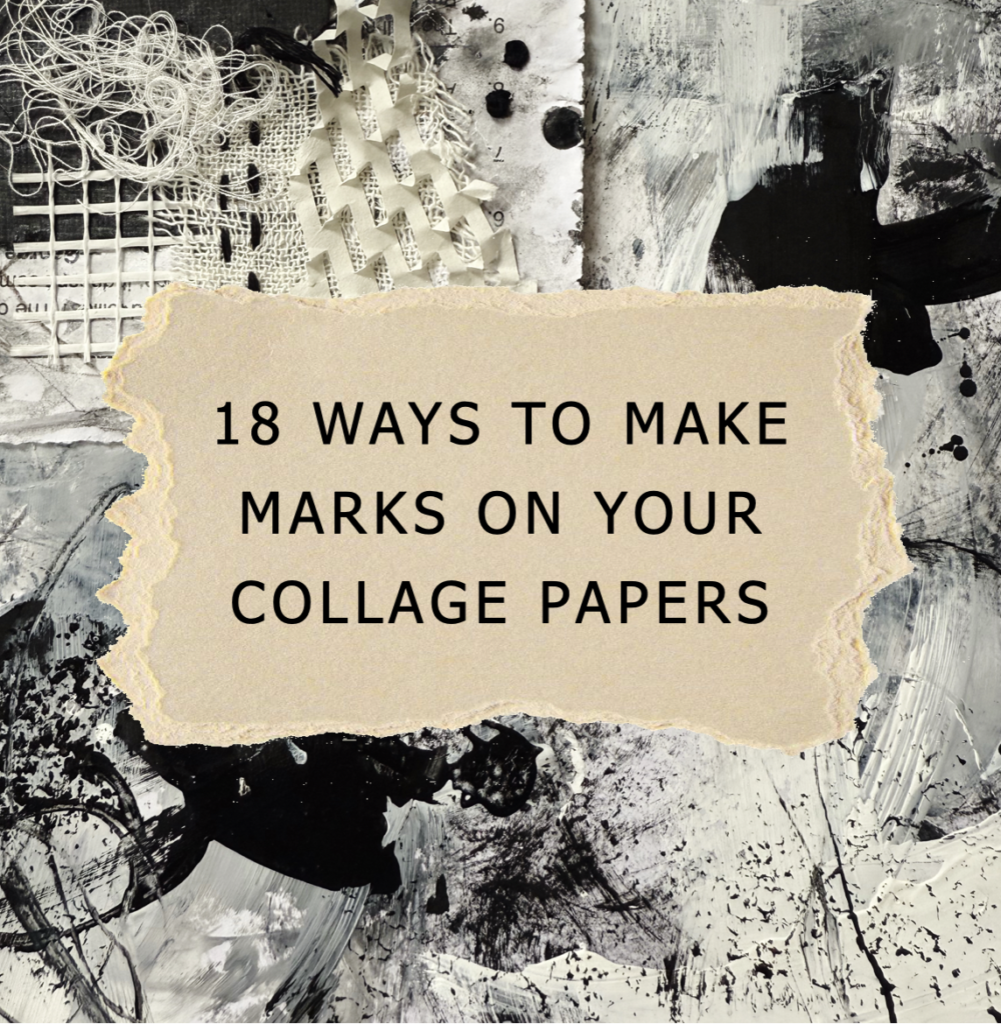
Download Your Free Guide
Grow your stash of collage papers with this visual guide to make expressive marks, add contrast & depth in your mixed media and art journaling projects!
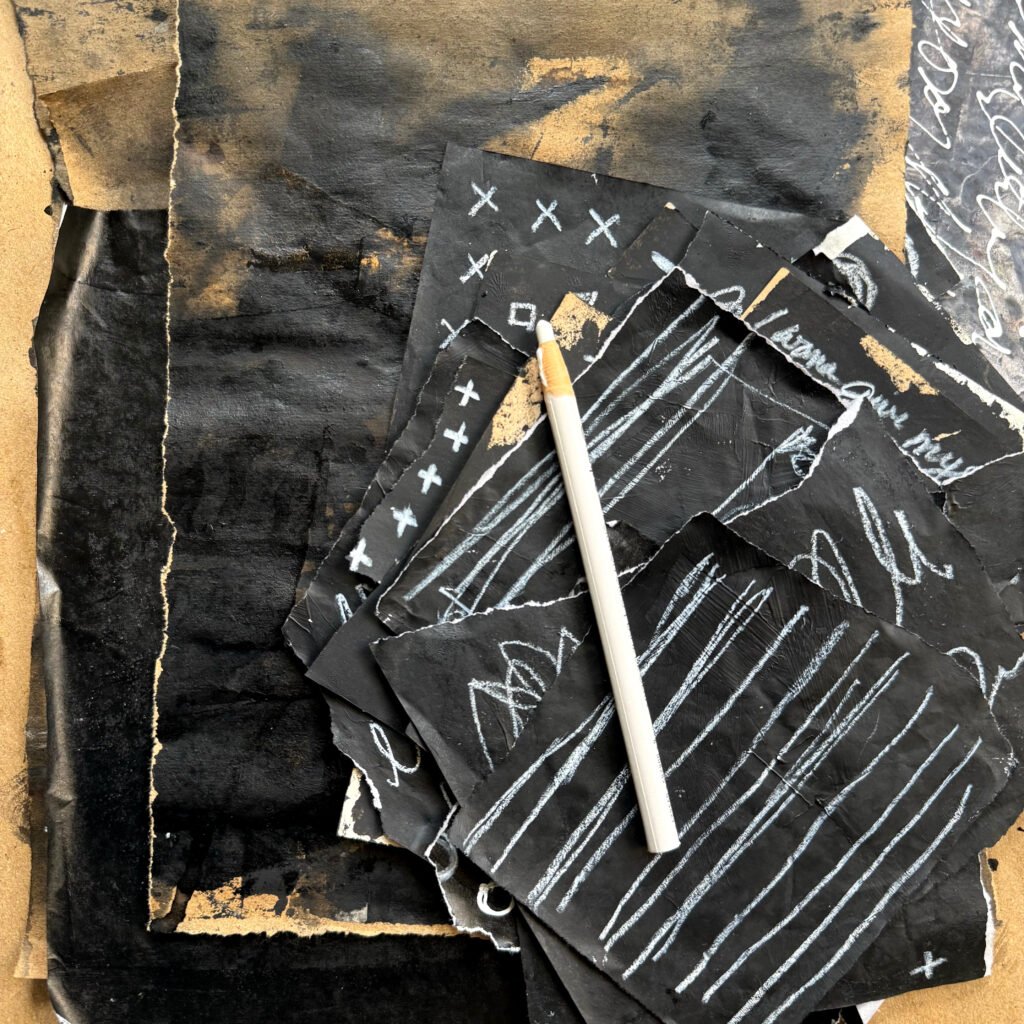
The Tool I'm Using: A White China Marker Pencil
For this session, I’m using a white China marker pencil to make marks on my black papers.
I enjoy experimenting with simple tools because they encourage me to focus on the marks themselves rather than getting distracted by too many materials.
With a white pencil on black paper, I can explore different kinds of lines, repeated shapes, dots, circles, scribbles and other expressive marks. I can vary the direction, spacing, rhythm and pressure to see how each mark changes the overall appearance of the page.
You don’t need an elaborate collection of art supplies to begin. Start with a dark sheet of paper and a white drawing tool that works on its surface. Try a few different options and see which one you enjoy using most.
Exploring Different Mark Making Ideas
One of my favourite things about mark making is that there are so many possibilities, even when you limit yourself to a single colour and tool.
Here are a few ideas to explore when working with white pencil on black paper.
1. Lines and Repeated Strokes
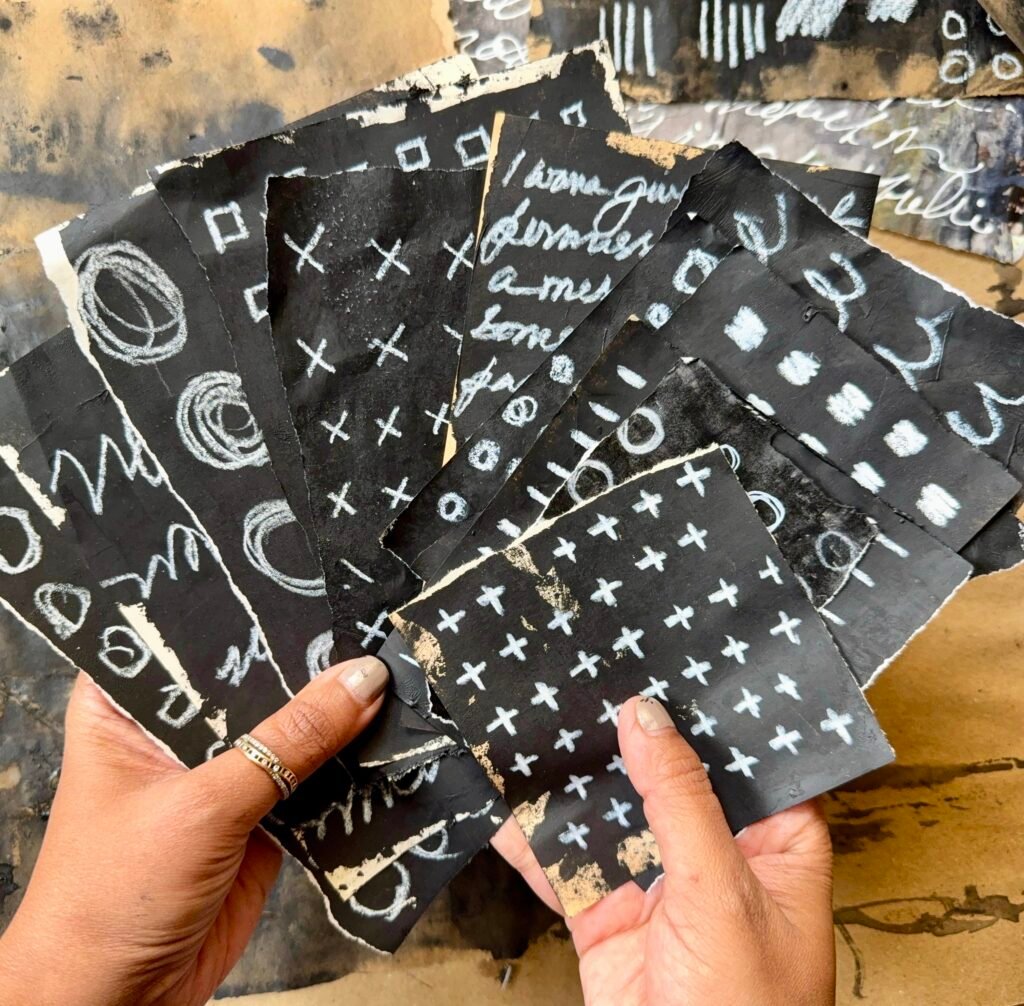
Begin with straight lines, curved lines, wavy lines or short, broken strokes. Repeat them in different directions, vary their lengths or bring them closer together to create rhythm and movement.
You can also experiment with parallel lines, crossing lines and loose, intuitive strokes.
2. Dots, Circles and Small Shapes
Try making dots of different sizes, tiny circles, larger rings, crosses or simple geometric shapes. Repeat a shape across the paper or group several together in one area.
You might discover that a collection of very simple marks can become surprisingly engaging when you change their scale and spacing.
3. Scribbles and Intuitive Marks
Let your hand move without deciding in advance what the marks should look like. Make quick scribbles, looping lines or irregular shapes. Allow one movement to suggest the next.
This is a lovely way to loosen up, especially when you feel stuck or are unsure what to create.
4. Patterns and Textures
Repeat a combination of lines, dots, circles and other shapes to develop your own patterns. You could fill a small area with closely spaced lines, create a loose grid or build a pattern from marks that appear naturally as you work.
There is no need to make every part of the paper equally detailed. Leaving areas of black untouched creates contrast and gives the marks room to breathe.
These are only starting points. You can combine them, change them or invent completely different marks as you go.
Making Marks Without a Plan
For this particular session, I’m not following a set design or trying to achieve a specific result.
I’m simply looking at the paper, picking up my white pencil and responding to whatever feels interesting in the moment. Sometimes I repeat a mark I enjoy. Sometimes I introduce something different. And sometimes I make a mark just to see what happens.
I find this kind of intuitive art practice refreshing because it takes away the pressure to produce something beautiful or meaningful every time I sit down to create.
Not every mark needs to become part of a finished artwork. Sometimes the value lies in experimenting, noticing what you enjoy and discovering new possibilities along the way.
If you would like to try this yourself, give yourself ten or fifteen minutes with a piece of black paper and a white pencil. Start making marks without planning the outcome. Notice which movements you enjoy, which patterns emerge and which marks you’d like to explore further.
You might be surprised by what happens when you allow yourself to play.
Create Unique Black & White Collage Papers
3 inspiring video lessons to create a stash of unique, artful materials for your mixed-media projects.
My Mark Making Dictionary
Over time, I’ve developed my own mark making dictionary, where I collect many of the marks and little patterns I enjoy creating.
It has become a personal source of inspiration that I can return to whenever I want to explore different possibilities in my art. Sometimes I look through it for an idea, and sometimes a mark from the dictionary finds its way into a completely new piece of work.
I like having this collection because it reminds me that inspiration doesn’t always have to come from somewhere outside ourselves. We can build a personal visual vocabulary simply by noticing, collecting and revisiting the things we enjoy making.
Final Thoughts
Working with white pencil on black paper has reminded me how much creative potential there is in something as simple as making a mark.
You don’t always need a plan, a complicated technique or a clear idea of what the finished result should look like. Sometimes, all you need is an interesting surface, a simple tool and the willingness to explore.
I hope this little experiment inspires you to try some intuitive mark making of your own. Gather your papers and pencils, give yourself permission to play, and see what emerges.
Happy creating!
Pin for later!
Browse Blogs By Category