Have you ever experimented with dye fabric with acrylic paint? I love exploring different colour combinations and finding ways to create fabrics that I can use in my mixed media artwork.
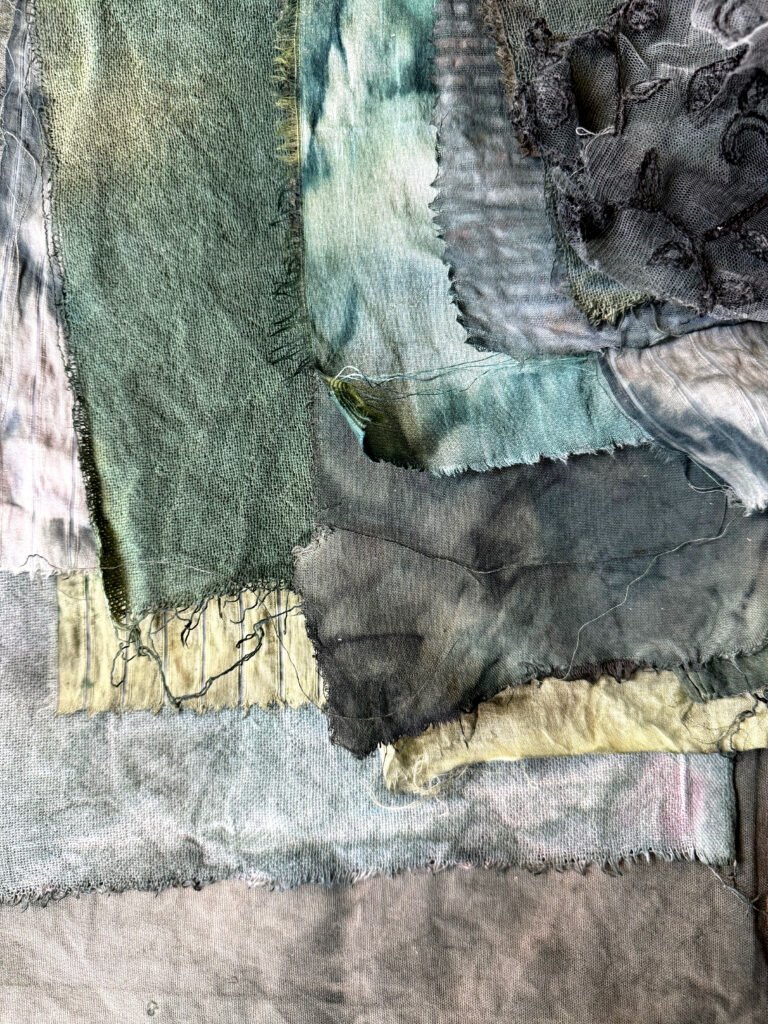
Recently, I took a bunch of old fabric scraps that I had dyed a few years ago and decided to give them a completely new look. Most of these fabrics were originally pink, orange, yellow and bright green – colours I no longer use very much in my artwork.
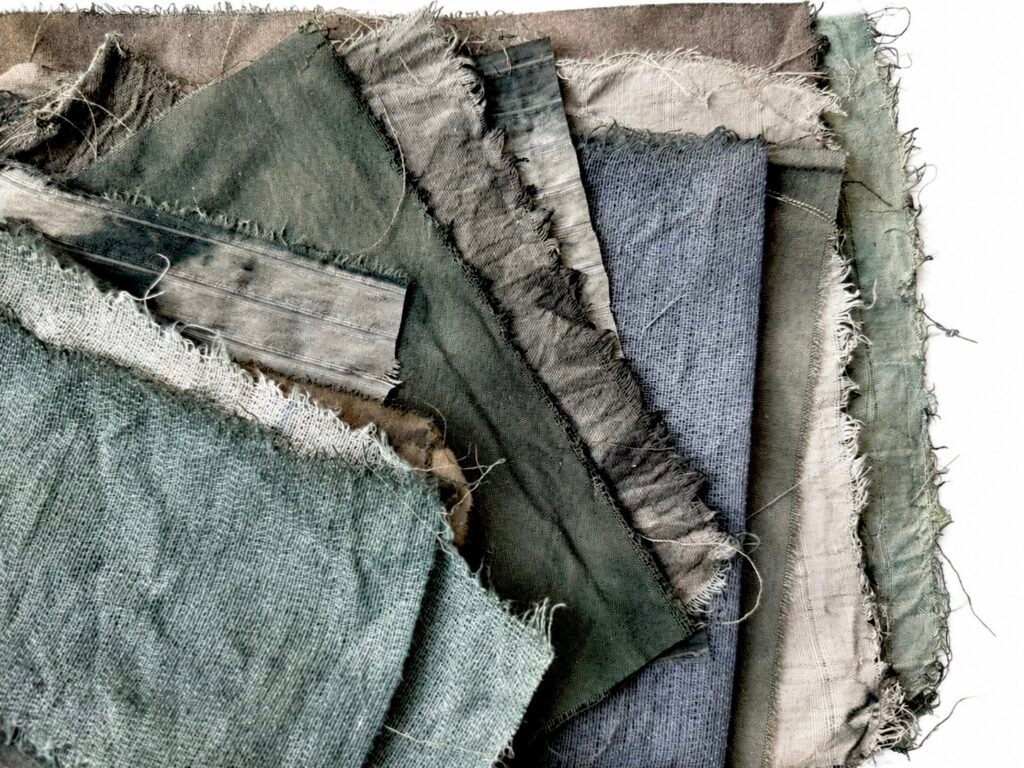
Instead of throwing them away, I decided to experiment with dyeing fabric with acrylic paint, using a palette of muted blues, greens, browns and greys.
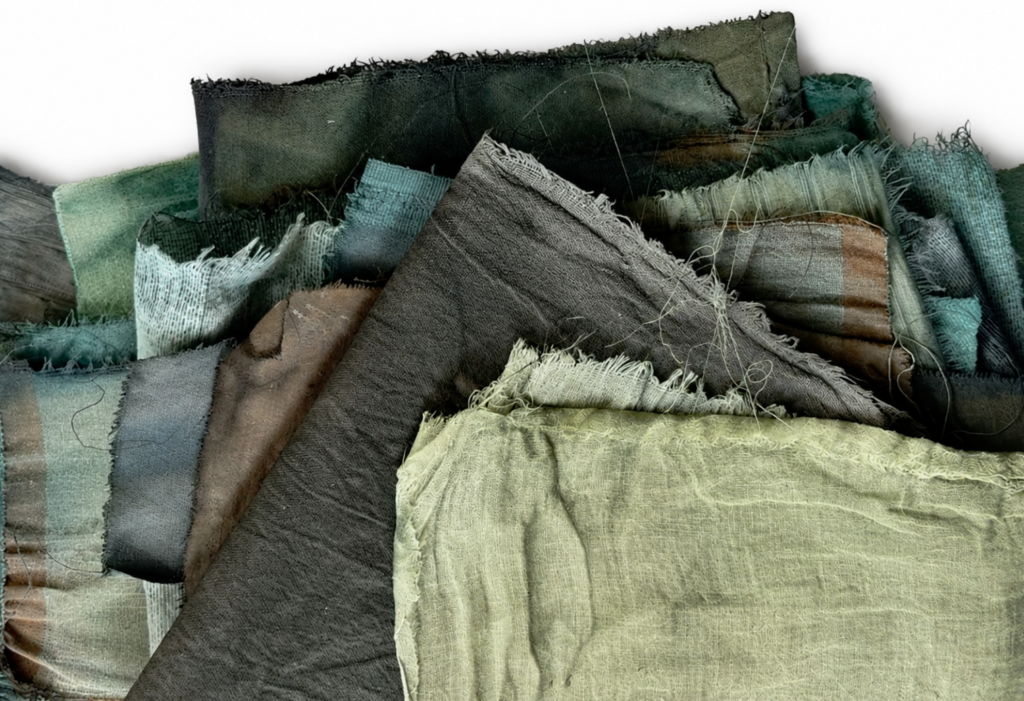
The results were quite unexpected, and I ended up with a beautiful collection of textured fabrics!
🎥 Watch the Video
Why I Started Experimenting with Fabric Dyeing
Over the years, I’ve collected lots of small fabric pieces from different experiments. Some were dyed with watercolours, some with coffee and acrylics, and others were simply experiments with different colour combinations.
Most of these fabrics were originally pink, orange, yellow and bright green – colours I don’t use very much in my artwork anymore.
Rather than throwing them away, I decided to experiment with re-dyeing my old fabrics using a palette I currently love – muted blues, blue-greens, charcoal and earthy tones.
I wanted to see what would happen if I layered new colours over these previously dyed fabrics. And I was quite surprised by the results!
If you’d like to see some of my earlier colourful fabric dyeing experiments, I’ve shared that process here.

My Acrylic Paint Colour Combinations
For this experiment, I worked with a combination of:
Cerulean Blue
Turquoise Deep
Van Dyke Brown
Black
Payne’s Grey
I started by mixing Cerulean Blue and Turquoise Deep. Turquoise Deep added a greenish quality to the blue, which I really liked.
Then I gradually introduced Van Dyke Brown to mute the colours and create more earthy shades.
I also had a mixture of Van Dyke Brown and Black ready in a separate container. Adding this to my blue mixture helped me create deeper, darker shades.
Finally, I experimented with adding Payne’s Grey to achieve some of those beautiful muted blue-grey tones.
There wasn’t one fixed formula for all the fabrics. I kept adjusting the colours, adding a little more of one shade or another, and seeing what emerged.
This is my favourite part of colour mixing – experimenting intuitively without knowing exactly what the final colour will look like.
I also keep a colour mixing journal where I document different combinations and the shades I create. Sometimes I follow a specific formula, while other times I simply mix colours intuitively and see what happens.
I find this practice incredibly useful because it helps me understand how different colours interact and how I can create the muted shades I love.
How I Dye Fabric with Acrylic Paint
My method of dyeing fabric with acrylic paint is quite simple.
I mix my chosen acrylic colours with plenty of water to create a diluted colour mixture. Then I dip the fabric into the mixture and allow it to absorb the colour.
I don’t use a lot of acrylic paint because I want the fabric to retain its original softness and flexibility.
One thing I’ve noticed through my experiments is that the amount of water and acrylic paint makes a difference to the final result. I prefer using a diluted mixture rather than applying thick acrylic paint directly onto the fabric.
You can experiment with different colour combinations and even layer colours over previously dyed fabrics.
The same colour can look completely different depending on the original colour and texture of the fabric. For example, when I applied blue over some of my previously green fabrics, they developed beautiful greenish-blue shades. Some of the original pinks and purples also showed through in unexpected ways.
This is what makes creating custom fabric colours with acrylic paint so interesting. You don’t always know exactly what you’re going to get!
If you’d like to explore another way of dyeing fabrics using coffee and acrylic paints, I’ve shared that process in my free Creative Playbook class. It’s a lovely way to experiment with muted colours using simple materials.
Learn the Art of Fabric Dyeing
Learn to dye your own fabrics in any color you love with my secret coffee-and-acrylic recipe! 

Creating Textures While Dyeing Fabric
One of my favourite discoveries is how much texture you can create simply by changing the way you dry your fabrics.
I usually experiment with two methods.
1. Hanging the fabrics
If you hang your wet fabrics to dry, the colour gradually spreads through the fabric. This creates a more even distribution of colour, with fewer pronounced folds and marks.
2. Crumpling the fabrics
This is the method I used for most of my recent experiments.
After dipping the fabric into the colour mixture, I gently scrunch it into a loose ball and leave it to dry in that position.
As the fabric dries, the colour settles differently around the folds and creases, creating beautiful variations, marks and textures.
I love these unpredictable patterns. Sometimes even a small fold or a clip mark becomes an interesting detail.
It’s almost like painting on fabric, except you’re allowing the fabric and the colour to create their own patterns.
This crumpling and drying technique is something I teach in my Fabulous Fabrics class. I had previously explored it using different shades of grey, and it was lovely to revisit the same process with an entirely different colour palette.
If you’d like to learn this exact fabric dyeing process, along with many other techniques for dyeing, altering and transforming fabrics, you can explore my Fabulous Fabrics class.

Fabulous Fabrics
Create Fabrics That Feel Like You. Master Four Fabric Dyeing Techniques and build your own fabric stash at home.
Sorting and Preparing My Fabric Scraps for Art
Once all my fabrics were dry, I started sorting through them to decide which ones I wanted to use in my artwork.
I tore some into smaller pieces, creating squares, rectangles and irregular shapes.
I also separated them according to colour and texture.
I’ve noticed that if I store large pieces of fabric in a box, I often forget to use them. Having smaller pieces ready makes it much easier to incorporate them into collage and mixed media projects.
Some of these scraps are perfect for adding layers to art journal pages, while others would make beautiful fabric book covers or stitched textile collages.
Creating a Fabric Swatch Book
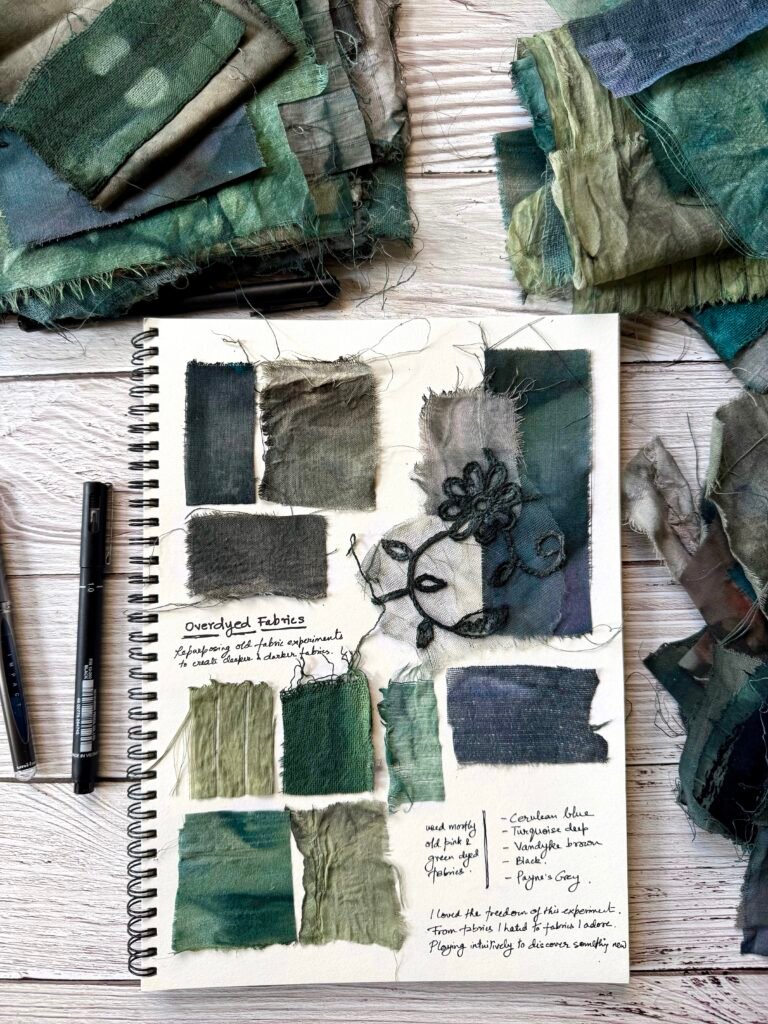
After all that experimenting, I wanted to keep a record of the colours and textures I had created.
So I took small swatches from the different fabrics and arranged them in my sketchbook.
I grouped them loosely by colour, starting with the darker blues and charcoal shades, followed by the lighter blue-greens and muted greens.
I also made a few notes about the colours I had mixed.
This is something I really enjoy doing with my art experiments. Keeping a record of the colours and materials helps me revisit combinations I love and gives me ideas for future projects.
Keep Experimenting with Colour and Fabric
This was a completely intuitive experiment. I didn’t follow a fixed recipe or set out to achieve one particular result.
I simply wanted to explore how I could transform some old fabrics using colours I love.
If you enjoy using fabrics in mixed media art, I encourage you to experiment with your own colour combinations. Try mixing acrylic paints, diluting them with water, and exploring different ways of drying your fabrics.
You might discover some unexpected colours and textures along the way!
And remember, you don’t always need new materials to create something interesting. Sometimes, all you need is a little curiosity and a willingness to experiment with what you already have.
Happy experimenting!
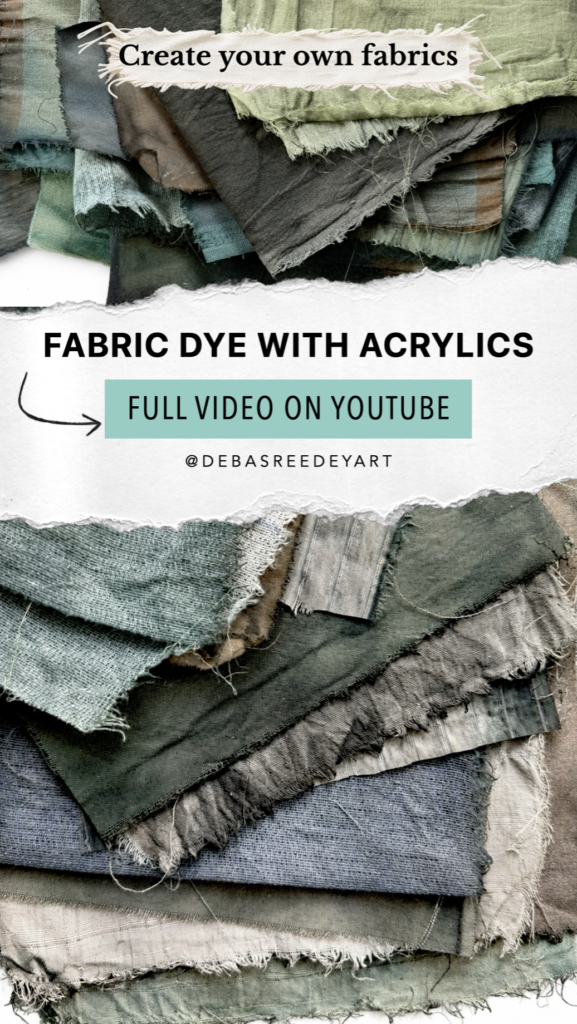
Pin for later!
Browse Blogs By Category